Premium Aluminum Pergola Design That Lasts For Years
A backyard upgrade is rarely just a purchase; it is a long-term design decision that has to look right in every season, under real weather, and through years of daily use. The difference between a pergola that feels premium and one that merely looks premium on installation day usually comes down to whether the engineering supports the aesthetic over time. When the structure stays straight, the coating stays intact, and the roof system performs as promised, the space continues to feel intentional instead of “aging out” prematurely.
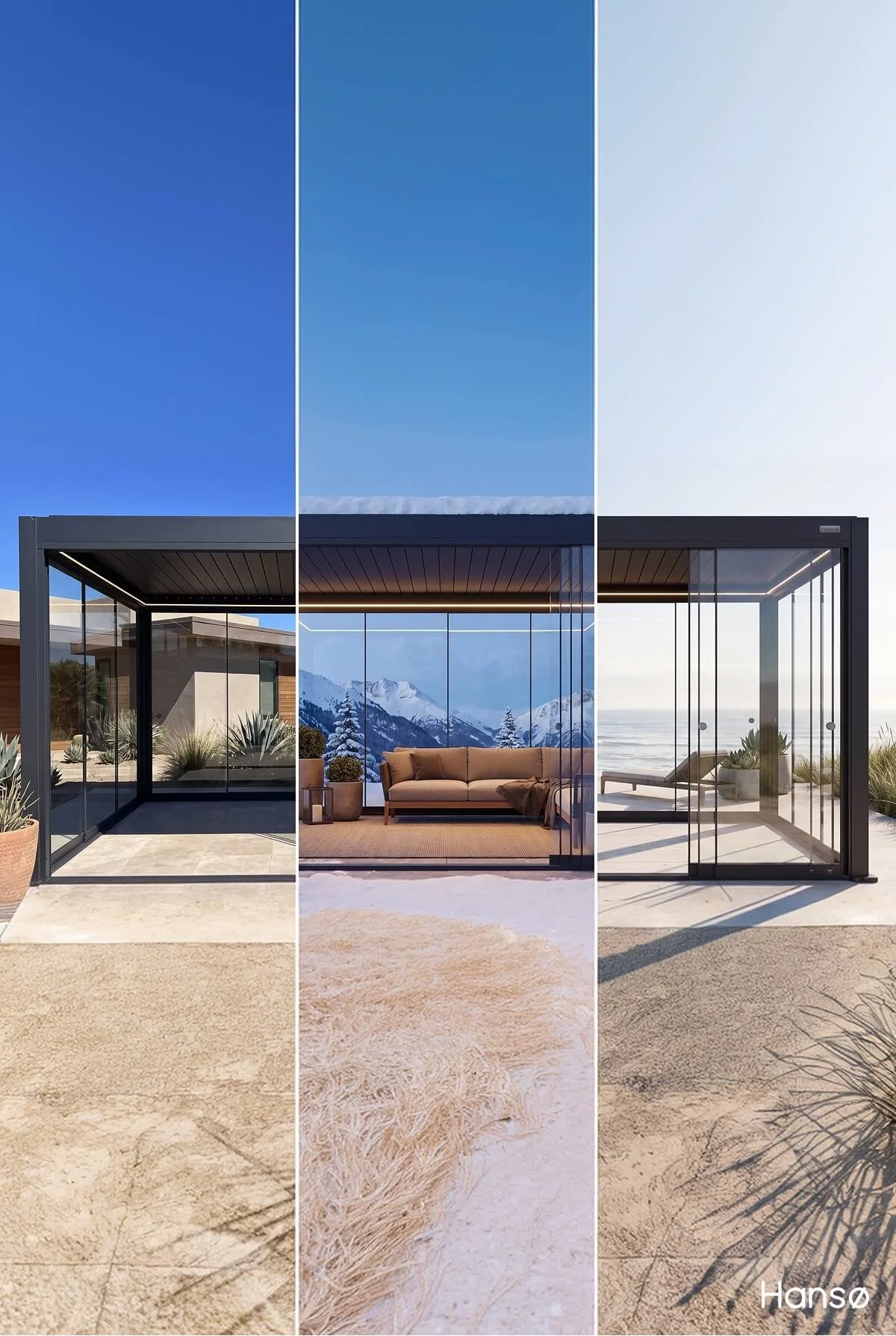
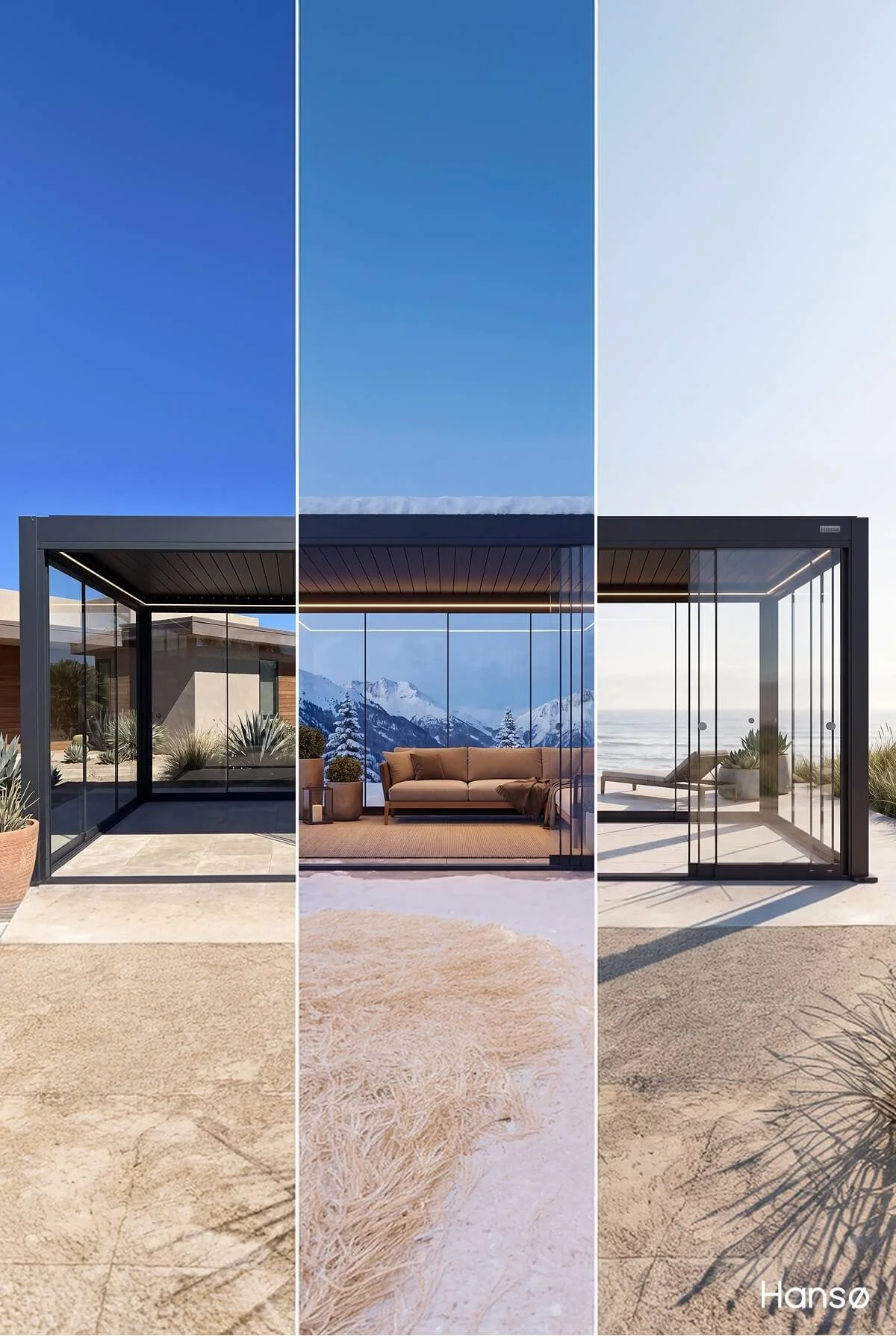
In this article, we will explore what separates a truly premium pergola design from a short-lived upgrade, using three real-world exposure conditions as the test: extreme heat, heavy snow load, and coastal salt air. Each scenario highlights the same core principle: in a properly engineered aluminum pergola - the kind Hansø engineers around - durability is not an add-on feature. It is the design.
Design That’s Built to Stay Premium
Every backyard improvement begins with a few visual decisions: where the structure sits, how it frames the view, what the ceiling plane looks like from inside the house, and where the eye naturally lands. A pergola is not just shade; it is architecture. If it warps, fades, loosens, or starts to look uneven, those original design decisions lose their impact.
A premium pergola design is measured by what you do not have to do later:
No repainting to fix chalking or patchy fading
No re-tightening hardware each season
No “temporary fixes” that become permanent
No replacing panels or components because the system no longer aligns
With a well-built aluminum pergola, the clean lines you paid for are not a moment in time; they are the baseline. That is the standard a Hansø-style approach aims for: engineering a structure to hold its geometry and finish for years, not just survive a season.
What “premium” should mean in practice
When you evaluate long-term quality, focus on outcomes that remain visible and measurable:
Visual integrity: straight beams, consistent spacing, louvers that close flush
Finish integrity: stable color, minimal chalking, no premature edge wear
Structural confidence: no wobble, no creeping shifts, no seasonal “settling”
Usability: shade and shelter that actually change how often the space gets used
In the next section, these three backyards show what premium looks like in practice. Three different reasons the yard needed an upgrade - and in every case, the same underlying choice: a pergola structure engineered to hold its design, not just wear it for a season.

No. 1
Built for Heat: Shade That Actually Cools
In high heat and constant UV exposure, many outdoor structures fail first at the surface. The finish fades, edges chalk, and the most visible lines of the design start to look tired. Even before major structural issues appear, the pergola can lose the crispness that made it feel premium.
Heat also exposes the limits of traditional materials:
Wood expands and contracts with seasonal swings, which can gradually loosen joints and create hairline cracks near fasteners.
Painted finishes tend to chalk and fade fastest where UV exposure is most direct, especially on top edges, beam faces, and corners.
Lesser coatings often degrade unevenly, which makes the pergola look older than it is.
A T6 aerospace-grade aluminum pergola avoids many of these problems at the root. It is engineered for stability and does not behave like wood when temperatures fluctuate, which helps preserve alignment and tight tolerances over time. The powder-coat finish is baked on rather than painted on, which is why it resists chalking and fading far better than basic coatings.
Heat performance is part of the design, not a bonus
A premium pergola is not only supposed to “block the sun.” It should actively improve comfort beneath it, turning harsh afternoon hours into usable time.
Closed louvers do more than create shade:
They reduce direct solar load hitting the seating zone
They help lower perceived heat by preventing overhead sun exposure
They reduce surface temperature underneath the structure by roughly 15°F compared to open sky
That last point is what separates design from decoration. A lesser structure may look similar from the street, but if it does not materially change the microclimate under the pergola, it is not delivering a premium experience.
Heat-ready design checklist
When designing for hot climates, look for features that keep the space comfortable and the structure visually crisp:
Tight, consistent louver closure to block direct overhead sun
Powder-coated aluminum designed to resist UV breakdown
Strong beam geometry that stays straight through temperature swings
Layout that positions shade where people actually sit, not just where it photographs well

No. 2
Built for Snow Load: A Roofline That Doesn’t Give an Inch
Snow load is where design and engineering either align perfectly or quietly diverge. Plenty of structures look clean in a showroom or in a mild climate, yet begin to show stress after the first serious winter. The earliest warning signs are not always dramatic failures; they are subtle distortions that undermine the design:
A slight bow along a beam line
Louvers that no longer seat flush
Gaps that appear where the roof system used to look seamless
A roofline that looks “off” from inside the home
Once those lines shift, the pergola stops reading as architecture and starts reading as a compromise.
Double-Layer Louvers on a properly engineered aluminum pergola are designed to manage weight and shed load to the perimeter beam intentionally. A system rated for 65 PSF snow load is built for real winter conditions, not just light accumulation. The upgrade is not simply that you can keep using the deck for more months of the year; it is that the structure earns those extra months without sacrificing the clean geometry that made it worth installing.
Why snow rating protects aesthetics
A snow-load rating is not only an engineering number; it is a design insurance policy.
When the structure is truly prepared for winter, you preserve:
Straight beam lines that remain visually level
Louvers that continue to align cleanly
A roof plane that looks intentional year after year
Confidence that the structure will not “relax” into a new shape
Snow-ready planning considerations
If you live in a snowy region, the best results come from matching the pergola to the environment, not the other way around:
Confirm snow-load rating is appropriate for local conditions
Prioritize systems with robust louver and perimeter-beam engineering
Choose an installation location that avoids roof snow dumps where possible
Plan for drainage and melt patterns so water does not pool near posts

No. 3
Built for Salt Air: A Coating Outlasting the Ocean
Coastal environments test finishes before they test frames. Salt air is relentless: it settles into corners, clings to surfaces, and accelerates wear in ways that can make outdoor products look years older within a couple of summers. In many cases, what “fails” first is not structural integrity. It is the visual layer that makes the pergola feel premium.
That is why the coating is not a detail worth compromising on. NASA and luxury yacht builders trust AkzoNobel Premium Coating, and the connection to pergolas is straightforward: in coastal conditions, the finish is the first line of defense. A superior coating can be the difference between a pergola that still looks freshly installed after multiple seasons and one that becomes visibly chalked, pitted, or dulled early in its life.
Coastal exposure requires total-system thinking
Premium performance near the ocean is not just about the beams; it is also about the ground-level connection where moisture collects and sits. Many cheaper systems use standard aluminum baseplates that pit or corrode precisely where water, salt, and grime accumulate.
Hansø uses reinforced SUS304 marine-grade stainless steel at the baseplates, a material spec used in boat hardware for a reason. That choice is designed to deliver zero corrosion in coastal, poolside, or sub-zero environments, right where the structure takes the most abuse and gets the least attention.
Coastal durability checklist
For a pergola that will still look new in salt air, prioritize:
High-performance coating designed for harsh exposure
Marine-grade stainless steel where the structure meets the ground
Component design that reduces crevices where salt and moisture linger
A maintenance routine that is simple enough to actually follow
A practical, low-effort coastal routine often includes an occasional rinse to remove salt buildup, especially after storms or windy weeks.
What Holds Up in All Yards
Across heat, snow, and salt air, the pattern is consistent: the design decision and the durability decision are the same choice, made once. When the material and finish are engineered for the environment, the pergola keeps looking like the version you approved in the design phase.
By contrast, common alternatives tend to demand ongoing correction:
Wood often needs re-staining and can develop visible movement at joints
Vinyl can chalk and lose visual sharpness over time
Budget aluminum may pit at joints or show wear where components meet
A properly engineered aluminum pergola with a real finish does not require constant cosmetic rescue. It simply continues to look premium, because it was built to preserve its lines, coating, and function long after installation day.
The long-term value of “right from day one”
A structure that is right-sized and well-built from the start does not need replacement when the rest of the landscape plan evolves. Instead, it becomes the anchor that everything else grows toward: seating layouts, outdoor kitchens, planting, lighting, and seasonal décor all benefit from a pergola that remains visually consistent. That's the standard every Hansø pergola is built to — not just on installation day, but five, ten, fifteen years in.
Takeaways
Premium pergola design is not defined by how it looks on installation day; it is defined by how well it holds its lines, finish, and function years later. The most reliable way to get that outcome is to treat durability as the design, not an optional upgrade.
In heat, a high-quality aluminum frame and powder-coated finish protect both comfort and aesthetics, while closed louvers can meaningfully reduce the temperature beneath the structure. In snow, proper engineering and a strong load rating keep the roofline straight and the louvers aligned, preserving the clean geometry that makes a pergola feel architectural.
In salt air, the finish and the ground connection are the first points of failure for lesser systems, which is why premium coating and marine-grade baseplates matter. When every component is engineered for the exposure it will face, the pergola continues to look new and perform well across seasons.
Looking for Home resources?
Looking to enhance your living space and create a sanctuary that supports your well-being? Explore our home partners who offer a wide range of resources to elevate your home environment.












This guide offers essential tips to seamlessly transition your home through the seasons, keeping it organized and ready for anything the Rathdrum weather has in store.