3 Brain-Boosting Board Games Everyone Should Play
Board games are more than a way to pass time on a rainy afternoon. They’re also surprisingly effective brain exercises—engaging memory, attention, reasoning, language, and emotional control in a setting that feels playful rather than clinical. Unlike many “brain training” apps that isolate a single skill, tabletop games tend to activate multiple cognitive systems at once: you’re making decisions, reading social cues, adapting to new information, and evaluating risk in real time.
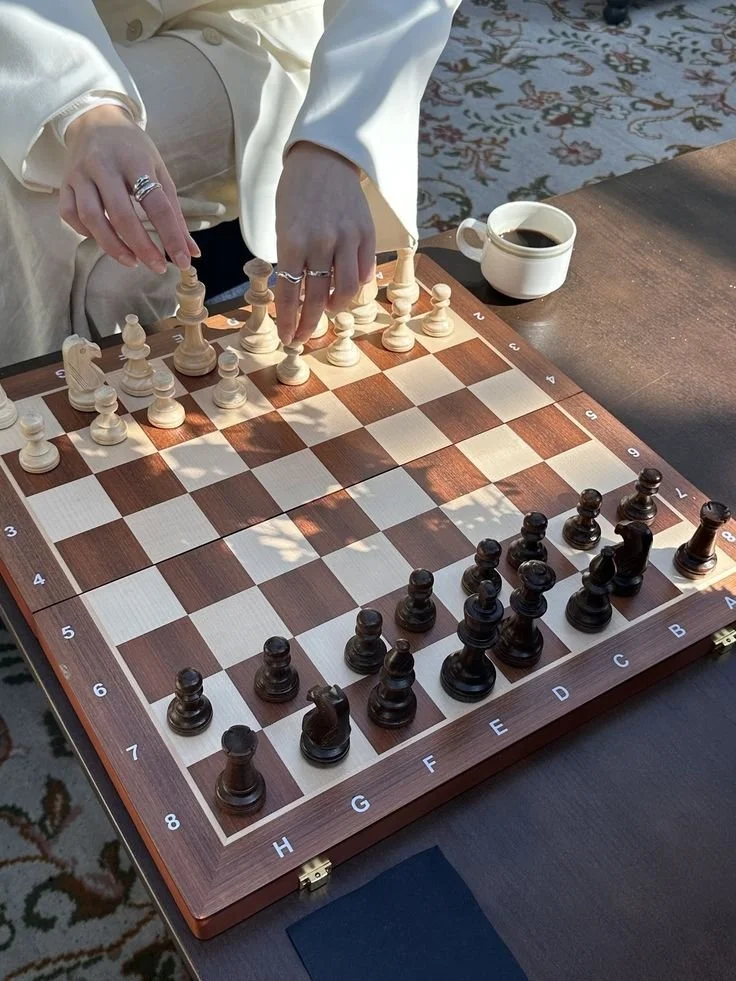
Just as importantly, board games are sustainable. People come back to them because they’re enjoyable, social, and varied. That consistency matters, because the best mental workout is the one you’ll actually do regularly.
In this article, we’ll explore three enduring board game staples—Chess, Scrabble, and Trivial Pursuit—and break down exactly which thinking skills they strengthen, why they have stood the test of time, and how to make them part of a realistic “brain health” routine for kids, adults, and older players.
Why Board Games Make Great Brain Exercises
Before diving into specific titles, it helps to understand what makes board games cognitively valuable. Most strong “brain exercise” activities share a few qualities:
They demand focused attention for longer than a few seconds.
They require active decision-making, not passive consumption.
They include feedback loops (good and bad outcomes) that refine future choices.
They encourage flexible thinking, because no two games unfold exactly the same way.
They often add a social layer, which challenges communication, emotional regulation, and perspective-taking.
Board games combine these elements naturally. Even a simple move can require you to hold several variables in mind—your goal, your opponent’s options, your limited resources, and what might happen next. Over time, repeated play can strengthen the habits behind good thinking: patience, planning, and the ability to learn from mistakes without quitting.
No. 1
Chess: The Strategy Workout That Trains Deep Thinking
Chess is one of the world’s oldest and most respected board games. It has been played for centuries across cultures and social classes, and its longevity is no accident. Chess remains popular because it is a near-perfect strategy environment: structured enough to learn, yet complex enough to reward study and experience for a lifetime.
What makes chess such a powerful brain exercise?
Every move in chess asks you to do some combination of the following:
Analyze the current position (What is happening on the board right now?)
Plan (What am I trying to achieve over the next few moves?)
Predict (What is my opponent likely to do, and how should I respond?)
Adapt (What changes when the position surprises me?)
Winning is rarely about one clever move. It’s usually about managing a chain of decisions—choosing a direction, anticipating threats, and adjusting your plan when new information appears. That type of “thinking in sequences” is a key cognitive skill that transfers well to academics, work tasks, and everyday problem-solving.
Cognitive skills chess strengthens
Chess is particularly strong at developing:
Executive function (planning, self-control, flexible thinking)
Working memory (keeping multiple possibilities in mind)
Pattern recognition (seeing familiar tactics and structures quickly)
Attention and patience (staying mentally present over time)
Risk assessment (weighing trade-offs and consequences)
Many players also report improvements in emotional skills that support cognition—like tolerating frustration, staying calm under pressure, and learning to recover after a mistake.
What the research suggests
Studies on experienced chess players often find differences in how the brain activates and connects during chess-related tasks, reflecting the game’s demand for pattern processing, calculation, and memory. While chess is not a guaranteed “dementia shield,” regular mentally challenging activities are often associated with building cognitive reserve—a concept linked to resilience in brain aging. In plain terms: the more you practice demanding thinking over the years, the more mental “buffer” you may develop.
How to make chess more accessible
Chess can look intimidating, but you don’t have to treat it like a grandmaster-in-training.
Practical ways to start:
Play short games (10–15 minutes) to build consistency.
Use puzzles (mate-in-one, mate-in-two) to train pattern recognition quickly.
Review one lesson at a time (basic openings, tactics, endgames) instead of trying to learn everything.
Mix formats: physical board for social play, digital platforms for convenience.
Age note: many children can start learning chess around ages 6–7, sometimes earlier with simplified teaching. If a full chess game feels too long at first, checkers can offer a more straightforward strategic challenge with a shorter learning curve.
No. 2
Scrabble: A Vocabulary and Memory Gym That Also Trains Strategy
If chess is a strategy workout, Scrabble is a language-and-planning workout—with a surprisingly tactical edge. On the surface, Scrabble looks like “just words,” but it actually draws on several cognitive systems at once: memory retrieval, spelling, spatial planning, and decision-making under constraints.
Why Scrabble challenges the brain
Scrabble asks you to do something cognitively demanding: build value (points) from limited resources (letters) under a changing environment (the board). That combination forces active thinking in multiple directions:
You search your memory for possible words.
You mentally rearrange letters (anagram solving).
You evaluate board positions and scoring opportunities.
You decide whether to play defensively (block openings) or aggressively (maximize points).
Cognitive skills Scrabble strengthens
Scrabble is excellent for:
Verbal fluency (retrieving words efficiently)
Spelling and orthographic memory (remembering correct letter patterns)
Working memory (holding possible word options while scanning the board)
Cognitive flexibility (switching strategies when the board changes)
Spatial reasoning (visualizing placement and multipliers)
Basic math (rapid scoring and probability-style thinking about tiles)
The linguistic benefits are the headline
The biggest advantage of Scrabble is how it forces you to interact with language actively. You don’t just recognize words—you must produce them, spell them, and fit them into a context.
Scrabble pushes you to:
explore words you “know but don’t use”
learn and remember new vocabulary through exposure
understand how prefixes and suffixes change meaning and add scoring options
notice letter patterns, which can improve spelling confidence over time
It’s a particularly strong option for adults who want to keep verbal skills sharp, and for students who benefit from language learning that doesn’t feel like homework.
Ways to play Scrabble without making it feel like a grind
Scrabble comes in many formats, which makes it easier to match the game to your household:
Traditional board game (classic pace and social feel)
Junior versions for kids (simplified vocabulary and rules)
Different-language editions (great for bilingual families)
Card-based versions (faster and more portable)
Mobile and digital versions (easy practice in small time windows)
If you want to improve anagram skills, tools like a WordUnscrambler can be used for practice, but many families prefer “learning mode” rules: look up unfamiliar words after the turn, or keep a shared word journal. That keeps the game educational without turning it into constant disputes.
No. 3
Trivial Pursuit: Retrieval Practice for Your Long-Term Memory
Trivial Pursuit is essentially a pub quiz in a box—and it’s one of the most direct board-game tests of recall. Where chess emphasizes planning and Scrabble emphasizes language construction, Trivial Pursuit focuses heavily on long-term memory retrieval: pulling names, dates, places, events, and concepts from storage under mild pressure.
What makes Trivial Pursuit such good brain exercise?
The game’s categories nudge your brain in different directions, typically including:
Science & nature
Geography
History
Arts & literature
Entertainment
Sports & leisure
That variety matters. It’s not just “knowing stuff”—it’s practicing the ability to access what you know. Often you’ll feel a fact hovering just out of reach, and then it snaps into place. That “tip-of-the-tongue” experience is a form of mental strain that can strengthen recall pathways over time.
Cognitive skills Trivial Pursuit strengthens
Trivial Pursuit is particularly good for:
Long-term memory (storing and retrieving information)
Recall under pressure (responding when you’re on the spot)
Attention and listening (tracking the question carefully)
Learning through feedback (remembering what you missed)
Social cognition (turn-taking, team communication, handling competition)
It can also reveal knowledge gaps in a fun way—prompting curiosity and follow-up learning that extends beyond the game itself.
Why the social element matters
Trivial Pursuit tends to be highly social, and that’s not just a bonus feature. Social play adds cognitive demands such as:
negotiating answers in teams,
explaining reasoning,
managing disagreement politely,
and regulating emotion when you get something wrong.
Those skills overlap with real-world mental performance more than many solo brain games do.
Options and variants
Trivial Pursuit is commonly played as a physical board game, but there are also digital versions for quicker rounds. Many people enjoy niche editions focused on specific themes (movies, music, certain decades, or fandoms). Choosing a theme your group loves can increase play frequency—and frequency is what drives the cognitive benefit.
How to Get the Most “Brain Benefit” From Board Games
If your goal is to use board games as brain exercises, a few small choices can make the mental training effect stronger:
Play consistently: even 1–2 short sessions a week can help.
Rotate games: different games stress different skills (planning vs. language vs. recall).
Increase challenge gradually: stronger opponents, timed rounds, or new variants keep your brain adapting.
Reflect briefly afterward: “What worked? What didn’t?” This strengthens learning.
Keep it enjoyable: stress that’s too high discourages repeat play.
You don’t need perfection or intense study to get value. The combination of focus, decision-making, and feedback is already doing meaningful work.
Takeaways: A Smarter Way to Train Your Brain (That You’ll Actually Enjoy)
Board games are a practical, enjoyable way to exercise the brain because they make cognitive effort feel like play. Chess trains deep strategy, planning, and pattern recognition. Scrabble strengthens vocabulary, memory, and flexible language thinking while adding a tactical layer. Trivial Pursuit sharpens long-term recall and broad knowledge across categories—especially when played socially.
If you’re looking for a brain exercise you can stick with, revisiting these classics is a strong place to start. Choose one game that fits your personality (strategy, words, or trivia), bring it to the table regularly, and let the challenge build naturally over time. The mental benefits come not from a single perfect session, but from repeated moments of focused, engaged thinking—exactly what good board games deliver.
Looking for resources?
At Hello Lovely Living, we aim to empower you to earn and save money and time while benefiting from our expansive network of home, life, wellness, travel, work-from-home, career, and business resources and opportunities. Discover a wealth of tools to support your journey.