How To Plan Your Move With Confidence Using A Moving Cost Calculator
Relocating to a new home or office is often a mix of excitement and anxiety. While the idea of a fresh start can be invigorating, the logistics—organizing belongings, hiring movers, and managing expenses—can quickly become overwhelming without proper planning. One of the most effective tools to simplify this process is a moving cost calculator.

In this article, we’ll walk you through a comprehensive, step-by-step approach to using a moving cost calculator effectively. Whether you're moving your family, transitioning to a new apartment, or relocating your business, this guide will help you estimate costs accurately, avoid hidden fees, and plan your move with confidence.
What Is a Moving Cost Calculator?
A moving cost calculator is an online tool designed to provide a preliminary estimate of your relocation expenses. Unlike vague guesses, this tool factors in specific variables such as:
Distance of the move
Size of your home or office
Additional services like packing, storage, or handling specialty items
By inputting detailed and accurate information, you can get a realistic idea of what your move will cost—helping you avoid surprises and stay within budget.
Why Is Using a Calculator Important?
Moving without a cost estimate can lead to unexpected expenses, last-minute stress, and budget overruns. A calculator helps you:
Understand the potential cost of your move
Compare moving company prices
Create a realistic budget
Avoid hidden fees on moving day
Using a moving cost calculator early in your planning process gives you a clear financial framework and allows you to make informed decisions every step of the way.
Step 1: Take an Inventory of Your Belongings
Before using a moving cost calculator, it’s essential to create a detailed inventory of everything you plan to move. The more accurate your list, the more precise your estimate will be.
Tips for Effective Inventory Management:
Go room by room and list all items
Highlight large or specialty items like pianos, TVs, or artwork
Identify fragile or high-value items that may require special handling
Decide what to donate, sell, or discard to reduce volume and cost
A thorough inventory not only improves the accuracy of your estimate but also helps you organize your packing and declutter your space.

Artifact Uprising
Turn your memories into timeless treasures with Artifact Uprising. Create custom personalized photo books and albums that tell your story, your way.
Step 2: Enter Accurate Information into the Calculator
Once your inventory is ready, it’s time to enter your details into the moving cost calculator. Accuracy is crucial here—small errors can lead to big discrepancies in your estimate.
Key Information to Include:
Origin and destination (full addresses or city names)
Size of the move (number of rooms or estimated volume)
Services required (packing, unpacking, storage, specialty item handling)
Timing of the move (peak seasons or last-minute bookings may cost more)
By entering precise data, you’ll receive a reliable estimate that reflects real-world moving company prices and helps you plan your budget accordingly.
Step 3: Understand Estimated Costs
After submitting your information, the calculator will generate an estimated cost range. This gives you a ballpark figure to work with and helps you understand how different variables affect your total cost.
Sample Cost Estimates:
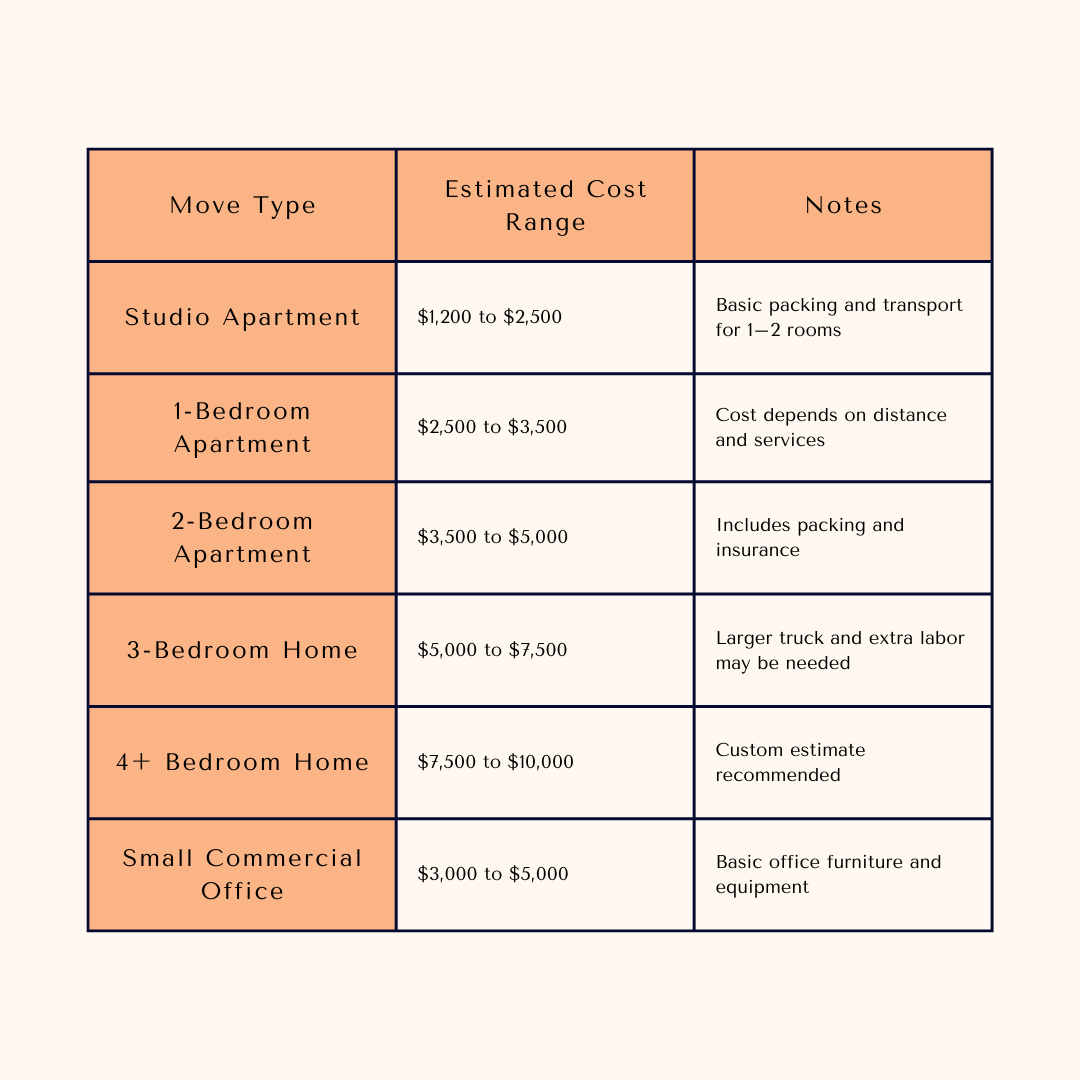
How to Use This Table:
Compare quotes from multiple moving companies
Adjust for optional services like storage or insurance
Use the figures as a budgeting baseline
Step 4: Plan for Additional Costs
Even with a calculator, some expenses may not be immediately obvious. Planning for these extras ensures your budget remains accurate and your move goes smoothly.
Common Additional Expenses:
Elevator or parking permits in apartment buildings
Long carry fees for navigating stairs or long hallways
Insurance for high-value or fragile items
Temporary storage if your new location isn’t move-in ready
Being proactive about these potential costs helps you avoid last-minute surprises and keeps your move on track.
Step 5: Use Your Estimate to Make Informed Decisions
Armed with a detailed cost estimate, you’re now in a strong position to make smart moving decisions.
Benefits of a Detailed Estimate:
Know what your move is likely to cost
Choose moving companies that align with your budget
Identify which services are worth the investment
Schedule your move efficiently and confidently
A moving cost calculator gives you a data-driven foundation for planning, reducing uncertainty, and empowering you to take control of your relocation.
Step 6: Tips for Maximum Accuracy
To ensure your estimate remains as accurate as possible, follow these best practices:
Accuracy Tips:
Double-check furniture dimensions and appliance sizes
Update your inventory if you reduce or add items
Leave a buffer in your budget for unexpected costs
Confirm details with moving companies to align estimates with actual quotes
These extra steps will help you avoid underestimating costs and ensure your move stays within budget.
Takeaways
Moving doesn’t have to be overwhelming or unpredictable. With the help of a moving cost calculator, you can estimate expenses, plan your budget, and make informed decisions that lead to a smooth and stress-free relocation.
In this article, we’ve outlined a step-by-step approach to using a moving cost calculator effectively—from taking inventory and entering accurate data to understanding cost estimates and planning for extras. These strategies are designed to help you stay organized, save money, and move with confidence.
Start your move the smart way: take inventory, use a calculator, and create a budget that works for you. A well-prepared move is not only easier—it’s more affordable and far less stressful.
Looking for Home resources?
Looking to enhance your living space and create a sanctuary that supports your well-being? Explore our home partners who offer a wide range of resources to elevate your home environment.