INSTYTUTUM Triple Action Peel Review And Guide
Peak-performance exfoliation is one of the quickest ways to improve how skin looks and feels, but it is also one of the easiest categories to overdo. Many at-home peels lean too mild to make a meaningful difference, or too aggressive to keep your barrier comfortable—especially if you are already using vitamin C, retinoids, or other acids.
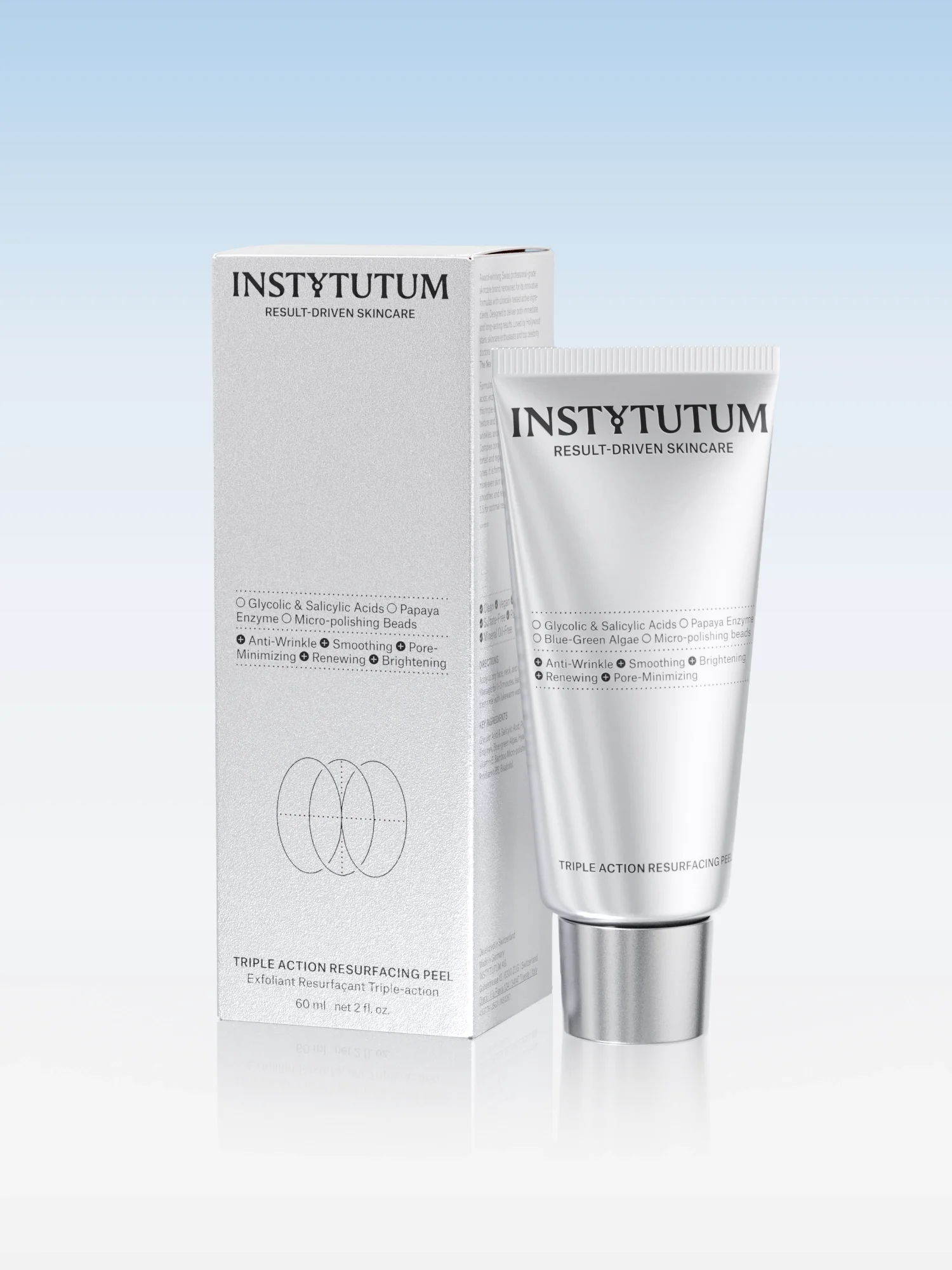
In this article, we will explore what the instytutum triple action resurfacing peel is designed to do, how its triple-exfoliation concept works, who it suits best, how to use it safely, and what kind of results you can realistically expect. You will also find guidance on pairing it with other active ingredients so you can get the “freshly resurfaced” look without inviting irritation.
No. 1
What the Product Is and What It Promises
INSTYTUTUM Triple Action Resurfacing Peel Next-Gen is positioned as a triple-action facial peel that combines mechanical, chemical, and enzymatic exfoliation for “deep skin renewal without irritation.” The brand highlights three headline benefits—minimizing the look of pores, refining texture, and reducing pigmentation—while also describing visible transformation after the first use.
That “first-use” claim is plausible for the surface effects of exfoliation. When dead, compacted cells are removed efficiently, skin often looks brighter and feels smoother immediately, and makeup can sit more evenly. Longer-term improvements—such as gradual pigment softening and refined-looking pores—typically require consistent use and, critically, daily sunscreen.
The product also emphasizes INSIDE & OUT Technology, described as an active-synergy approach working on the skin’s surface, tissue level, and cellular renewal processes. While marketing language varies across brands, the practical meaning for the user is that the peel aims to deliver both instant cosmetic refinement and ongoing tone-and-texture improvement when used regularly.
No. 2
How Triple Exfoliation Works (and Why It Matters)
To understand whether this peel is a match for your skin, it helps to know what each exfoliation “lane” contributes. Triple exfoliation is not just a stronger peel; it is a layered strategy intended to deliver a more even result across different types of buildup.
Mechanical exfoliation focuses on immediate polishing. In this formula, that comes from 10% bamboo micro-polishing beads. This step is often responsible for the quick “silky” feeling after rinsing, because it physically buffs the surface layer where roughness is most noticeable.
Chemical exfoliation, by contrast, works by loosening the bonds that hold dead skin cells together and encouraging orderly shedding. The peel features a 10% glycolic and salicylic acid complex (AHA & BHA). Glycolic acid (AHA) is well known for improving dullness and uneven tone at the surface, while salicylic acid (BHA) is oil-soluble and is especially relevant for pores, congestion, and comedones.
Enzymatic exfoliation is generally the gentlest pathway and is often chosen by people who want refinement with less sting. Here, 1% papaya enzymes support the overall resurfacing effect by breaking down protein residues on the skin’s surface while helping preserve comfort.
The advantage of combining all three is not only intensity; it is coverage. Different types of buildup respond to different exfoliation methods, and multi-modal peeling can help the skin look more uniformly smooth rather than “patchy” in areas that are more congested or thicker.
No. 3
Ingredient Highlights: More Than Just Acids
A resurfacing product is only as good as its ability to deliver results while keeping the barrier functional. This formula includes ingredients intended to support firmness and recovery, which is important because irritation is one of the main reasons people abandon exfoliation routines.
The peel includes 3% blue-green algae, described as a natural retinoid-like ingredient that stimulates collagen production and supports firmness, elasticity, and even tone without irritation. “Retinoid-like” should be read as supportive rather than identical to retinol or prescription retinoids, but it signals an anti-aging intent beyond basic exfoliation.
For barrier support and comfort, it also features arginine and vitamin E (for repair support and antioxidant protection), plus an SOS-style recovery complex that includes pro-vitamin B5 (panthenol), hyaluronic acid, and bisabolol. These ingredients are commonly used to reduce the tight, stripped feeling that can follow stronger exfoliation and to calm visible redness.
One practical note: the ingredient list includes fragrance (parfum). If your skin is fragrance-reactive or you are managing rosacea-like sensitivity, this may be a relevant consideration, especially because exfoliation can temporarily increase how strongly skin perceives other ingredients.
No. 4
Who It Is Best For (and Who Should Proceed Carefully)
Based on the brand’s positioning and the ingredient profile, this peel is most aligned with people who want noticeable refinement without needing a professional appointment. It is presented as ideal for concerns such as enlarged pores, comedones, uneven texture, dullness, pigmentation, and post-acne marks, as well as early or visible signs of aging.
If you have normal, combination, or oily skin and you tolerate acids reasonably well, the AHA/BHA structure plus the rinse-off format can be an effective way to reset texture and clarity without committing to a daily leave-on exfoliant. If you are acne-prone in the T-zone but also want brightness and smoother makeup wear, the combination of glycolic and salicylic acids is directionally appropriate.
Where you should be more cautious is when your routine already includes multiple strong actives, or when your barrier is not in a stable place. Over-exfoliation is not always obvious at first; it can show up as sudden sensitivity to products you previously tolerated, persistent tightness, stinging when applying moisturizer, or increased redness.
The product page also notes that if you are pregnant or breastfeeding, you should consult your doctor before use. That is a sensible, conservative guideline, particularly because salicylic acid is often discussed in pregnancy skincare decisions.
No. 5
How to Use It for Results Without Irritation
INSTYTUTUM provides two usage pathways: a standard method and a sensitive-skin method. The existence of a sensitive option is useful because it allows users to benefit from chemical and enzymatic exfoliation while dialing back the mechanical component if needed.
For standard use, the peel is applied evenly to dry skin on the face, neck, and decollete (avoiding the eye area), gently massaged in circular motions for 1–3 minutes, left on for an additional 5–8 minutes, and then rinsed thoroughly with lukewarm water. The brand recommends using it twice per week and following with serum and/or cream, plus sunscreen in the morning.
For sensitive skin, the peel can be used as a mask without massaging and left on for 3–5 minutes before rinsing. This modification can make a significant difference, because physical friction is often what pushes an otherwise tolerable peel into irritation territory.
If you are unsure which method to choose, starting with the sensitive-skin approach is typically the more professional, risk-managed decision. You can gradually increase contact time or add a brief, gentle massage once you have confirmed your skin’s response.
No. 6
What to Expect: First Use vs. Ongoing Improvement
A multi-action peel can deliver immediate, visible refinements, but it is helpful to separate “right now” results from cumulative change.
After the first use, many people experience a smoother feel, increased radiance, and a more even-looking surface. The mechanical polishing beads contribute strongly to that immediate softness, while the acids and enzymes help remove dulling buildup that can make skin look uneven or tired. Mild, temporary redness is possible, particularly if you massage aggressively, leave it on longer than your skin can tolerate, or use it when your barrier is already compromised.
Over several weeks of consistent use, the more meaningful outcomes tend to appear. These include more stable smoothness, fewer visible clogged pores, gradual brightening, and improved appearance of post-acne marks as turnover becomes more regulated. Pigmentation concerns, in particular, are rarely “one-peel fixes”; progress is typically incremental and hinges on daily SPF use.
No. 7
How It Compares to Other At-Home Peels
The at-home peel market generally splits into a few categories: scrub-style mechanical exfoliants, acid-only rinse-off peels, leave-on acid toners and serums, and enzyme masks. This product is unusual because it intentionally combines three exfoliation mechanisms in a single step and then supports that activity with a comfort-focused ingredient base.
If you like a single “reset” product that can replace multiple exfoliation steps, this peel’s design is appealing. It is also structured enough that you can tailor intensity by altering the massage step and contact time. On the other hand, if you strongly dislike physical exfoliation in principle, you may prefer a purely chemical or enzymatic option.
The rinse-off nature can be a positive for people who want control and predictability. You are not sleeping in the acids, and you can adjust contact time to match your skin’s tolerance, which often makes it easier to use consistently.
No. 8
Routine Compatibility, Safety Notes, and Best Practices
The product page includes unusually detailed safety guidance, including notes about irritation potential with acids and retinoids, gradual introduction of actives, and the reality of purging when starting certain ingredients. The most important user-level implication is that you should treat this peel as a primary exfoliation event on the days you use it, not as one more step in an already aggressive routine.
In practice, that means being conservative with what you pair it with in the same evening. The brand specifically notes that sensitive skin should not combine it with acids or retinol in the same routine. Even if your skin is not sensitive, that is still a smart guideline, because stacking resurfacing actions is the fastest way to unintentionally trigger inflammation and barrier disruption.
It also means that sunscreen is not optional. Any exfoliation that improves brightness by removing surface buildup also increases sun sensitivity, and pigment concerns will not improve sustainably unless SPF is consistent.
No. 9
Value, Size, and Who It Makes Sense For
The peel is sold as a 60 ml product and is listed at $99, placing it firmly in the premium at-home treatment category. Whether it is “worth it” depends less on the price tag and more on whether you will use it consistently and whether it can replace other exfoliation products in your routine.
If you already own multiple exfoliating products that you rotate unpredictably, a structured, twice-weekly peel can actually simplify your regimen and reduce the likelihood of overdoing actives. If you use it as intended and keep the rest of your routine supportive, it may function like a reliable maintenance treatment that helps your skin look more polished week after week.
Conversely, if your skin is extremely reactive, if fragrance is a known trigger for you, or if you are already using prescription-level actives and achieving steady results, you may not need a triple-action peel. In those cases, a simpler approach may be safer and just as effective.
No. 10
Editorial Verdict: A Results-Forward Peel With Built-In Flexibility
As a category, multi-action peels are only successful when they manage the tradeoff between performance and tolerance. INSTYTUTUM Triple Action Resurfacing Peel Next-Gen is built around a clear concept—triple exfoliation supported by barrier-friendly and soothing ingredients—and it offers enough flexibility in use that many people can adjust intensity without abandoning the product.
The best candidates are those seeking visible texture refinement, clearer-looking pores, and gradual tone improvement, especially if they prefer a single, scheduled exfoliation step rather than daily acids. The most important success factor is restraint: use it on dry skin, massage lightly if you choose the standard method, do not stack it with other strong actives that night, and wear high-SPF sunscreen consistently.
How To Use:
Start with the sensitive-skin method if you are new to acids or prone to irritation.
Keep pressure light during massage and treat contact time as adjustable, not a challenge.
Avoid combining it with retinoids or other acids in the same evening routine.
Follow with hydration and barrier support, then apply SPF the next morning without exception.
Takeaways
INSTYTUTUM Triple Action Resurfacing Peel Next-Gen combines mechanical polishing, an AHA/BHA complex, and papaya enzymes to target texture, dullness, and the look of congestion in a single rinse-off step. The added comfort ingredients, including panthenol, hyaluronic acid, and bisabolol, help position it as performance-focused but not needlessly harsh.
Used correctly, the most noticeable short-term benefits are smoother and brighter-looking skin, while longer-term benefits tend to include more even tone and refined-looking pores. The key is to treat it as your primary exfoliation step on the nights you use it and to keep the rest of that routine calm and supportive.
If you want a premium, structured at-home peel that you can tailor for sensitivity, it is a strong option to consider. If you are highly fragrance-sensitive or already using intensive actives successfully, a simpler exfoliation approach may be a better fit.
Looking for Wellness resources?
Are you looking to enhance your wellness routine? Explore our wellness partners who offer a wide range of resources to support your journey toward holistic living and well-being.