5 Design Choices That Help Countertops And Cabinets Align Beautifully
Nobody walks into a kitchen and notices just the countertops or just the cabinets in isolation. What people respond to, often without being able to explain why, is how everything reads together. Two beautiful materials that clash with each other can make a kitchen feel unsettled, while a thoughtful pairing of even modest finishes can make the whole space feel intentional and calm.
The tension between individual choices and overall harmony is what makes the countertop and cabinet relationship one of the most important decisions in any kitchen design. And you need to get it right.
In this article, we share five design choices that help countertops and cabinets work together the way they should.
No. 1
Contrast Works Better Than Matching
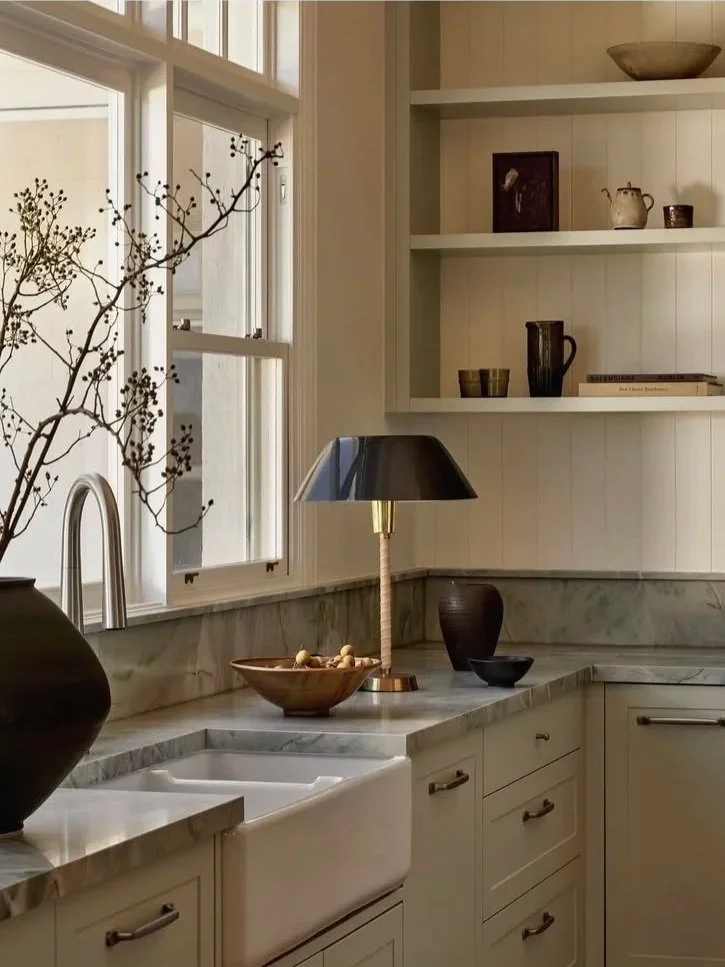
The instinct to match countertops and cabinets is understandable. It feels safe. But kitchens where everything is the same tone tend to look flat rather than cohesive. A small amount of contrast, light cabinets with a darker countertop, or dark cabinets with a lighter stone surface, creates visual definition that makes each element stand out in a way that actually benefits both.
The key is controlling how much contrast you introduce. A very light cabinet paired with a very dark countertop creates drama that works beautifully in some spaces and feels overwhelming in others, depending on the size of the kitchen and how much natural light it gets. A moderate contrast, where the two elements are clearly different but neither dominates aggressively, tends to age better and suit more kitchen styles.
No. 2
Undertones Are the Detail That Makes or Breaks the Pairing
Two materials can look perfectly matched in a showroom and clash noticeably under kitchen lighting once they're installed. The reason is almost always undertones. White cabinets, for example, aren't all the same white. Some have a warm, creamy undertone. Others read cool and slightly gray. Pairing a warm white cabinet with a countertop that has cool gray veining creates a subtle tension that most people sense even if they don't know what's causing it.
Homeowners who hire Kitchen Renovation services for Countertops & Cabinets often discover that undertone matching is a step most commonly skipped in DIY planning but one that experienced designers focus on. Studios like Envyland Kitchen typically evaluate materials together under the actual lighting conditions of the space rather than making decisions from samples viewed in isolation. That single step prevents a category of mistake that's expensive to correct after installation.
No. 3
Finish Texture Adds Depth Without Adding Color
One of the quieter ways to create a kitchen that feels layered and interesting is to vary the finish texture between the countertop and the cabinets rather than relying entirely on color contrast. Matte cabinet doors paired with a honed stone countertop read differently than the same colors in a high-gloss finish, even if the actual tones are identical. The texture variation creates visual interest that doesn't depend on dramatic color choices.
This approach works particularly well in kitchens where the homeowner wants a calm, neutral palette without the space feeling bland. A soft matte cabinet in a warm white or greige paired with a leathered quartzite countertop, for example, produces a combination that reads as refined and intentional without relying on contrast to carry the design.
No. 4
The Scale of the Pattern Matters as Much as the Color
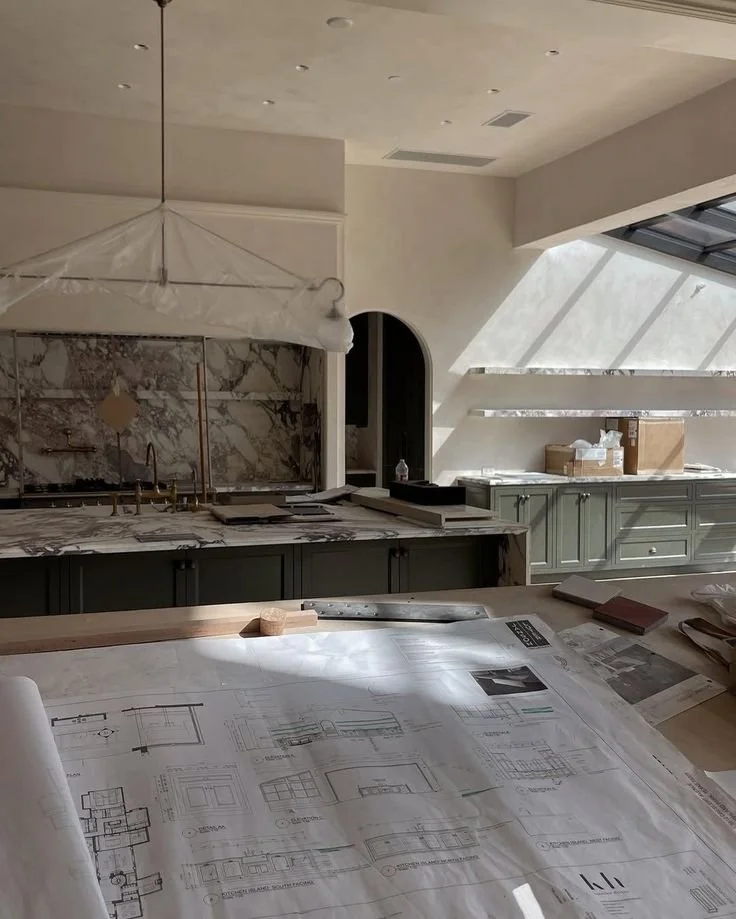
Countertop materials with heavy veining or bold movement need cabinets that are visually quiet enough to let that pattern breathe. When both the countertop and the cabinet door style are competing for attention, the kitchen starts to feel busy rather than layered.
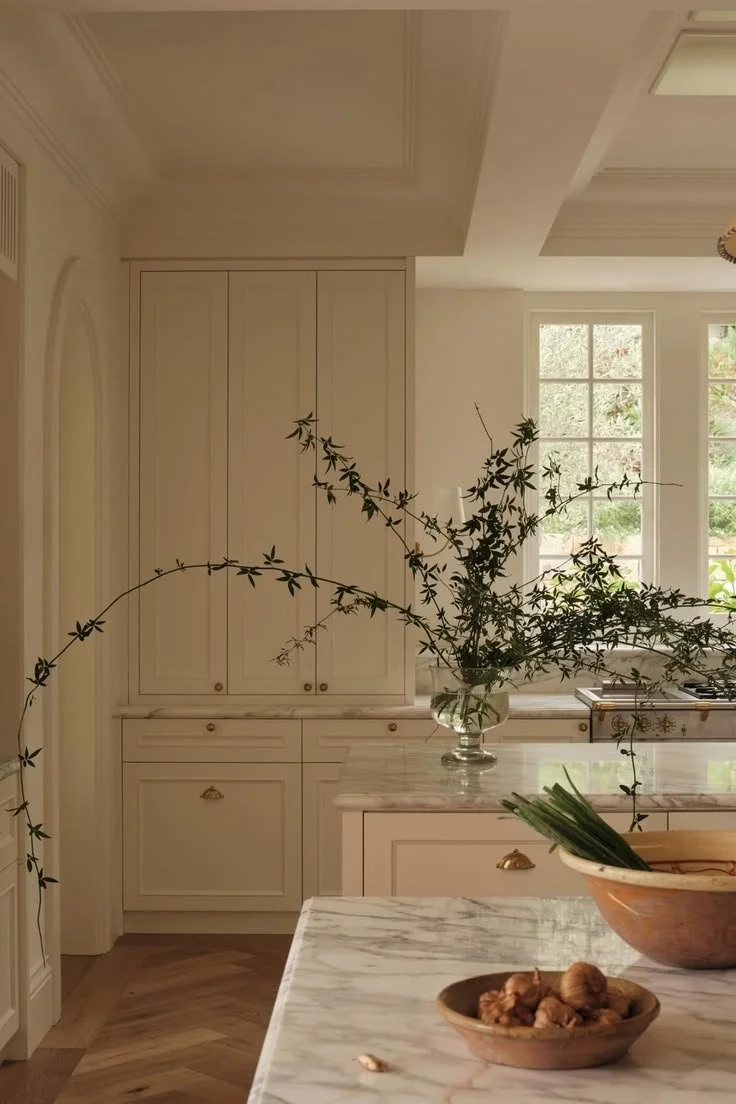
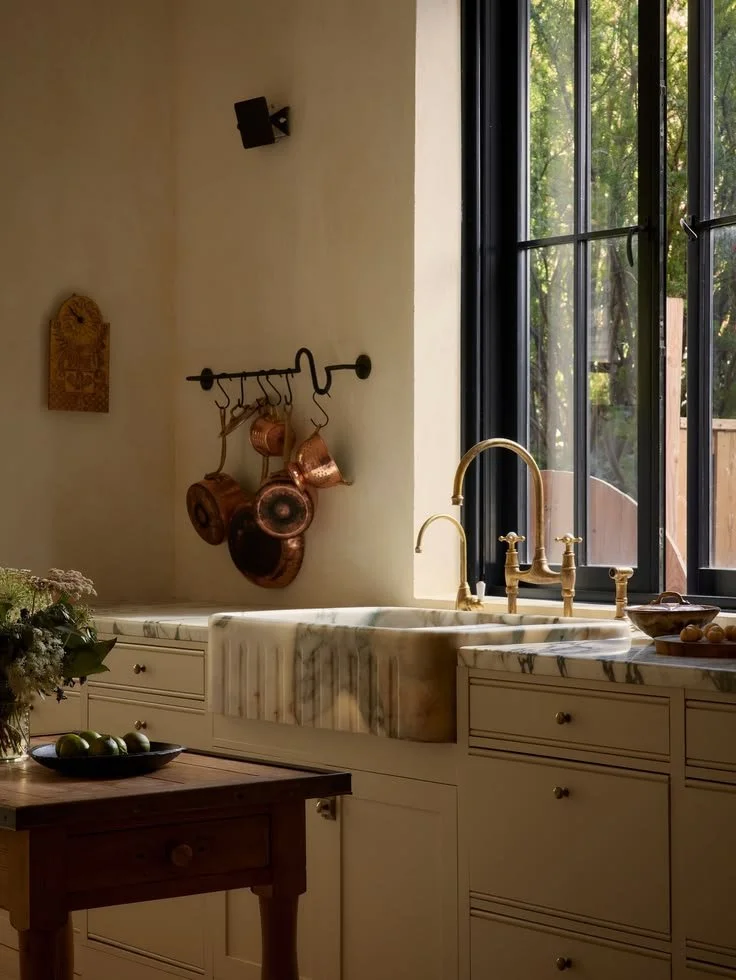
A heavily veined marble or quartzite countertop almost always looks better against a simple, flat-front cabinet than against an ornate raised-panel door. Visual complexity in a space directly affects how comfortable it feels to be in, and a countertop with a lot of movement is already doing the heavy lifting on its own.
No. 5
Hardware Ties the Two Elements Together
Cabinet hardware is the connection point between the countertop and the cabinets, and it's often treated as an afterthought when it's actually one of the most important decisions in the pairing. The finish of the hardware should relate to something in the countertop. A countertop with warm gold veining pairs naturally with brass or bronze hardware.
A cool gray stone reads better with chrome or brushed nickel. Hardware selection is one of the details homeowners most frequently wish they had given more thought to after a kitchen project is done, and getting it right doesn't require a big budget. It just requires choosing with the full picture in mind.
Takeaways
Countertops and cabinets don't have to match to work well together. They have to relate, through contrast, undertone, texture, scale, and the small connective details like hardware that pull both elements into a single coherent design. Thinking through each of those relationships before committing to materials is what separates a kitchen that looks designed from one that just looks decorated.
Looking for Home resources?
Looking to enhance your living space and create a sanctuary that supports your well-being? Explore our home partners who offer a wide range of resources to elevate your home environment.