How Pilates Boosts Core Strength And Flexibility
You bend to pick something up off the floor, and your hamstrings immediately file a loud complaint. You carry the heavy groceries in from the car, and your lower back lets you know about it for the rest of the evening. You sit at a computer desk for eight hours and stand up feeling like you have been folded in half.

None of this physical discomfort is particularly dramatic or the result of a sudden injury. It is just the slow, creeping stiffening that happens when a human body spends significantly more time sitting than moving. This common, everyday stiffness is the exact reason so many people eventually end up on a Pilates mat.
Often, these newcomers arrive feeling a little skeptical about the entire process. They find themselves wondering whether a slow, highly controlled fitness class can really change anything about their daily aches and pains. In this article, we will explore how regular pilates classes can dramatically improve your flexibility and core strength over time.
No. 1
What the Research Shows
The physical improvements associated with this exercise method are not just anecdotal claims made by enthusiastic instructors. A randomized clinical trial published in BMC Sports Science, Medicine and Rehabilitation in 2024 provided concrete evidence regarding these benefits. Researchers put a group of sedentary young women through eight weeks of Pilates, requiring them to complete three sessions a week.
The study found that the traditional Pilates program produced a significant improvement in sit-and-reach flexibility among the participants. This improvement demonstrated a remarkably large effect size when compared with a modified version of the routine that removed the stretching elements. Such scientific validation proves that the specific combination of movements in traditional classes is highly effective.
Two months of dedicated practice, completed three times a week, leads to measurable and lasting physical change. That is the realistic timescale you need to keep in mind when beginning your new fitness journey. Consistency over this eight-week period is the ultimate key to unlocking the full benefits of the practice.
No. 2
How Pilates Builds Flexibility
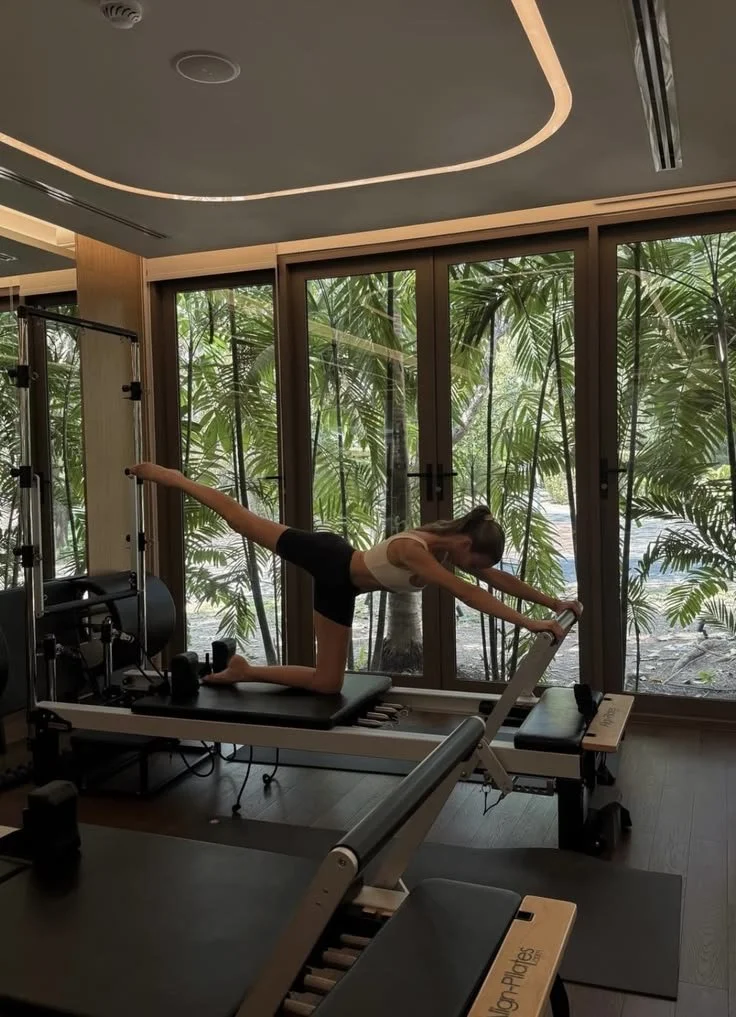
Pilates does not stretch your muscles in the same way a traditional yoga class or a post-run cool-down does. Instead of holding a static position for a minute, it moves your joints through their full range of motion under strict control. Often, this happens with the muscle on the opposite side of the joint working actively at the exact same time.
The Benefits of Dynamic Movement
Lengthens muscles while they are active, which the human body tolerates much better than passive stretching and retains for a longer period.
Mobilizes the spine in every possible direction, including flexing, extending, side-bending, and rotating, which most daily life never asks of it.
Opens the hips and hamstrings, which are the two specific anatomical areas that shorten the most from prolonged sitting.
Improves the functional range of the shoulders and upper back, which tend to stoop forward over computer screens and smartphones.
Teaches the central nervous system that a greater range of motion is perfectly safe, which is a large part of why people feel looser after a few weeks.
The ultimate result of this active stretching is functional flexibility you can actually use in the movements you do every single day. It provides practical mobility for real life, rather than just teaching you a fancy party trick to perform on the exercise mat.
No. 3
How Pilates Builds Core Strength
The word core in Pilates means much more than just the superficial abdominal muscles that make up a six-pack. It refers to the deep, complex muscular system that stabilizes the entire spine and pelvis during movement. This includes the transverse abdominis, the pelvic floor, the diaphragm, the deep back muscles, and the obliques, with the glutes and hip muscles acting as essential partners.
Methods for Strengthening the Core
Starting with absolute control, teaching you to find and consciously engage the deep muscles before adding any external load.
Working in every physical plane, so the core learns to resist twisting and side-bending, rather than only focusing on forward flexion.
Loading the muscles progressively, moving from basic mat exercises to longer levers, controlled instability, and specialized resistance equipment.
Linking your natural breath to your physical movement, which actively engages the diaphragm and pelvic floor as part of the stabilization system.
Repeating highly precise movements, which builds necessary endurance in postural muscles that need to work all day long, not just for ten repetitions.
The everyday payoff of this deep strengthening shows up as a lower back that does not ache after carrying the shopping bags inside. You will also notice significantly better balance, a much steadier posture, and more physical power in everything from running a marathon to lifting a heavy toddler.
No. 4
What Regular Practice Means
When it comes to seeing actual results, consistency matters much more than the sheer intensity of your workouts. Pushing yourself to the point of exhaustion once a week will not yield the same benefits as moderate, frequent practice. For most individuals looking to improve their health, a steady routine is the best approach.
Guidelines for Consistent Practice
Completing two to three sessions a week generally produces noticeable physical changes within six to eight weeks of starting.
Shorter, more frequent exercise sessions easily beat one long, exhausting session completed on a Sunday afternoon.
A diverse mix of class types, including fundamentals, tempo or flow, and core-focused routines, keeps your progress moving forward.
Beginner modifications are always the right choice until the foundational basics are completely solid in your muscle memory.
Rushing prematurely to advanced work often undoes the benefit of the exercise and can easily lead to unnecessary strain or injury.
By focusing heavily on consistency, building a strong foundation, and progressing at your own unique pace, you can make steady improvements. These gradual enhancements in strength, flexibility, posture, and overall fitness will serve you well for the rest of your life.
No. 5
Finding Classes That Fit Your Life
The biggest obstacle to maintaining a regular practice is usually related to everyday logistics and scheduling conflicts. Studio timetables, travel time, childcare requirements, and high financial costs can make attending in-person classes incredibly difficult. That is exactly why so many people now choose to do at least part of their weekly practice at home.
Overcoming Scheduling Obstacles
Being able to search digital classes by type and level removes most of the common excuses for skipping a workout.
Pressing play on a smartphone, tablet, or television allows you to fit a session into even the busiest daily schedule.
Platforms like Pilates Live offer a free library of physiotherapist-led sessions, including comprehensive month-long calendars for building fundamentals.
These digital resources often include tempo work, core confidence builders, and a dedicated rehabilitation library for managing specific physical conditions.
Whether you choose to train at home, in a traditional studio, or utilize a combination of both, the quality of instruction matters immensely. Look for instruction that cues the deep core clearly, offers helpful modifications, and progresses week to week rather than just repeating the exact same routine.
No. 6
A Realistic Timeline for Results
Understanding the timeline of your physical progression can help keep you motivated during the early stages of your practice. It is completely normal to feel a bit clumsy or unusually sore during the first few sessions. Knowing what to expect week by week will prevent you from getting discouraged and quitting prematurely.
Week by Week Progression
Weeks one to two involve learning the specific breathing techniques and the basic physical positions required for the exercises.
During this initial phase, muscles you did not even know you had will likely feel quite sore and fatigued.
By weeks three to four, the physical movements will start to feel significantly more coordinated and natural to your body.
Around this one-month mark, your lower back will finally start to feel supported by your core rather than strained by daily activities.
During weeks six to eight, you will experience measurable gains in your hamstring and hip flexibility.
Holding a standard plank or a challenging side plank will feel entirely different and much more manageable than it did on day one.
At three months and beyond, you can expect better posture, fewer daily aches, and the confidence to try more advanced work.
Physical progress is often very quiet and easy to miss if you are not paying close attention. Take a photograph of your sit-and-reach stretch on day one and compare it to your range of motion at week eight.
No. 7
Making Your New Routine Stick
Building a lasting exercise routine is much easier when you intentionally make it a seamless part of your daily life. You must choose an approach that realistically fits your current schedule, your personal goals, and your baseline fitness level. Forcing yourself into a routine that clashes with your lifestyle will only lead to eventual burnout.
Tips for Building a Habit
Schedule your weekly sessions in your calendar just like you would schedule important medical appointments or work meetings.
Keep your exercise mat unrolled in a place where you can easily see it to serve as a constant visual reminder.
Follow a structured, progressive program rather than simply choosing a random, disconnected class each time you work out.
Pair your sessions with walking or another physical activity you already enjoy to create a comprehensive fitness habit.
Notice and celebrate the small wins, like finally getting out of a low car seat without letting out an audible groan.
By staying highly consistent, celebrating small physical improvements, and choosing activities you genuinely enjoy, you can make this a sustainable habit. You will be able to enjoy the long-term benefits of a strong, flexible body for decades to come.
No. 8
Who Should Consult a Professional First
While this form of exercise is generally quite gentle, it is not universally appropriate for every single body without some modifications. Anyone with a recent acute injury, a chronic spinal condition, or a diagnosis of osteoporosis needs to exercise caution. Additionally, individuals who are currently pregnant or recently postnatal should speak to a physiotherapist or doctor before starting.
Navigating Special Conditions
Some standard movements, such as loaded spinal flexion, can be dangerous for people with osteoporosis and need to be swapped for safer alternatives.
Deep abdominal work in the later stages of pregnancy must be carefully modified to protect both the mother and the developing baby.
A short, informative conversation with a medical professional beforehand is usually all it takes to know exactly which modifications apply to you.
Choosing specialized classes designed specifically for these unique physical situations ensures you can exercise safely and effectively.
Once you have that professional medical guidance, a well-chosen rehabilitation or prenatal class can be incredibly beneficial. It is often one of the best possible ways to stay strong and mobile through recovery or pregnancy, rather than using your condition as a reason to stop moving entirely.
Takeaways
Regular Pilates practice offers a transformative approach to building functional flexibility and deep core strength. By committing to consistent sessions, you can effectively counteract the physical strain of modern sedentary lifestyles.
The journey requires patience since the most profound physical changes happen gradually over several weeks. However, the resulting improvements in your daily posture and joint mobility are well worth the initial effort.
Always remember to consult a medical professional if you have preexisting conditions before starting any new exercise regimen. Ultimately, finding a sustainable routine will help you maintain these wonderful health benefits for years to come.
Looking for wellness resources?
Are you looking to enhance your wellness routine? Explore our wellness partners who offer a wide range of resources to support your journey toward holistic living and well-being.