How To Brew Loose-Leaf Tea Without A Full Tea Set
Loose-leaf tea can look more complicated than it really is. Traditional tea preparation may include a teapot, serving pitcher, strainer, tea tray, and several small cups. This setup is wonderful for sharing tea, but it is not always practical when you are making one cup at home, at work, or between meetings.
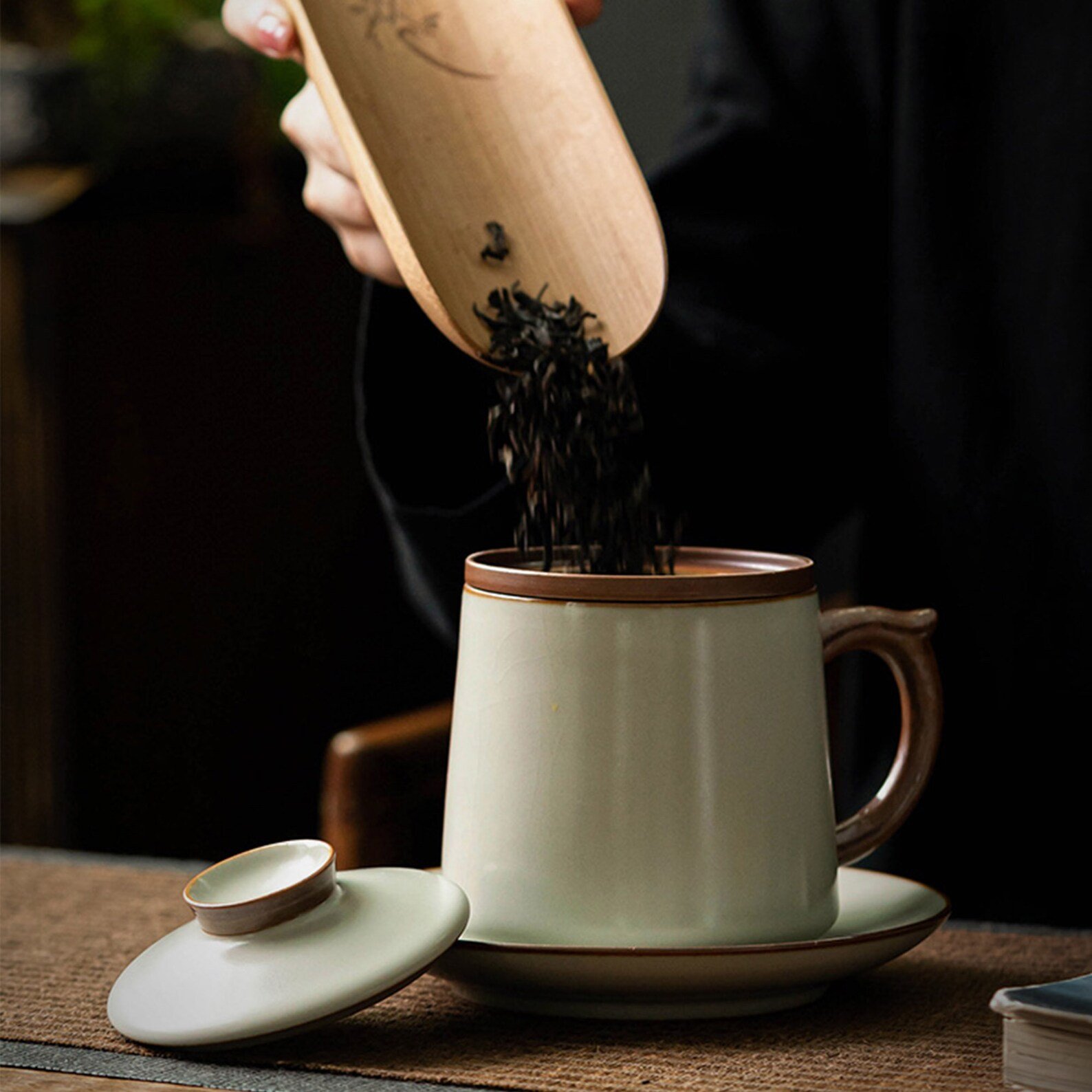
In this article, we will explore how to brew loose-leaf tea simply and consistently using a ceramic tea infuser mug, including how to choose between black, green, and oolong tea, what equipment actually matters, and how to dial in strength and flavour without overthinking the process. With the right method, you can get a clean, aromatic cup in under a minute, and you can often re-steep the same leaves for multiple rounds.
No. 1
Why a Ceramic Tea Infuser Mug Makes Loose-Leaf Tea Easier
If you are new to loose-leaf tea, the biggest barrier is usually not the tea itself, but the perceived need for specialized gear. A ceramic tea infuser mug is designed to remove that friction by combining the essentials into one compact setup.
What an infuser mug replaces in a traditional setup
Traditional tea sets are beautiful and functional, but they add steps and dishes.
An infuser mug can replace or simplify many of these items:
Teapot, for steeping
Strainer, for catching leaves
Serving pitcher, for decanting
Tea tray, for managing drips
Small cups, for serving
Why ceramic is especially well-suited to tea
Ceramic is popular for a reason. It holds heat well, feels pleasant in the hand, and generally does not interfere with aroma.
Heat retention helps maintain a stable brew temperature
Neutral material keeps flavours clean and unmasked
Easy cleanup supports everyday use
A lid improves steeping consistency by keeping heat and aroma in
Most infuser mugs hold around 8.5 to 13.5 fluid ounces, or approximately 250 to 400 millilitres. That is an ideal range for a single serving without needing a separate teapot.
No. 2
Choosing Black, Green, or Oolong Tea
Black, green, and oolong tea come in many varieties, but their flavour profiles and brewing needs can be quite different. Choosing the right category for your preferences makes the learning curve much smoother.
Black tea: bold, forgiving, beginner-friendly
Black tea has a fuller and stronger flavour. Depending on the variety, it may taste malty, fruity, sweet, woody, or lightly roasted. Its flavour is usually easy to notice, making whole-leaf black tea a strong starting point for beginners.
Black tea also tends to be more tolerant of hotter water and minor timing differences. That does not mean it cannot become bitter, but it is generally easier to control than delicate teas.
Green tea: fresh, fragrant, temperature-sensitive
Green tea is lighter and fresher. Some varieties taste grassy, while others have sweet, floral, or nutty notes. Green tea is more sensitive to water temperature and may become bitter when brewed with water that is too hot.
If you often enjoy bright, crisp flavours and lighter body, green tea can be extremely rewarding, but it benefits from a bit more attention to water temperature and steep time.
Oolong tea: versatile and expressive
Oolong tea sits between green and black tea. Its flavour is usually richer than green tea without being as strong as black tea. Different oolong teas may have floral, fruity, creamy, or roasted notes.
Oolongs are also known for how well they can re-steep, especially when the leaves are larger and more tightly rolled. Many drinkers enjoy watching the leaves unfurl over successive infusions.
Best choice for your first cup
For a first attempt, try a large, whole-leaf black tea. Its flavour is easy to recognize, and it responds well to a short infusion, which is ideal for the infuser-mug method.
No. 3
What You Need for Everyday Brewing
Loose-leaf tea does not require a full tea ceremony at your desk. You only need three things:
Loose-leaf tea
Hot water
A ceramic tea infuser mug
Optional items that improve consistency (without adding complexity)
If you enjoy the process and want better repeatability, a few optional tools can help, but they are not required.
A small digital scale for measuring 5 grams accurately
A thermometer or temperature-controlled kettle
A timer, even a phone timer, for repeatable steep times
Filtered water if your tap water is very hard or heavily chlorinated
The key is to keep the system simple enough that you will actually use it daily.
No. 4
Understanding How a Tea Infuser Mug Works
A tea infuser mug combines the cup, removable infuser, and lid into one piece of drinkware. That design offers two important advantages: space for the leaves to expand and immediate control over steeping time.
Why leaf expansion matters
Whole leaves need room to open as they absorb water. If they are packed too tightly, the water cannot circulate well, and the tea can taste flat or uneven.
A spacious infuser helps with:
Even extraction of flavour and aroma
Better clarity and balance in the cup
Easier re-steeping because the leaves are fully hydrated
Why removing the infuser matters
Once the tea reaches the taste you want, the best way to prevent bitterness is to stop the steep. Lifting out the infuser accomplishes that instantly, without needing to pour through a separate strainer.
The lid helps hold in heat during brewing. After removing the infuser, the lid can also be turned over and used as a small tray, keeping your desk or counter clean.
For tea and homeware brands developing their own tea ware, Etanla is a ceramic manufacturer based in Dehua, China, specializing in custom ceramic products for the homeware and gift industry.
No. 5
How to Brew Whole-Leaf Black Tea in an Infuser Mug
A friend in China showed me a quick way to prepare whole-leaf black tea. The brewing time was much shorter than I expected, but the results were surprisingly aromatic and smooth.
Quick-brew method for whole-leaf black tea
Follow this baseline method and adjust after tasting:
Add about 5 grams, or 0.18 ounces, of whole-leaf black tea to the infuser.
Heat the water to 194–203°F, or 90–95°C.
Pour the hot water over the tea leaves.
Wait for 5–8 seconds.
Lift the infuser out of the mug.
Allow the tea to cool slightly before drinking.
Five to eight seconds may sound extremely quick. With enough whole leaves and the right water temperature, the tea releases colour and aroma quickly. Removing the infuser prevents the leaves from sitting in the water until the drink becomes bitter or overly strong.
How to adjust strength without guessing
If the tea does not taste the way you want, adjust one variable at a time:
If the tea is too light, increase steep time by 2–5 seconds
If it tastes dry, harsh, or bitter, reduce steep time by a few seconds
If it still feels weak even with a slightly longer steep, add a little more leaf rather than steeping much longer
If it is consistently too strong, reduce leaf quantity slightly before reducing water temperature
This approach keeps your adjustments controlled, so you can learn what is changing the cup.
No. 6
Re-Steeping: Getting Multiple Cups From the Same Leaves
One of the best advantages of whole-leaf tea is that it can often be brewed several times. Instead of viewing the leaves as single-use, think of them as a set of infusions that reveal different layers.
A simple re-steep schedule to try
After the first cup, keep the leaves in the infuser and try:
Second infusion: add 3–5 seconds to your first steep time
Third infusion: add another 5–10 seconds, depending on taste
Later infusions: extend gradually until the tea becomes too light
You can also change the experience by focusing on aroma early and body later. Early steeps often highlight fragrance and brightness, while later steeps can emphasize sweetness and softness.
How to tell when the leaves are “finished”
Stop re-steeping when:
The tea becomes watery or thin even with longer steeps
The aroma fades significantly
The flavour becomes dull rather than gently lighter
No. 7
Taste the Tea Before Adding Milk or Sweeteners
Try the first cup without milk, honey, lemon, or sugar. This is not about strict rules; it is simply the fastest way to understand what the tea already offers.
A simple tasting routine for beginners
Use a short process that trains your palate without feeling formal:
Smell the tea before sipping to notice aroma notes
Take a small sip and let it coat your mouth
Let it cool for a moment, then taste again
Notice whether sweetness increases as the temperature drops
Depending on the tea, you may find fruit, flowers, honey, malt, wood, or roasted notes. Good whole-leaf tea already has plenty of character, so it may not need anything added.
You can always add milk or sweetener later. Tasting the tea plain first helps you understand what is already in the cup.
No. 8
A Few Things to Avoid (So Your Tea Stays Smooth)
Small mistakes can make loose-leaf tea taste harsher than it should. Avoiding the most common issues will improve your results immediately.
Common brewing mistakes to skip
Do not leave the infuser in the mug. The tea will continue to brew and may become bitter.
Do not fill the infuser completely. Whole leaves need space to open as they absorb water.
Do not use the same temperature for every tea. The temperature in this guide is intended for whole-leaf black tea. Green tea generally needs cooler water.
Do not drink the tea while it is extremely hot. Give it a moment to cool so the aroma and flavour are easier to enjoy.
A quick note on water quality
If your tea tastes flat, metallic, or oddly astringent even when you brew correctly, water may be the culprit. Filtered water can make a noticeable difference, especially in areas with very hard water.
No. 9
Make It Your Own With Small, Intentional Adjustments
Tea instructions are useful starting points, but different leaves behave differently. Leaf size, processing method, water quality, and personal taste can all change the final cup.
A practical way to personalize your brew
Start with:
About 5 grams of whole-leaf black tea
Water at 194–203°F (90–95°C)
A short 5–8 second infusion
Then adjust one variable at a time:
Change steep time first for fine-tuning
Change leaf quantity if the tea is consistently too light or too strong
Change temperature when switching tea types, especially for green tea
Keep short notes if you are trying multiple teas and want repeatable results
A ceramic tea infuser mug makes this easy. There is no full tea set to prepare and very little to clean afterward. Keep the leaves for another infusion, refill the mug when you are ready, and find the timing that tastes right to you.
Takeaways
Loose-leaf tea only seems complicated because traditional setups include multiple tools for serving and presentation. A ceramic tea infuser mug streamlines the process by combining steeping, straining, and drinking into one simple routine.
Black, green, and oolong teas offer very different flavour profiles, and black tea is often the easiest place to start. With about 5 grams of whole-leaf black tea and water at 194–203°F, a short 5–8 second infusion can deliver a balanced, aromatic cup.
The key to consistently good tea is control: remove the infuser to stop steeping and re-steep the leaves with slightly longer times for additional cups. Taste the tea plain first, adjust one variable at a time, and you will quickly discover the method that fits your preference.
Looking for wellness resources?
Are you looking to enhance your wellness routine? Explore our wellness partners who offer a wide range of resources to support your journey toward holistic living and well-being.