Essential Design Upgrades For A Brighter And More Peaceful Home
A home can look “finished” and still feel draining. That’s because genuine comfort isn’t created by furniture alone—it’s created by how a space supports your nervous system, your routines, and your sensory needs throughout the day. If you want your home to function as a wellness sanctuary, the goal is not only minimalism or visual harmony. The goal is a living environment that consistently feels calm, quiet, breathable, and emotionally restorative.

In this article, you’ll learn the most impactful design upgrades—both structural and decorative—that make a home brighter and more peaceful in a lasting way. We’ll start with foundational comfort (temperature and sound), move into the psychological benefits of daylight, and then finish with smaller sensory-friendly enhancements that make everyday living feel lighter and more intentional.
No. 1
Build a Sanctuary by Upgrading Acoustic and Thermal Comfort
Visual aesthetics can only do so much if your home is freezing in winter, stifling in summer, or constantly interrupted by street noise. A peaceful home is not merely a styled home; it is a protected home—one that reduces exposure to outside stressors so you can downshift, recover, and focus.
Two of the most common “invisible stressors” are:
Thermal discomfort: drafts, fluctuating temperatures, rooms that never feel stable
Acoustic irritation: traffic noise, neighbour activity, barking dogs, general urban sound bleed
When these persist, the body stays subtly alert. That low-level vigilance is the opposite of what most people want from their home environment. Addressing it often requires structural upgrades, not just décor changes.
For homeowners who want to significantly improve both temperature regulation and acoustic insulation, investing in premium fixtures can be transformative. Exploring upgrades like double glazed windows in Mornington is a strong example of how a practical structural improvement can convert a noisy, drafty room into a quieter retreat. Double glazing works by trapping an insulating layer (often gas) between two panes of glass, which helps stabilize indoor temperatures and reduce heat transfer.
Just as importantly, that dual-pane construction reduces the intensity of outside noise. In a wellness-oriented home, that matters: quiet is not a luxury detail—it’s a foundational ingredient for rest, reading, focused work, and better sleep.
Additional upgrades that support acoustic and thermal calm include:
Sealing gaps around windows and doors to reduce drafts and noise leakage
Upgrading door sweeps and weatherstripping, especially on exterior doors
Adding thicker curtains or acoustic drapery in bedrooms and living areas
Using rugs (or larger area rugs) to reduce echo and soften footfall noise
Insulating key problem areas such as the roof cavity and external-facing walls
These changes don’t only improve comfort; they reduce ongoing friction. When your home maintains temperature and dampens sound naturally, you stop “managing” your environment and start living in it.
No. 2
Maximize the Psychological Benefits of Daylight (Not Just the Aesthetic Ones)
Natural light is one of the most powerful, underused wellness tools in modern home design. Bright spaces feel larger and more inviting, but daylight’s real value goes beyond appearance. Consistent exposure to natural light helps regulate circadian rhythms, supports mood stability, and improves sleep quality—three pillars of feeling mentally and physically well.
When a home lacks daylight, people often compensate with harsh overhead lighting, screens, and constant stimulation—especially in winter months or in homes with smaller windows. Over time, that can contribute to fatigue, irritability, and a general sense of low energy.
Research highlighted by UCLA Health reinforces why daylight matters. A large study involving 500,000 individuals found that each additional hour spent outside in natural light was linked with a corresponding reduction in the risk of long-term depression, alongside self-reported improvements in happiness and sleep quality.
The takeaway for home design is simple: if you can bring more daylight into your indoor environment, you’re not just improving a room—you’re supporting your biology.
Design upgrades that help you capture more daylight indoors:
Larger, energy-efficient windows (where renovation is possible)
Glass doors or wider openings to share light between rooms
Lighter wall colours that reflect sunlight rather than absorbing it
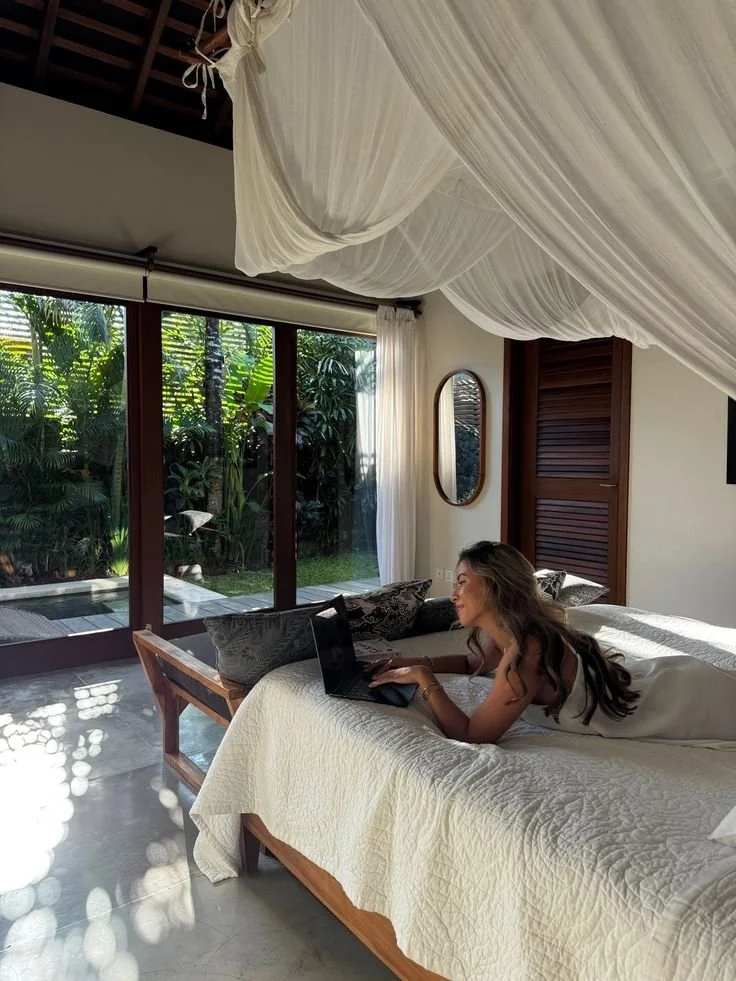
Strategically placed mirrors that bounce light deeper into the space
Sheer curtains that maintain privacy without blocking brightness
Daylight also improves how other materials read—wood looks warmer, textiles look richer, and a minimalist palette feels softer rather than stark. That’s why increasing natural light often makes an entire home feel more “expensive” without changing any furniture.
No. 3
Use a Minimalist Framework: Space, Color, Lighting, Texture, and Form
A calm home isn’t created through emptiness; it’s created through coherence. When design feels unified, the mind works less to interpret the environment—and that reduces mental load.
A helpful framework is the foundational five elements of interior design:
Space: flow, clear walkways, functional zones
Color: a controlled palette that supports calm
Lighting: balanced layers, warm temperatures, dimmable options
Texture: softness and tactile comfort to counter sterile minimalism
Form: consistent shapes and silhouettes that reduce visual “noise”
If any one of these is chaotic, the home can feel unsettled even if it’s clean. The goal is to align them so each room feels intentional, not accidental.
Practical ways to apply this framework quickly:
Remove one piece of oversized furniture that interrupts flow
Reduce competing colours by choosing two neutrals plus one accent family
Replace one harsh overhead fixture with layered, warm lighting
Add texture (wool, linen, timber) to soften hard surfaces
Repeat shapes—e.g., rounded lamps with rounded mirrors—to create visual rhythm
Minimalism works best when it serves comfort, not when it becomes rigid. A wellness home can be simple and still feel warm.
No. 4
Make Small Sensory-Friendly Upgrades That Calm the Body
Once your home is structurally prepared to welcome daylight and buffer noise, the “small” interior details begin to matter more. These are the upgrades that shift a room from visually appealing to genuinely soothing.
A sensory-friendly home is designed to reduce overstimulation. It considers glare, harsh contrast, scratchy materials, chemical scents, echo, and clutter density. This is where peace becomes tactile.
Natural materials (tactile calm)
Introduce materials that feel grounding and breathable:
Untreated or lightly finished timber
Linen bedding and curtains
Wool rugs or throws
Cotton upholstery and simple weaves
These textures don’t only look good—they create a subtle sense of warmth and safety.
Ambient lighting (nervous system support)
Light tells the brain when to be alert and when to wind down. If your home relies on cool, bright bulbs in the evening, you may unintentionally keep your body in “daytime mode.”
Consider:
Dimmers in living rooms and bedrooms
Warm-toned LED bulbs for lamps and evening lighting
Bedside lighting that is soft, not glaring
Indirect light (wall sconces, shaded lamps) to reduce harsh shadows
Indoor greenery (visual softness + air quality)
Plants add organic shape and soften minimal interiors. They also bring life into corners that feel visually dead.
Good low-maintenance choices often include:
Snake plant
Pothos
ZZ plant
Peace lily (if safe for your household)
Even one larger plant can change the mood of a room by adding a gentle focal point.
Mindful color palettes (reduce visual fatigue)
Colour is mood architecture. If you want peace, choose tones that read as stable and grounded rather than sharp or overly saturated.
Examples of calming tones:
Sage green
Warm terracotta
Muted beige
Soft clay
Gentle off-white (not stark bright white)
These colors tend to reflect light beautifully and reduce the “buzz” that high-contrast rooms can create.
No. 5
Design with Long-Term Intention (So Peace Lasts Beyond the Makeover)
A brighter, calmer home isn’t a one-time project—it’s a design philosophy. It’s the decision to align your environment with how you want to live, not just how you want your home to look in photos.
Long-term intention means you choose upgrades that remove recurring friction:
Materials that hold up well and age gracefully
Insulation and window upgrades that lower ongoing discomfort
Lighting that supports evening wind-down rather than fighting it
Layout choices that support routines (morning calm, meal prep ease, bedtime quiet)
It also means resisting trend-chasing. Wellness design is not about what’s popular this year. It’s about what continues to feel good five years from now.
When your environment functions as a true sanctuary, your days begin and end differently. You recover more fully. You sleep more deeply. You feel less “on.” That’s not abstract—it’s a practical outcome of a home designed to support human needs.
Takeaways
A peaceful home is created through more than furniture and styling; it’s built through structural comfort, supportive light, and sensory-friendly details.
In this article, we covered the upgrades that make the biggest difference: improving acoustic and thermal stability, increasing natural daylight to support mood and sleep, using a minimalist design framework (space, color, lighting, texture, and form), and layering smaller wellness-focused enhancements like natural materials, ambient lighting, indoor greenery, and calming color palettes.
If you want the highest-impact starting point, prioritise the upgrades that reduce daily friction—particularly noise, drafts, and poor light quality. These changes don’t just improve how your home looks; they improve how it feels to live in, day after day.
Looking for Home resources?
Looking to enhance your living space and create a sanctuary that supports your well-being? Explore our home partners who offer a wide range of resources to elevate your home environment.