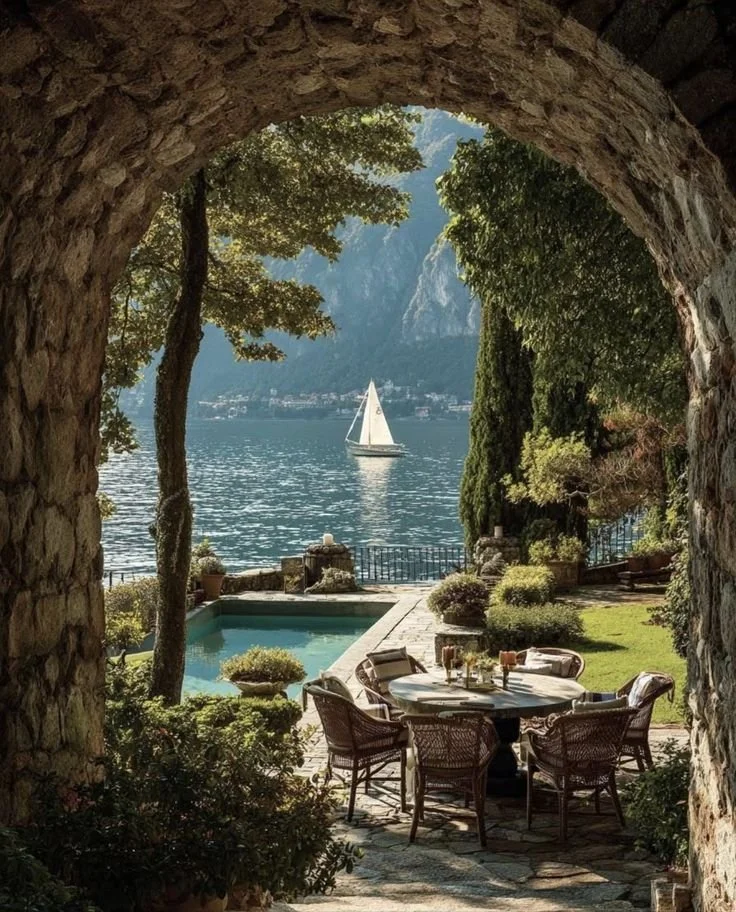
Top Resort Areas For Buying Property In Turkey
Turkey’s Mediterranean (and adjacent Aegean) coastline is not one uniform “seaside market,” but a set of fundamentally different micro-economies. The same decision—buying an apartment near the water—can represent either a highly liquid, tourism-driven asset designed for short-term rental turnover or a quieter residence optimized for lifestyle, long-term tenants, and capital preservation. In other words, the most important question is rarely “where is it prettier?” but which economic model supports the location you’re choosing.

Buying in a resort area is never just about sunshine and beaches. It is directly tied to strategy:
Do you want short-term rental income with high seasonal demand?
Are you focused on capital appreciation and market momentum?
Is your priority value preservation and lower volatility?
Or are you relocating and seeking comfort, services, and stability first?
In this article, we’ll break down four major coastal scenarios—Antalya, Alanya, Mersin, and Izmir—and show how each market works in practice, what kind of buyer it fits, and where expectations often diverge from reality. The goal is clarity: not hype, not “best city” claims, but a sharper match between your goals and the local fundamentals.
No. 1
The Coastal Thesis: Location Is a Business Model
Before comparing cities, it helps to think like an operator. A seaside property can be:
a hospitality product (short-term rental, tourist demand, high turnover, constant marketing),
a housing product (long-term rental, employment-driven demand, lower vacancy),
a lifestyle asset (personal use, emotional utility, quality of life),
or a store of value (scarcity-driven, premium segment, stable appreciation).
Each coastal region in Turkey tends to lean heavily into one of these models. When buyers get disappointed, it’s often because they purchase with one model in mind (e.g., “quick rental returns”) in a market structured for another (e.g., “long-term, local tenants”).
A useful way to frame your decision is to define your “primary win”:
Monthly cash flow
Future resale potential
Low-risk preservation
Relocation comfort
Then choose the city that naturally supports that outcome.
No. 2
Antalya: The Liquidity Leader (Tourism, Infrastructure, Competition)
Antalya is widely considered the most liquid resort real estate market in Turkey. Liquidity here is driven by a clear engine: a major international airport with direct flights from a huge number of global destinations and a tourism sector that functions like an economic backbone rather than a seasonal side note.
Why Antalya works (especially for rental strategy)
Antalya’s value proposition rests on three pillars:
Consistent tourist flow supported by flight connectivity
Mature infrastructure (healthcare, retail, dining, transport)
Established resort neighborhoods with predictable demand patterns
Districts such as Konyaaltı and Lara remain flagship areas, combining proximity to the sea, city convenience, and newer residential complexes with higher service standards.
Yield profile and operational reality
Short-term rental yields are commonly cited in the 8–10% annual range, with a season that often runs April through November.
However, it’s important to interpret yield numbers correctly:
Gross yield is not net yield.
Property management, turnover costs, furnishing, maintenance, platform fees, and vacancy can materially change the outcome.
Competition is intense, so “average” units can underperform unless they’re positioned and managed professionally.
Antalya can be a strong market for buyers who treat the property as a business—with marketing, pricing strategy, and guest experience handled properly.
The main trade-off
The downside is precisely what makes Antalya attractive: it’s crowded with investors. The market is more saturated, which can limit “easy wins.” Many investors still reach breakeven in roughly 10–12 years (often cited as a reasonable horizon), but expectations of rapid price surges should be tempered. This is a mature, competitive market—excellent for liquidity, less ideal for speculation.
Best fit: Investors prioritizing liquidity and proven tourism demand, comfortable with competition and professional management.
No. 3
Alanya: The Accessible Entry Point (Mid-Budget, High Demand, Stable Rentals)
Alanya has become the Mediterranean coast’s most accessible entry point for foreign buyers. For many investors, it’s where the math finally works: with a budget around €70,000–100,000, buyers can often find a two-bedroom apartment in a residential complex with a pool and basic amenities—an achievable threshold compared with many European seaside markets.
This is also where the dream of owning an apartment near the water shifts from vague aspiration to a measurable plan. An apartment by the sea in Turkey is often approached here as a practical asset rather than a luxury fantasy, especially for mid-budget investors who want rental demand and resale liquidity. For an overview of seaside options and layouts, see: https://myestateinvest.com/en/apartment-by-the-sea-in-turkey/
Demand structure: foreign buyers and rental stability
Alanya’s market is heavily oriented toward international demand, particularly from Europe. This matters because it can stabilize rental activity and resale liquidity, especially for:
smaller, functional layouts (studios and 1+1 units)
modern complexes with amenities
locations with convenient access to beaches and services
Another strength is livability. Alanya’s compact structure, alongside hospitals, schools, shopping centers, and general year-round infrastructure, supports both seasonal use and permanent relocation.
The trade-off: mass-market positioning
Alanya’s brand is also its limitation. The “mass-market resort” image can cap long-term appreciation relative to premium coastal enclaves. While liquidity and rental continuity can be strong, Alanya is typically best viewed as:
a cash-flow and usability market, not
a “buy now, double in two years” speculation story.
Best fit: Mid-budget buyers seeking a clear rental model, stable demand, and easier resale—prioritizing income and liquidity over premium scarcity-driven appreciation.
No. 4
Mersin: The Underpriced Growth Story (Port Economy, Long-Term Rentals, Upside)
Mersin is a compelling outlier: a coastal city whose economy is not primarily driven by tourism.
Instead, Mersin benefits from:
a major port,
industrial facilities,
logistics and trade infrastructure.
That non-tourism base is crucial because it creates structural long-term rental demand, often supported by local employment and business activity rather than seasonal visitor waves.
Price advantage and development pace
Property prices in Mersin are frequently described as 40–50% lower than Antalya, while many new developments remain comparable in quality—modern complexes, planned layouts, and amenity-focused projects.
The city is also expanding quickly:
new districts are being developed,
the waterfront is being improved,
transport infrastructure continues to evolve.
Why “less tourism” can be an advantage
Mersin is not yet a mass tourist magnet, and for many investors that’s precisely the point. Lower tourist attention can mean:
less “hype pricing,”
more room for organic appreciation,
and a tenant base that isn’t dependent on holiday seasonality.
Mersin is often attractive to investors with a long-term lens—the kind of buyer who is comfortable entering before the market becomes internationally fashionable. Over time, the city may follow a trajectory similar to other large coastal metros that gradually strengthened their real estate positioning as infrastructure improved and demand broadened.
Best fit: Investors prioritizing long-term rentals, lower entry prices, and potential appreciation tied to urban growth rather than tourism.
No. 5
Izmir (Aegean): Premium Lifestyle, Scarcity, and Capital Preservation
Izmir represents a different philosophy of seaside real estate. If Antalya is a tourism machine and Alanya is the practical entry point, Izmir is more often a lifestyle-first, premium-leaning market.
There’s typically less “all-inclusive resort” noise here.
Instead, Izmir draws:
affluent Turkish buyers
European expats
those who value environment, culture, and everyday quality of life.
Areas such as Çeşme, Alaçatı, and the Karaburun Peninsula are often framed as limited-supply, high-standard environments. That scarcity tends to support steadier value behavior over time.
Performance profile: moderate, stable growth
Price growth is often described as moderate (around 5–7% annually) but relatively consistent.
In practical terms, this makes Izmir a market where buyers frequently aim for:
capital preservation,
premium long-term tenants, or
personal use with strong lifestyle utility.
What Izmir is not
Izmir is generally not positioned as a high-yield, mass short-term rental market in the same way as Antalya. While rentals exist, the broader investment story is usually less about squeezing maximum yield and more about owning a high-quality coastal asset in a market with cultural appeal and constrained supply.
Best fit: Buyers who prioritize lifestyle, stability, and premium positioning—often valuing preservation over aggressive yield.
No. 6
How to Choose: A Practical Decision Framework
If you’re deciding between these markets, use a simple filter.
Ask:
1) What is my rental strategy?
Short-term rentals: Antalya (strong), Alanya (possible), Izmir (selective), Mersin (less central)
Long-term rentals: Mersin (strong), Antalya/Alanya (also viable), Izmir (premium segment)
2) What kind of appreciation am I expecting?
Mature market, steady pricing: Antalya
Stable, mid-market demand: Alanya
Growth story with lower base: Mersin
Scarcity and premium stability: Izmir
3) Do I want lifestyle utility or financial yield first?
Lifestyle-first often aligns with Izmir (and certain parts of Antalya)
Yield-first tends to align with Antalya or Alanya
Balanced long-term fundamentals often align with Mersin
4) How much operational work am I willing to do?
Short-term rentals are a hospitality business.
If you don’t want to manage:
guest messaging
cleaning turnover
furnishing and repairs
seasonality pricing
listing optimization
Then markets designed for long-term tenants (like Mersin’s economic base) may feel more comfortable.
Takeaways: In 2026, Winners Match the Market to the Audience
Turkey’s coastal real estate markets reward precision. Antalya, Alanya, Mersin, and Izmir are not interchangeable beach destinations—they are distinct investment environments with different demand engines, tenant profiles, and return patterns.
Antalya remains the liquidity leader for tourism-driven rentals, though competition is intense and “easy appreciation” is less likely in a mature market. Alanya continues to serve as an accessible entry point where a seaside purchase can function as a liquid, mid-budget asset—often ideal for stable rental income rather than speculative gains. Mersin stands out as an underpriced coastal city supported by a real economy, making it attractive for long-term rental demand and gradual appreciation. Izmir offers a premium lifestyle thesis, where scarcity and cultural appeal support steady value and quality of life.
The overarching lesson is simple: success belongs to those who align the property with its true economic model and target audience. In 2026, performance is defined less by proximity to the beach and more by sober calculation—choosing the right city for the right strategy, then executing with realistic expectations.
Looking for Travel resources?
Looking to embark on a transformative journey to discover new cultures, expand your horizons, and reconnect with yourself? Explore, learn, and awaken your wanderlust with our travel partners designed to support you on your next getaway.