Posts in home
Why Mold Keeps Coming Back And How To Stop The Cycle For Good

Having a mold problem in your home isn’t something anyone wants to deal with—yet it’s a surprisingly common issue for both renters and homeowners. Mold is more than an eyesore on a wall or a musty smell in the corner of a room. It’s a signal that moisture is present where it shouldn’t be, and that moisture is creating conditions that can damage your property, ruin belongings, lower indoor comfort, and potentially affect health.


The frustrating part is when you scrub, spray, and wipe—only to find mold returning days or weeks later. That usually means the visible mold was only the symptom, not the cause.

In this article, we’ll walk through the most common reasons mold keeps coming back even after cleaning, what you may be overlooking, and the practical steps that help break the regrowth cycle. The goal is simple: stop repeatedly cleaning the same spots and start solving the underlying moisture and air-quality problems that allow mold to thrive.

No. 1

You’re Not Eliminating the Moisture Source (You’re Only Treating the Symptom)

The most common reason mold returns is also the easiest to misunderstand: you cleaned what you could see, but you didn’t address what’s feeding it.

Mold grows where moisture collects. If water is still entering or condensing in the same area, mold will return—even if the surface looks spotless right after cleaning. Many people assume that if the wall looks dry, it is dry.

But moisture can hide:

  • Behind drywall

  • Under flooring

  • Inside cabinets

  • Around window frames

  • Behind appliances (especially refrigerators, washing machines, and dishwashers)

  • In poorly sealed bathrooms or showers

Where moisture typically comes from

Mold can be fueled by both obvious and subtle sources, including:

  • A small plumbing leak under a sink

  • A slow drip behind a toilet

  • A cracked grout line or failing caulk in a shower

  • Rainwater entering around a window or roof flashing

  • Condensation on cold surfaces (pipes, exterior walls, windows)

  • Damp crawlspaces or basements wicking moisture upward

What to do instead of “just cleaning”

To stop mold from returning, treat cleaning as the final step—not the first.

A better order of operations is:

  • Find the dampness

  • Stop the moisture

  • Dry the materials thoroughly

  • Then clean or remove contaminated materials

If you can’t identify the source, consider using a simple moisture meter (often inexpensive) or bringing in a professional to locate hidden leaks or saturation behind walls. Repeated regrowth is often your home’s way of saying, “There’s water here somewhere.”

No. 2

Your Home’s Humidity Is Too High (Even Without a Leak)

A lot of homeowners look for a leak and find nothing—so they assume mold “just happens.” In many cases, the real issue isn’t a single water intrusion event; it’s consistently high indoor humidity.

Mold doesn’t always need dripping water to thrive. In many situations, ambient humidity above ~60% is enough to support mold growth—especially on materials that hold moisture, like drywall, fabric, wood, and cardboard.

Why humidity rises faster than you think

Everyday activities add moisture to the air, including:

  • Showering and bathing

  • Cooking (especially boiling water)

  • Running the dishwasher

  • Drying clothes indoors

  • Mopping floors

  • Even breathing in a closed room overnight

In warm months, humidity can also enter from outside, especially if doors/windows are opened frequently or if your HVAC system isn’t effectively removing moisture.

How to measure and fix it

You don’t need to guess. You can buy a hygrometer for a relatively low cost and then identify where your home's humidity is high.

Once you know where humidity is high, solutions include:

  • Run a dehumidifier (especially in basements, laundry rooms, and bathrooms)

  • Use air conditioning to remove humidity during hot months

  • Improve airflow so damp air doesn’t stagnate

  • Aim for 30–50% indoor humidity for most homes (comfortable and mold-resistant)

If mold repeatedly appears in multiple rooms or closets, high humidity is often the real culprit—not your cleaning method.


No. 3

Mold Spores Are Still in the Air (So the Problem Keeps Re-Seeding)

Here’s the part many people miss: mold isn’t only a surface issue. Mold spreads via spores, and spores can remain suspended in the air and resettle onto surfaces.

When you clean visible mold, you may accidentally disturb colonies and release more spores. If the room still has excess moisture, those spores have everything they need to establish new growth—sometimes right in the same spot.

Why airborne spores matter

Even after wiping down a wall, spores can land on:

  • Window sills where condensation forms

  • Bathroom ceilings after a hot shower

  • Closet corners with poor airflow

  • Behind furniture pushed against exterior walls

This is why surface cleaning alone can feel like an endless loop.

A practical tool: filtration

Removing airborne spores is where targeted filtration helps. Using products like air purifiers for mold can be extremely useful in managing ongoing issues—especially in rooms where you’ve already found mold. Models with HEPA filtration can capture spores before they land and spread, helping reduce recontamination while you work on moisture control.

Important note: filtration supports prevention; it doesn’t replace fixing humidity or leaks. But it can meaningfully reduce how quickly mold returns and how widely spores circulate.

No. 4

Ventilation Is Poor (Moisture Has Nowhere to Go)

Even if humidity isn’t high throughout the whole home, individual rooms can become “microclimates” where moisture builds up daily. Bathrooms, laundry rooms, kitchens, and basements are common examples.

When ventilation is poor, damp air lingers. If the air doesn’t move, surfaces stay wet longer—and mold gets the time it needs to grow.

Common ventilation problems

Poor ventilation often looks like:

  • Bathroom exhaust fans that are too weak—or not used long enough

  • Fans that vent into the attic instead of outside

  • Blocked HVAC vents or returns

  • Furniture pushed flush against cold exterior walls

  • Closets packed tightly with no air movement

  • Windows that stay closed in damp weather with no mechanical ventilation

Fixes that usually work

Improving ventilation doesn’t have to be complicated. Often, the best results come from a few consistent habits and small upgrades:

  • Run the bathroom fan during showers and for 20–30 minutes after

  • Open a window briefly (weather permitting) to purge humid air

  • Check fan ducting to ensure it vents outside

  • Keep interior doors open periodically to balance airflow

  • Avoid blocking vents and returns

  • Leave a small gap between furniture and exterior walls

  • Use your HVAC fan setting strategically to circulate air

Think of ventilation as moisture removal. If moisture can’t leave the room, it will settle—on mirrors, ceilings, grout lines, and painted drywall—creating a recurring mold pattern.


No. 5

You May Be Using the Wrong Cleaning Approach (Or Cleaning the Wrong Material)

Not all mold problems can be solved with a wipe-down. Sometimes mold is rooted in porous materials that can’t be fully sanitized once colonized.

Porous materials can hold mold “roots”

Materials that often require removal (not just cleaning) when mold is persistent include:

  • Drywall (especially if it feels soft or crumbly)

  • Ceiling tiles

  • Carpeting and padding

  • Cardboard storage boxes

  • Untreated wood that has remained damp

If mold keeps returning in the same area despite cleaning, the growth may be beneath the surface. In that case, you may need to replace the affected material after fixing the moisture source.

Avoid spreading spores while cleaning

Also, consider your cleaning method. Scrubbing aggressively without containment can spread spores around the room. If the affected area is larger, or if you’re dealing with recurring growth, it may be safer to:

  • Wear proper PPE (gloves, eye protection, and an appropriate mask/respirator)

  • Ventilate the area while cleaning

  • Use controlled wiping rather than dry brushing

  • Dispose of contaminated rags/sponges carefully

If the mold covers a large area or keeps returning quickly, a professional assessment may be warranted.

No. 6

The Mold Is Coming From an Adjacent Space (Basement, Attic, Crawlspace, or Wall Cavity)

Sometimes the mold you see isn’t originating where it appears.

For example:

  • A closet wall grows mold because the attic above is poorly vented

  • A bedroom corner grows mold because the exterior wall is cold and condensing

  • Bathroom mold returns because moisture is trapped behind tile or inside a wall cavity

  • Basement mold keeps seeding the upstairs air

If you fix the visible patch but ignore the connected space, the problem repeats.

Clues that mold is coming from elsewhere

Watch for patterns like:

  • Mold concentrated on an exterior wall or corner

  • A persistent musty smell even after cleaning

  • Mold returning seasonally (hot/humid months or rainy periods)

  • Multiple small outbreaks in different rooms

In these cases, the “real” fix may involve insulation improvements, sealing air leaks, crawlspace encapsulation, attic ventilation correction, or targeted dehumidification.

Takeaways

In this article, we looked at why mold keeps coming back after you clean it—and the answer is usually simple: cleaning removes what you can see, but mold regrows when moisture, humidity, spores, and poor airflow remain.

To stop the cycle, focus on the root causes:

  • Eliminate the moisture source (leaks, condensation, water intrusion)

  • Control indoor humidity (ideally keeping it in a mold-resistant range)

  • Reduce airborne spores with tools like air purifiers for mold featuring HEPA filtration

  • Improve ventilation so damp air doesn’t linger in bathrooms, basements, and closed rooms

  • Recognize when materials must be replaced, not just wiped down

  • Check adjacent spaces (attics, crawlspaces, wall cavities) if regrowth persists

If you address moisture first and cleaning second, mold stops being a recurring battle—and becomes a solvable home maintenance issue.


Looking for Home resources?

Looking to enhance your living space and create a sanctuary that supports your well-being? Explore our home partners who offer a wide range of resources to elevate your home environment.




homeHLL x Editor


Smart Toilets Vs. One Piece Toilets: Which Is Better For Hygiene And Comfort?

When was the last time you thought seriously about your toilet? For most people, the answer is “not often”—unless you’re in the middle of a bathroom remodel or dealing with an urgent plumbing issue. Still, the toilet is one of the most frequently used fixtures in any home, and it has a surprisingly large impact on daily comfort, cleanliness, and even long-term hygiene habits.


With bathroom technology evolving quickly, more homeowners are debating whether to invest in a smart toilet or stick with classic one piece toilets. The decision isn’t only about luxury or aesthetics; it’s also about practical hygiene, ease of cleaning, and how your bathroom functions for kids, guests, and older family members.

In this article, we’ll compare smart toilets and one-piece toilets in a realistic, non-salesy way. We’ll cover how each option affects hygiene, what features matter most, where hidden costs show up, and how to choose the best fit for your home and lifestyle.

No. 1

What Makes Smart Toilets and One-Piece Toilets Different?

Before we talk hygiene, it helps to define what each toilet type actually is. The differences aren’t just cosmetic—they change how the toilet is cleaned, how it’s used, and what kinds of upgrades are possible.

A quick overview of one-piece toilets

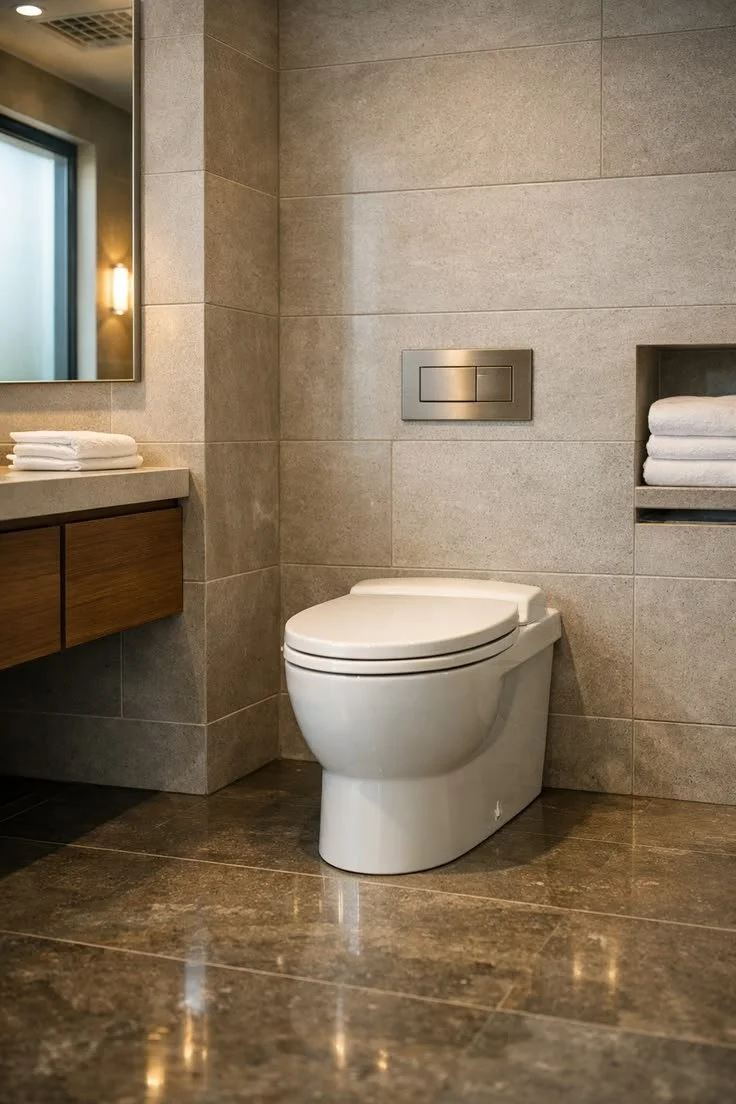
One-piece toilets are exactly what they sound like: the bowl and tank are molded together into a single, seamless unit. They differ from two-piece toilets (where the tank bolts onto the bowl), and that one design change brings a few meaningful benefits:

  • Fewer seams and crevices, which means fewer places for grime to hide

  • Easier wiping and disinfecting, especially around the tank area

  • A clean, modern look that works well in updated bathrooms

  • Often more durable over time because there are fewer connection points and gaskets

For many households, one-piece toilets hit the “sweet spot”: they feel like an upgrade, they’re easier to maintain than older designs, and they don’t introduce new tech that requires power or specialized servicing.

What exactly is a smart toilet?

A smart toilet goes beyond shape and style—it changes the experience of using the bathroom. Think of it as a toilet combined with bidet functionality and a set of automated features designed to improve comfort and cleanliness.

Depending on the model, smart toilets may include:

  • Automatic flushing (sometimes with adjustable settings)

  • Heated seats

  • Built-in bidet spray systems (front and rear wash options)

  • Warm air drying

  • Touchless lids (auto open/close using sensors)

  • Deodorizing systems

  • Self-cleaning bowls and self-cleaning nozzles

Some high-end options even add night lights, foot-sensing lid controls, or health-oriented sensors. While that might sound futuristic, smart toilets are already mainstream in some regions—Japan is the most commonly cited example—because the hygiene benefits are real and immediate.

No. 2

Why Bathroom Hygiene Matters More Than Most People Realize

Bathrooms feel “clean” when they look tidy. But hygiene is not only about appearance—it’s about reducing germ transfer, minimizing contaminated touchpoints, and making routine cleaning easier and more consistent.

The hidden truth about bathroom germs

Even a well-maintained bathroom can spread bacteria through everyday use. A few uncomfortable-but-useful realities:

  • Flushing can aerosolize microscopic droplets (often called the “toilet plume” effect)

  • Flush levers, buttons, and lids become high-touch germ surfaces

  • Shared bathrooms amplify these issues because germs transfer from one user to the next

  • Toilet seat covers, rugs, and fabric accessories can trap moisture and microbes

So, when people compare smart toilets and one-piece toilets on hygiene, they’re really comparing two things:

  1. How many surfaces you have to touch

  2. How thoroughly you can clean yourself and the toilet itself


No. 3

How Smart Toilets Improve Hygiene (Where They Truly Stand Out)

Smart toilets tend to win the hygiene argument because they reduce touchpoints and improve personal cleanliness, not just “how nice the bathroom looks.”

Touchless operation is a genuine game-changer

One of the biggest hygiene upgrades is hands-free operation. Many smart toilets offer sensor-based:

  • Lid opening and closing

  • Automatic flushing

  • Sometimes touchless controls via remote or side panel design

That means fewer people touching the same flush lever or button multiple times per day. In a home with kids, frequent guests, or anyone prone to skipping handwashing steps, reducing touchpoints can noticeably improve bathroom cleanliness.

One-piece toilets are easier to clean than older two-piece models, but most still rely on manual flushing. Even if you disinfect the handle regularly, it remains a shared “germ handoff” point.

Built-in bidet and warm air drying (cleaner than paper alone)

If you’ve never used a bidet, it can be hard to understand the difference until you try it. A smart toilet with bidet features provides targeted water cleansing, often with adjustable:

  • Water temperature

  • Spray pressure

  • Nozzle position

  • Washing modes (rear, front, oscillating, pulsing)

Many models also add warm air drying, reducing (or sometimes eliminating) the need for toilet paper. From a hygiene standpoint, this matters because:

  • Water cleans more thoroughly than dry wiping alone

  • Less paper use can mean less irritation for sensitive skin

  • Reduced residue can lower odor and discomfort

By comparison, one-piece toilets rely on toilet paper as the primary method of personal cleaning. The toilet itself may be sleek and easy to wipe down, but the personal hygiene experience is still fundamentally the same as a standard toilet.

Self-cleaning mechanisms and nozzle sterilization

Many smart toilets include features designed to reduce cleaning frequency and prevent bacteria buildup, such as:

  • Nozzle rinsing before and after use

  • Antibacterial materials or coatings

  • UV sterilization (on some models)

  • Electrolyzed water cleaning systems (model dependent)

This can reduce how often you need to scrub, and it can also help maintain a more consistently hygienic bowl and bidet system between deep cleans.

One-piece toilets typically don’t self-clean, but they remain easier to manually clean than two-piece toilets because of their smooth, integrated construction.

No. 4

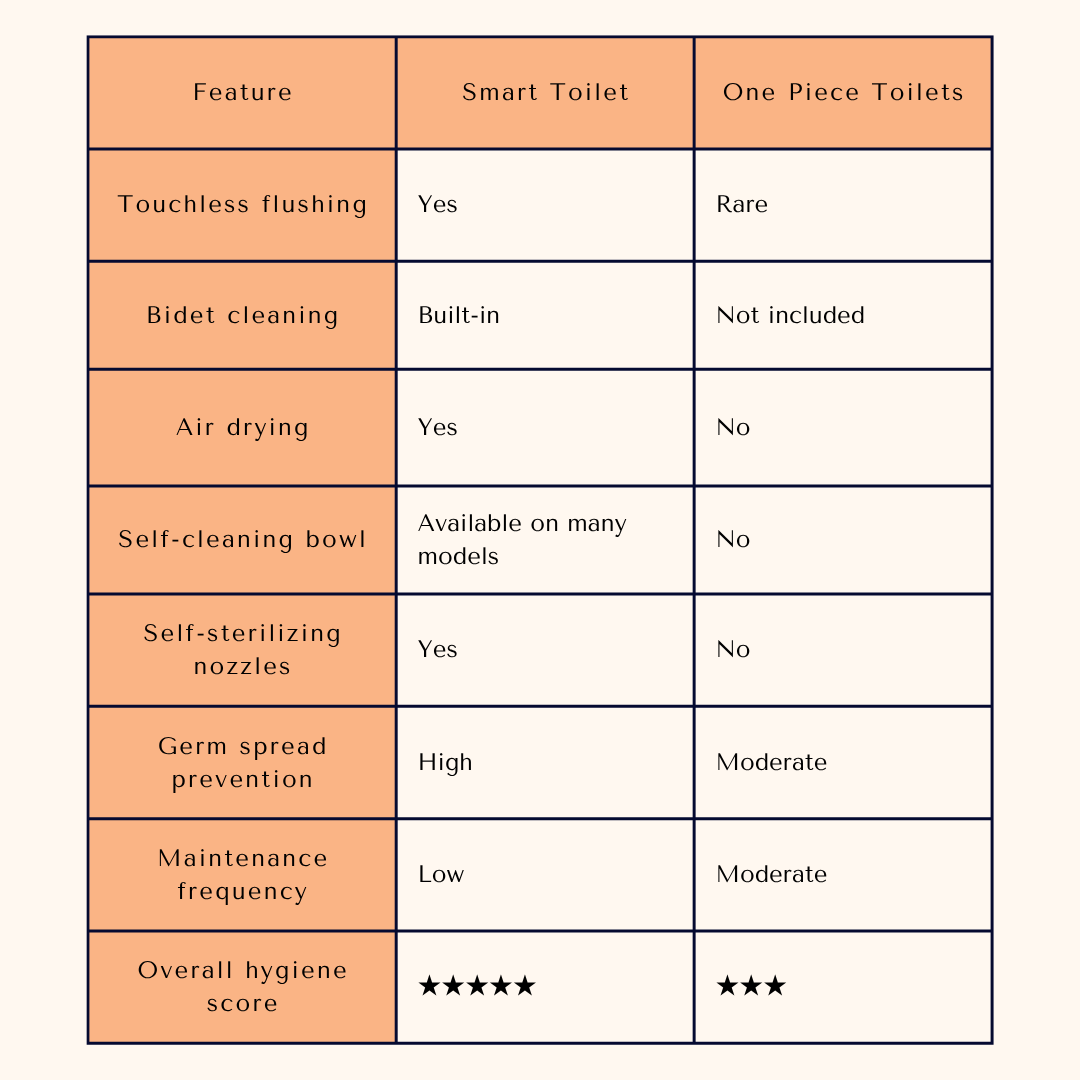
Hygiene Comparison: Smart Toilets vs One Piece Toilets (Side-by-Side)

Here’s a practical breakdown of how the two typically compare on hygiene-related features:


If hygiene is your top priority, smart toilets usually deliver more measurable improvement because they change both contact surfaces and personal cleaning methods.


No. 5

Real-Life Scenarios Where Hygiene Features Matter Most

Hygiene upgrades matter differently depending on who uses your bathroom and how often.

Families with kids

Kids are wonderful—and also famous for rushing. A smart toilet can reduce the “mess factor” by automating steps that children may forget or avoid, such as flushing or closing the lid. You also reduce how often little hands touch the same high-germ surfaces.

A one-piece toilet can still be a strong choice for family bathrooms because it’s easier to wipe clean quickly, especially around seams. But it can’t prevent touchpoint sharing the way touchless features can.

Elderly users or people with limited mobility

For seniors or anyone with arthritis, injuries, or mobility limitations, hygiene and dignity often overlap. Smart toilet features can reduce strain by eliminating twisting and reaching for flush handles, while bidet washing reduces uncomfortable movement.

A one-piece toilet may still work well if simplicity is the priority, but it won’t provide the same level of assistance.

Homes that host frequently

If you regularly have guests, a smart toilet’s automatic features and deodorizing systems can help keep the bathroom feeling fresher with less intervention. That said, guests may need a short “how to” if controls are unfamiliar—something to consider if you host a lot of people.

No. 6

Downsides and Trade-Offs (Being Honest About the Costs)

No toilet is perfect for every household. The “best” option depends on priorities: budget, reliability, comfort, and willingness to maintain technology.

Smart toilet challenges

Common drawbacks include:

  • Higher upfront cost than one-piece toilets

  • Requires electricity (and sometimes a nearby outlet upgrade)

  • More components can mean more specialized servicing

  • Some users need time to adjust to bidet functions and settings

  • Repairs, when needed, can be more expensive than standard parts

Smart toilets can be incredibly reliable, but they’re still technology—and technology introduces more variables than traditional plumbing hardware.

Why many people still choose one-piece toilets

One-piece toilets remain popular for practical reasons:

  • Lower cost and strong value

  • Simple operation (nothing to learn)

  • Fewer parts compared to smart systems

  • Sleek, modern aesthetic without needing electricity

  • Easier cleaning than two-piece toilets due to the integrated design

If your goal is a clean-looking, easy-to-maintain toilet with minimal complexity, a one-piece design can be a satisfying upgrade without stepping into the smart category.

No. 7

Which Option Is Better for Hygiene? A Realistic Verdict

If hygiene is the top priority, smart toilets generally offer the highest hygiene ceiling because they:

  • Reduce shared touchpoints (touchless lid + flush)

  • Improve personal cleanliness (bidet + optional air drying)

  • Offer self-cleaning features that help maintain a more sanitary bowl and nozzle system

That said, one-piece toilets are still a hygienic, practical choice, especially compared with older two-piece designs. Their smooth shape makes routine disinfecting easier, which is a major factor in real-world cleanliness.

The most honest conclusion is this:

  • Choose a smart toilet for maximum hygiene, comfort, and convenience.

  • Choose one-piece toilets for strong hygiene with simplicity, reliability, and a more manageable budget.

No. 8

How to Choose Between Smart Toilets and One-Piece Toilets

Use these questions as a quick decision framework:

  • Do you want maximum hygiene and fewer touchpoints? → Smart toilet

  • Is your budget limited, but you still want a modern upgrade? → One-piece toilets

  • Do you have kids, seniors, or frequent guests? → Smart toilet (often worth it)

  • Are you doing a simple remodel without electrical changes? → One-piece toilets

  • Do you value comfort features like heated seats and drying? → Smart toilet

If you’re on the fence, a middle-ground approach can work too: install a high-quality one-piece toilet now, and consider a bidet seat add-on later (if compatible) to improve hygiene without a full smart toilet investment.

Takeaways

In this article, we compared smart toilets and one-piece toilets through the lens of hygiene and everyday usability—not just aesthetics. Smart toilets clearly lead in hygiene features thanks to touchless operation, built-in bidet washing, air drying, and self-cleaning functions that reduce germ spread and improve personal cleanliness. They’re especially valuable for families, older users, and households that want maximum comfort with less manual effort.

At the same time, one-piece toilets remain a highly practical and hygienic choice. Their seamless design reduces crevices, simplifies cleaning, and offers a modern look with fewer parts and lower cost—ideal for homeowners who want reliability and simplicity.

The best choice depends on your priorities: if you want the cleanest, most hands-free experience, smart toilets are hard to beat. If you want a durable, easy-to-clean upgrade without introducing technology, one-piece toilets are still an excellent option.


Looking for Home resources?

Looking to enhance your living space and create a sanctuary that supports your well-being? Explore our home partners who offer a wide range of resources to elevate your home environment.



homeHLL x Editor


The Hidden Costs Of Backyard Upgrades No One Talks About

Backyard upgrades are one of the most satisfying ways to improve how your home looks, feels, and functions. A new patio can turn unused space into an outdoor living room. A deck can create the perfect spot for entertaining. A garden can add beauty and calm. And a pool can completely change how you spend your summers.


Yet while most homeowners plan carefully for the “obvious” expenses—materials, design choices, and contractor labor—many projects still end up costing more than expected. The reason is usually not poor planning or bad luck. It’s that there are several predictable costs that rarely get discussed upfront, and they tend to surface only after you’ve already committed.

In this article, we’ll break down the most commonly overlooked expenses that can quietly inflate your backyard renovation budget. You’ll learn what to watch for, why these costs show up, and how to plan for them so your project stays financially manageable from start to finish.

No. 1

Permit and Inspection Fees (Costs That Start Before Construction)

One of the first hidden costs can appear before any digging, drilling, or building begins: permits and inspections. Many outdoor projects—especially those involving structures, electrical work, plumbing, or pools—require approvals from local authorities.

Permits exist to ensure your project aligns with:

  • Zoning rules (setbacks, property lines, easements)

  • Safety standards (structural requirements, barrier rules for pools)

  • Environmental or drainage regulations (stormwater runoff, grading changes)

Why it affects your budget more than you think

Permit fees vary widely based on location and project type, and inspections may be required at multiple milestones. In other words, you may pay more than once, and you may have to schedule work around inspection availability.

Skipping permits can feel like a shortcut, but it often becomes expensive later through:

  • Fines and stop-work orders

  • Forced removal or rebuilds to meet code

  • Appraisal or home sale complications (unpermitted work can raise red flags)

If your contractor isn’t proactively discussing permitting, it’s worth asking early so you can budget for it rather than being surprised mid-project.

No. 2

Electrical and Utility Upgrades (The “Invisible” Infrastructure)

Modern backyard features often demand more from your home than you expect. Outdoor lighting, audio systems, kitchens, hot tubs, pool pumps, heaters, and automation equipment all require power—and not every home has an electrical system that can handle extra load.

Common cost drivers include:

  • Upgrading an electrical panel

  • Adding new circuits for outdoor equipment

  • Trenching and running conduit to outdoor areas

  • Installing GFCI protection and weather-rated outlets

  • Adding dedicated disconnects where required by code

Don’t forget plumbing and gas

Depending on the upgrade, you may also need:

  • Plumbing extensions for an outdoor sink, shower, or irrigation changes

  • Gas line installation for grills, fire pits, or pool heaters

  • Utility locating services to confirm what’s underground before digging

These are “hidden” because they often don’t appear until a contractor assesses your current setup—or until excavation begins and the reality of distances, access, and code compliance becomes clear.


No. 3

Soil Preparation and Groundwork (What’s Below the Surface Matters)

A backyard can look flat and simple until construction starts. Then the ground tells the truth. Soil composition, drainage patterns, and the slope of your yard can significantly impact cost—especially for projects that require stable footings and long-term structural integrity.

Potential groundwork expenses include:

  • Excavation and removal of soil

  • Grading to create a level base

  • Compaction for patios, pavers, and slabs

  • Soil replacement if the existing soil is unstable

  • Drainage solutions such as French drains or dry wells

Common surprises that add cost

Many homeowners are caught off guard by issues like:

  • Rock-heavy soil that slows excavation

  • Tree roots that require removal or rerouting plans

  • Poor drainage that must be fixed to prevent pooling water

  • Soft or shifting soil that can compromise foundations

Skipping or minimizing groundwork can be tempting when trying to save money, but it’s one of the most expensive corners to cut. Poor preparation can lead to cracking patios, shifting pavers, leaning retaining walls, or water damage—repairs that often cost more than doing it right the first time.

No. 4

Fencing and Safety Requirements (Especially for Pools)

Some upgrades are subject to safety regulations that are not optional. Pools are the clearest example, but other features may also require barriers depending on your local code and layout.

Typical pool-related requirements can include:

  • Fencing of a specific height

  • Self-closing or self-latching gates

  • Door or window alarms (in certain jurisdictions)

  • Safety covers or additional barriers

Even if you already have a fence, it may not meet code due to spacing, gate hardware, height, or access points. That can mean replacing sections or installing new compliant barriers—an expense that homeowners frequently don’t anticipate during the “dreaming” phase.


No. 5

Landscaping Restoration (The Cleanup Phase Isn’t Free)

Backyard construction is messy by nature. Materials are delivered, equipment rolls in, and paths are taken through parts of the yard you never intended to disturb. Even with careful contractors, heavy work can leave your outdoor space looking rougher than expected once the main build is done.

Restoration costs can include:

  • Re-sodding or reseeding damaged lawn areas

  • Replacing crushed plants, shrubs, or garden beds

  • Repairing sprinkler or irrigation lines

  • Adding mulch, edging, or new plantings to blend old and new areas

  • Rebuilding compacted soil so plants can grow again

This stage often gets overlooked because homeowners focus on the main feature—a patio, deck, or pool—and assume the yard will “naturally” look finished once it’s complete. In reality, construction can leave behind a patchwork effect unless you budget to restore or redesign the surrounding landscape for a cohesive final look.

No. 6

Ongoing Maintenance Costs (The Budget After the Build)

A backyard upgrade is not just a one-time purchase. Most improvements introduce ongoing maintenance requirements that can add up over the years. Planning for these costs upfront helps you avoid buyer’s remorse later.

Here are common examples:

  • Decks may need sealing, staining, and periodic repairs

  • Gardens require watering, seasonal care, soil amendments, and pest management

  • Patios and pavers may need leveling, joint sand replacement, and cleaning

  • Pools require routine cleaning, chemicals, filter maintenance, and equipment upkeep

Maintenance isn’t necessarily a downside—many homeowners enjoy it. But financially, it should be treated like part of ownership. A project that fits your renovation budget might still strain your finances if the long-term upkeep isn’t realistic for your schedule or wallet.

No. 7

Unexpected Issues During Construction (Why a Contingency Fund Matters)

Even the best-planned projects can run into surprises once you break ground. Underground conditions, old installations, and hidden damage don’t always show up in initial planning conversations.

Common unexpected issues include:

  • Underground utility conflicts requiring rerouting

  • Drainage problems that become obvious only after excavation

  • Structural concerns with existing patios, retaining walls, or decks

  • Permit-driven changes required after inspection feedback

  • Material substitutions due to supply issues or backorders

These surprises can increase both the budget and the timeline—sometimes quickly. The most practical defense is a contingency fund. Many contractors recommend setting aside 10% to 20% of your total budget for unforeseen conditions, especially for large or complex projects.

No. 8

A Note on Pool Installations (Where Hidden Costs Are Especially Common)

Pool projects are particularly known for uncovering hidden costs during installation. Excavation often reveals conditions that require adjustments—unstable soil, unanticipated drainage needs, or outdated electrical systems that must be upgraded to safely support pumps, heaters, lighting, and automation.

That’s why working with experienced professionals matters. For example, top rated pool companies in Annapolis typically anticipate many common challenges and can advise homeowners early on what to expect. Even with strong planning, it’s important to treat adjustments as a normal part of the pool-building process—not as an exception or a sign that something has gone wrong.

If you’re considering a pool, it’s wise to discuss these topics before construction:

  • Soil and groundwater considerations

  • Drainage and runoff management

  • Electrical load requirements and panel capacity

  • Access limitations for excavation equipment

  • Safety barrier and inspection requirements

The clearer these discussions are at the beginning, the more accurate your budget will be—and the less stressful the build tends to feel.

Takeaways

Backyard upgrades can add comfort, enjoyment, and long-term value to your home—but the true cost extends beyond materials and labor. In this article, we covered the hidden budget items that often catch homeowners off guard: permits and inspections, electrical and utility upgrades, soil preparation, fencing and safety requirements, landscaping restoration, ongoing maintenance, and unexpected construction surprises.

If you want a renovation that feels exciting rather than financially draining, plan with reality in mind. Get clarity on permitting early, confirm utility capacity before you commit to high-powered features, and budget for groundwork and restoration so the final result looks intentional—not “finished, but messy.” Most importantly, include a contingency fund so that surprises don’t derail your project.

With thoughtful preparation and the right professionals—especially for complex installs like pools—your backyard upgrade can be both beautiful and financially manageable, from the first sketch to the final walkthrough.


Looking for Home resources?

Looking to enhance your living space and create a sanctuary that supports your well-being? Explore our home partners who offer a wide range of resources to elevate your home environment.



homeHLL x Editor


Why Hiring a Professional Painter Is Worth It - And How To Choose The Right Team

A home feels truly welcoming when it reflects your personality—your preferred colors, your style, and the small details that make a space feel unmistakably yours. Paint is one of the fastest, most cost-effective ways to transform a room, but it’s also one of the easiest upgrades to underestimate. What looks simple on a short online video often becomes time-consuming in real life: moving furniture, repairing walls, taping edges, cutting in straight lines, and applying coats evenly without streaks, drips, or missed spots.


In this article, you’ll learn why hiring a professional painter can be one of the smartest decisions for your home improvement project, how it saves time and reduces disruption, what “high-quality finish” actually means, and how to choose a decorating company you can trust—from experience and insurance to licensing and bonding.

No. 1

A Home That Feels Like You Starts With the Right Color and Finish

Before discussing timelines and workmanship, it helps to acknowledge why painting matters so much. Color affects mood, energy, and how large (or small) a room feels. A well-chosen palette can make a house feel calmer, brighter, warmer, or more modern—without changing the layout or buying new furniture.

A professional painter doesn’t just “apply paint.” 

The best ones help you think through choices that affect the final look, such as:

  • Color scheme: warm vs. cool tones, bold vs. neutral palettes

  • Undertones and lighting: how natural and artificial light shifts color during the day

  • Sheen selection: flat/matte, eggshell, satin, semi-gloss, gloss (each impacts durability and how imperfections show)

  • Consistency across rooms: making hallways, adjoining rooms, and trim feel cohesive

If your goal is comfort and happiness in your space, paint is foundational—and the decisions behind it deserve care.

No. 2

Save Time (and Protect Your Free Time)

Your spare time is valuable. Most homeowners have long lists of things they’d rather do than spend evenings and weekends prepping walls, washing trim, patching dents, sanding rough areas, laying drop cloths, and cleaning brushes.

When you hire professionals, you’re not only paying for labor—you’re buying back time. That matters because DIY painting is rarely “just painting.” 

It often becomes:

  • A multi-weekend project that stretches longer than planned

  • A constant cycle of moving furniture around

  • A house that feels perpetually “in progress”

  • Stress over whether you’re doing it right (and how hard it will be to fix mistakes)

Professional painters arrive with a plan, a workflow, and the right tools. Instead of sacrificing your downtime, you can keep your schedule intact while the work gets done efficiently.


No. 3

Get Your Home Decorated Faster (Without Living in Half-Finished Rooms)

One of the most frustrating parts of painting on your own is how quickly the project expands.

What starts as “we’ll paint the living room this weekend” can become:

  • Day 1: move furniture + tape edges + patch imperfections

  • Day 2: sand + prime + first coat

  • Weeknight: second coat (after work, already tired)

  • Following weekend: touch-ups + trim + cleanup

And that’s just one room—assuming everything goes smoothly.

Professional painters typically complete projects faster because:

  • They work full days rather than squeezing time around other commitments

  • They use efficient prep and masking systems

  • They apply paint evenly, minimizing rework and touch-ups

  • They coordinate drying times and room-to-room sequencing smartly

Speed isn’t just about convenience—it reduces disruption. 

A faster project means fewer days of:

  • Furniture pushed into the center of rooms

  • Tape lines, drop cloths, and paint odors

  • Interrupted routines (especially challenging for families and remote workers)

A professional team can often refresh multiple rooms—or even an entire house—in a fraction of the time it would take most homeowners to do it themselves.

No. 4

Enjoy a High Standard of Finish (What “Professional Results” Really Mean)

Many people assume a high-quality finish is mainly about neatness. It is, but it’s also about consistency and durability. 

A professional finish typically includes details that DIY jobs often miss, such as:

  • Smooth walls with properly repaired dents, nail holes, and small cracks

  • Clean, straight cut-in lines at ceilings, corners, and trim

  • Even coverage with no patchiness, flashing, or roller marks

  • Proper primer use to prevent stains from bleeding through or color inconsistency

  • Crisp trimwork without brush lines, drips, or paint on hardware

  • A finish that holds up to real life—cleaning, scuffs, humidity, and everyday wear

Painting may look simple until you’re staring at a wall that dried unevenly or noticing lap marks every time the sunlight hits it. Professionals know how to avoid these issues through technique, product selection, and surface preparation.


No. 5

Reduce Costly Mistakes (and the Hidden Expense of DIY)

DIY projects can be economical—when they go as planned. But painting is one of those tasks where small errors can become expensive or time-consuming to fix. 

Common DIY pitfalls include:

  • Buying the wrong sheen (too glossy for walls, too flat for high-traffic areas)

  • Skipping primer when it’s needed (leading to stains, poor adhesion, or extra coats)

  • Inadequate surface prep (paint peeling, bubbling, or showing every imperfection)

  • Paint bleeding under tape due to poor technique

  • Choosing low-quality rollers/brushes that leave fuzz or streaks

  • Underestimating how much paint is required (multiple store runs, mismatched batches)

A professional painter reduces these risks because they’ve already learned—through experience—what works and what fails. They also tend to have supplier relationships and product knowledge that help ensure the coating system performs properly.

No. 6

How to Choose the Best Decorating Company

Hiring professionals has clear advantages, but your results depend heavily on who you hire. You will find that some painters vary widely in reliability, craftsmanship, cleanliness, and communication. The goal is to find a team that delivers excellent quality on schedule—without leaving messes, missed details, or surprise costs behind.

Below are the key factors to evaluate before you commit.

Experience

Always look for painters with a strong track record. Experience often translates into:

  • Better prep work (where quality truly begins)

  • Faster completion times without cutting corners

  • More consistent finishes on different surfaces (drywall, wood, plaster, trim)

  • Better problem-solving when unexpected issues appear (water stains, cracking, uneven textures)

Ask practical questions:

  • How long have you been painting professionally?

  • Do you specialize in interiors, exteriors, or both?

  • Have you completed projects similar to mine (older homes, high ceilings, detailed trim)?

Insurance

Before allowing any tradesperson to work on your property, confirm they are fully insured. This protects both you and the workers if something goes wrong—property damage, accidental injury, or unexpected incidents.

Ask to see proof of insurance and make sure it’s current. A reputable company will provide documentation without hesitation.

Licensed and bonded

For added peace of mind, look for painters who are licensed (where required) and bonded. While requirements vary by location, being licensed and bonded generally signals professionalism and accountability.

  • Licensed often means they meet local standards and operate legitimately.

  • Bonded can provide financial protection if contractual obligations aren’t met.

If you’re unsure what applies in your area, ask the company to explain their status clearly.

References and reviews

Don’t rely only on a polished website. 

Ask for:

  • Recent references you can contact

  • Photos of completed projects

  • Reviews that mention punctuality, cleanliness, and communication (not just “looks great”)

When you speak with references, consider asking:

  • Did the painters show up on time consistently?

  • Was the final cost close to the quote?

  • Did they protect floors and furniture properly?

  • How did they handle touch-ups or concerns?

A clear, detailed written quote

A professional quote should spell out what you’re paying for. 

It should include details like:

  • Areas to be painted (walls, ceilings, trim, doors)

  • Prep work included (patching, sanding, caulking)

  • Paint brand/line and sheen

  • Number of coats (and what determines if more are needed)

  • Timeline and daily working hours

  • Cleanup plan and disposal details

Clarity prevents misunderstandings and helps ensure the “high standard of finish” you expect is actually what’s being delivered.

Communication and professionalism

Finally, trust how the process feels. 

A strong painting company typically:

  • Answers questions directly

  • Offers realistic timelines

  • Explains prep and protection steps

  • Sets expectations about drying times and odor/ventilation

  • Treats your home with care

Professionalism shows up early—often before a single drop of paint is opened.

Takeaways

In this article, we explored why hiring a professional painter is often the best route to a home that looks polished, feels comfortable, and reflects your personal style. While DIY painting may seem straightforward, the reality is that prep work, product selection, technique, and timing all play major roles in how long your paint job lasts—and how good it looks in everyday lighting.

Professional painters help you save time, finish faster, and avoid the disruption of living in half-decorated rooms for weeks. They also deliver a higher standard of finish through careful preparation, precise edges, consistent coverage, and durable results.

To get the best outcome, choose a decorating company with proven experience, proper insurance, and (where applicable) licensing and bonding. Ask for references, insist on a detailed written quote, and look for clear communication from the first interaction. With the right professionals, your home can be beautifully transformed—efficiently, cleanly, and to a standard you’ll be proud to live with.


Looking for Home resources?

Looking to enhance your living space and create a sanctuary that supports your well-being? Explore our home partners who offer a wide range of resources to elevate your home environment.



homeHLL x Editor


The Hidden Reason Your Car Repairs Don't Last As Long As They Should

It’s one of the most aggravating situations any driver can face: you pay for a repair, you pick up the vehicle believing the problem is solved, and then—weeks or months later—the same symptom returns. At that point, it’s tempting to blame “bad parts,” assume the shop did something wrong, or chalk it up to rotten luck. Sometimes those explanations are true, but more often the reason is deeper and more predictable.


Long-lasting repairs depend on more than swapping a failed component.

They hinge on three fundamentals:

  1. Part quality (does the replacement meet the demands of real-world driving?)

  2. Correct installation (was it fitted, torqued, sealed, calibrated, and verified properly?)

  3. Accurate diagnosis (was the true cause found, or only the most obvious symptom?)

Drivers who invest in reliable components—such as sourcing quality jeep parts for vehicle-specific needs—are already making a smart move. Still, even great parts can fail early if they’re installed incorrectly, paired with worn supporting components, or used to “treat” the wrong problem.

In this article, you’ll learn the most common reasons repairs fail prematurely, how quality and installation work together, how diagnostic tools like an obd scanner reduce expensive guesswork, and what you can do—before and after any repair—to make sure you aren’t paying twice for the same issue.

No. 1

Part Quality and Installation: The Two Pillars of a Repair That Lasts

Part quality isn’t just “OEM vs. aftermarket”

Not all replacement parts are equal—even when they look identical in the box. A part’s longevity is influenced by its materials, tolerances, manufacturing consistency, and quality control. Low-cost components often “fit,” but they may not withstand heat cycles, vibration, road salt, and everyday wear the way a well-made part will.

High-quality parts are typically built to meet or exceed manufacturer standards. That matters because modern vehicles operate within tight mechanical and electrical tolerances. A slightly out-of-spec sensor, gasket, or suspension component can cause repeated warning lights, poor drivability, noise, leaks, or premature wear.

If you drive a jeep, for example, choosing vehicle-appropriate jeep parts is especially important because many jeeps see heavier loads, more vibration, and more off-road stress than the average commuter car. The wrong part may survive a short time—but it can degrade quickly under tougher conditions.

Installation quality is just as important as what you buy

Even the best part can fail if it’s installed carelessly.

Common installation-related issues include:

  • Incorrect torque specs (over-tightening or under-tightening fasteners)

  • Poor sealing surfaces or improper gasket placement

  • Contamination (dirt/debris in a sealed system, like cooling or braking)

  • Misalignment (belt tracking, suspension angles, axle seating, etc.)

  • Skipped steps (not bleeding brakes properly, not vacuum-filling coolant, not calibrating electronic components)

A professional-grade repair is more than “replace and send.” It’s a process: inspect, replace, verify, and test.

A repair should treat the whole system, not one failed piece

Many components fail because something else pushes them past their limits. If you only replace the final “victim” part, you risk repeating the failure.

Examples:

  • Installing a new brake caliper while ignoring seized slide pins or warped rotors

  • Replacing a battery repeatedly without testing the alternator, grounds, or parasitic draw

  • Installing a new wheel bearing without addressing an axle nut torque issue or worn hub mating surfaces

  • Swapping an ignition coil without checking plugs, injector issues, or oil contamination in the plug well

When a repair considers the full system—adjacent wear, root causes, and operating conditions—it’s far more likely to last.

No. 2

Accurate Diagnosis: The Difference Between Fixing a Symptom and Solving the Problem

If there’s one reason drivers get trapped in repeat repairs, it’s misdiagnosis. Vehicles often show the same symptoms for multiple different reasons. A rough idle, for instance, can be caused by ignition issues, vacuum leaks, fuel delivery problems, sensor faults, carbon buildup, or even mechanical engine wear.

That’s why replacing parts based on suspicion is expensive. You may get temporary improvement simply because the new part masks the symptom, but the underlying fault remains.

Why “parts cannon” repairs fail

A “parts cannon” approach means replacing the most common culprit and hoping it works.

Sometimes it does, but when it doesn’t, you’ve paid for:

  • An unnecessary part

  • Unnecessary labor

  • More downtime

  • Continued damage (because the real issue keeps persisting)

How an OBD scanner improves repair outcomes

A quality diagnostic workflow usually starts with data. Tools like an obd scanner help identify fault codes, monitor live sensor readings, and confirm whether a repair actually resolved the condition.

Crucially, fault codes are not the same as a diagnosis. They are clues. A good technician uses codes plus testing—smoke tests for vacuum leaks, fuel pressure tests, battery/charging tests, compression checks, wiring integrity tests, and more—to confirm root cause.

If you want repairs to last, insist on this mindset: confirm the failure, repair it correctly, then verify the result.


No. 3

Why Some Repairs Fail Too Soon (Even When the Part Is “Good”)

Even with quality components and competent installation, repairs can still fail prematurely when underlying contributors are ignored. Below are the most common real-world reasons.

1) Incomplete repairs and ignored contributing wear

A vehicle is a network of systems. When one component fails, it may be linked to wear elsewhere.

For example:

  • Replacing shocks/struts without addressing worn bushings can continue to cause noise and poor handling.

  • Installing a new radiator cap won’t solve overheating caused by a weak water pump or trapped air.

  • Replacing a single tire on an AWD vehicle can create drivetrain stress if the tread depths mismatch.

A durable fix often involves replacing or servicing related components—not because shops want to upsell you, but because the system must operate as designed.

2) Driving conditions that accelerate wear

Your environment matters. Short trips, stop-and-go traffic, rough roads, towing, extreme heat, and winter salt all shorten component life. A repair that would last five years in mild highway use may last two years in harsh urban driving.

This doesn’t mean repairs are “bad”—it means expectations and maintenance intervals must match reality.

If you drive in severe conditions, you may need:

  • More frequent fluid changes

  • More frequent brake inspections

  • More frequent suspension checks

  • Better-grade parts suited for heavy-duty use

3) Skipping routine maintenance after the repair

Maintenance is what protects repairs. New parts still rely on clean fluids, correct lubrication, and proper operating conditions. Neglecting basics—oil changes, coolant service, transmission servicing where applicable, air filter replacement, tire rotations—can cause repeat failures by increasing heat and friction across the vehicle.

Think of it this way: the repair is the “reset,” but maintenance is what keeps the reset from being undone.

4) Electrical or charging problems that destroy components

Electrical problems are notorious for causing repeat failures because they can look like unrelated issues.

For example, if you keep searching for a car battery near me and replacing the battery again and again, the battery may not be the true problem.

Common root causes include:

  • A weak alternator that undercharges

  • Overcharging due to a faulty voltage regulator

  • Corroded battery terminals or poor ground connections

  • Parasitic draw (something draining power when the car is off)

In these scenarios, the battery is just the component that fails first. Without a charging-system test, you can easily get trapped in an expensive cycle.


5) Incorrect or mismatched parts

Sometimes a part is “close enough” to fit, but not correct for the exact engine, trim, year, or drivetrain configuration.

Small spec differences can matter:

  • Wrong thermostat temperature rating

  • Incorrect sensor type or calibration

  • Slightly different brake pad compound

  • Incorrect serpentine belt length

  • Wrong spark plug heat range

Using the wrong part can create new symptoms or shorten lifespan, even if the installation was perfect. This is another reason sourcing correct jeep parts (or any vehicle-specific components) matters—fitment is not the whole story; correct specification is.

6) Delaying the repair until it causes secondary damage

Timing matters. Driving “just a little longer” with a known problem often creates collateral damage that makes the eventual repair less effective.

Examples:

  • Ignoring a misfire can damage catalytic converters.

  • Driving with a coolant leak can warp engine components from overheating.

  • Continuing with worn suspension parts can wear tires unevenly and stress steering components.

Early intervention is one of the simplest ways to ensure repairs last—because you’re fixing the original fault before it spreads.

7) Lack of verification testing after the job

A repair isn’t finished when the part is installed; it’s finished when the system is proven to work under real conditions.

Verification may include:

  • Clearing codes and confirming they do not return

  • Test-driving under the conditions that originally triggered the issue

  • Checking live data (fuel trims, sensor readings, charging voltage)

  • Rechecking for leaks after heat cycling

  • Confirming torque on critical fasteners after initial settling (where appropriate)

Skipping final checks is how small mistakes survive—only to become big problems later.

No. 4

How to Protect Yourself as a Driver: Practical Habits That Prevent Repeat Repairs

You don’t need to be a mechanic to improve your odds dramatically. A few smart habits can help you avoid paying twice.

  • Ask what caused the failure: A good shop can explain the root cause, not just the replaced part.

  • Request evidence of diagnosis: This might include scan results, voltage readings, or inspection photos.

  • Use quality components: For critical systems (brakes, steering, cooling, charging).

  • Don’t ignore maintenance: Repairs last longer when the vehicle is cared for consistently.

  • Test early if symptoms return: The sooner you address a returning issue, the less secondary damage you create.

If you’re troubleshooting at home, an obd scanner can be a cost-effective way to gather information before you approve major work—particularly for check-engine light issues. And for platform-specific vehicles, choosing the right jeep parts can reduce compatibility issues that lead to early failure.

Takeaways

Repairs that don’t last are rarely caused by one single mistake. Most premature failures come from a combination of part quality, installation quality, and—most importantly—whether the repair addressed the true root cause rather than just the symptom.

In this article, we covered why choosing reliable components (including vehicle-specific options like jeep parts) matters, why correct installation and system-level thinking prevent repeat failures, and how accurate troubleshooting with tools like an obd scanner reduces costly guesswork. We also highlighted common failure triggers—harsh driving conditions, neglected maintenance, electrical faults that lead to repeated battery replacement (the “car battery near me” cycle), incorrect part specifications, delayed repairs, and skipped post-repair testing.

A successful repair isn’t just a replacement—it’s a verified solution. When you combine quality parts, careful workmanship, proper diagnosis, and sensible maintenance, you dramatically increase the odds that the fix will hold up for the long haul.


Looking for Home resources?

Looking to enhance your living space and create a sanctuary that supports your well-being? Explore our home partners who offer a wide range of resources to elevate your home environment.



homeHLL x Editor


Why Spring Is the Best Time to Inspect Your Roof for Hidden Damage

Spring is often associated with fresh starts—cleaning, decluttering, and tackling home maintenance projects that were postponed during colder months. It’s also the ideal season to check one of your home’s most important protective systems: the roof. After months of freezing temperatures, snow loads, ice buildup, and strong winds, roofing materials can shift, crack, loosen, or fail in ways that aren’t obvious from the ground.


In this article, you’ll learn why post-winter roof inspections are so important, what kinds of hidden damage winter commonly causes, where to look for early warning signs, and how spring repairs can prevent expensive problems later in the year. We’ll also cover a practical (and often overlooked) benefit: how spring roof maintenance can make holiday light installation safer and less stressful when winter returns.

No. 1

Post-Winter Roof Inspections Are Essential

Winter weather can be surprisingly destructive for roofs—even ones that appear fine at first glance. The freeze-thaw cycle is particularly hard on building materials. Water can seep into tiny gaps around shingles, flashing, or roof penetrations, then expand as it freezes. Over time, that expansion can widen cracks, loosen fasteners, and separate joints.

Meanwhile, heavy snow accumulation can stress structural components, and high winds can lift, curl, or dislodge shingles. Some of the most common winter-related roof issues include:

  • Ice dams forming at the roof edge and forcing water back under shingles

  • Shingles loosening due to wind uplift or brittle cold-weather cracking

  • Flashing separating around chimneys, skylights, and vents

  • Small leaks that begin subtly and worsen as spring rain arrives

  • Gutter and downspout strain that causes water to back up near rooflines

The trouble is that many of these issues don’t show immediate symptoms indoors. A roof can sustain damage in January and only reveal it in March or April—when snow melts, spring rain increases, and warmer temperatures encourage moisture to spread.

Scheduling a roof inspection in early spring is a preventative move. It helps you locate weak points before they become urgent failures, extending the service life of your roof and reducing the odds of emergency repairs.

No. 2

Catching Loose Shingles Early (Before Water Finds a Path)

One of the most common problems after winter is loose, lifted, or missing shingles. Wind gusts and ice can break adhesive seals, allowing shingles to shift. Even if only one area is affected, the risk can multiply quickly.

A single displaced shingle may not look dramatic, but it can trigger a chain reaction:

  • Exposed underlayment becomes more vulnerable to moisture and UV damage

  • Wind can catch the edge of surrounding shingles, lifting more over time

  • Water can infiltrate beneath the shingle line, leading to rot or mold

  • Interior ceilings and insulation can absorb moisture before stains appear

Spring is the best time to address this because the weather is generally moderate and repairs are easier to schedule. Replacing or securing shingles early is often far less costly than repairing the damage caused by months of slow leaks.

What to look for during a spring check

From the ground (or using binoculars), watch for:

  • Shingles that look curled, uneven, or “wavy”

  • Missing tabs or exposed areas that appear darker than the rest

  • Granules collecting in downspouts (a sign shingles are deteriorating)

If you can safely access the attic, also look for:

  • Damp insulation

  • Darkened wood or a musty smell

  • Staining around roof decking or rafters


No. 3

Checking Flashing for Potential Leaks

Flashing is the thin metal material installed around roof joints and penetrations—such as chimneys, skylights, vents, and valleys—to guide water away from vulnerable seams. It’s a small component with a major job, and it often becomes the first point of failure after winter.

Cold temperatures can cause flashing to:

  • Crack or corrode

  • Separate from adjacent materials

  • Lose sealant adhesion

  • Warp slightly, creating gaps where water can enter

Once flashing is compromised, leaks can develop quickly—especially during spring storms. What makes flashing leaks tricky is that water may travel along rafters or roof decking before it shows up as a visible ceiling stain. That delay can make the damage more extensive by the time it’s detected.

A spring roof inspection should include close attention to flashing conditions and seals. If a roofer identifies gaps or cracks, addressing them early can prevent:

  • Interior water damage

  • Mold growth in attics or wall cavities

  • Damaged insulation and rising heating/cooling costs

  • Structural wood deterioration

No. 4

Why Early Repairs Make Holiday Light Installation Safer

Many homeowners only think about roof safety when it’s time to install Christmas lights. But by that point, the weather is colder, days are shorter, and roof surfaces can be slippery—making the job riskier. Taking care of roof issues in spring reduces the odds that you’ll be dealing with broken shingles, unstable edges, or hidden weak spots months later.

A well-maintained roof makes holiday decorating safer and simpler because:

  • Shingles are less likely to crack under foot traffic

  • Gutters and edges are more secure for ladder placement

  • You’re less likely to trigger leaks by disturbing damaged sections

  • You can plan decorating instead of scrambling to repair last-minute problems

If you prefer professional help during the holidays, hiring the best holiday light installation company in Grovetown, GA can also reduce risk—especially if your roof has steep pitches, multiple rooflines, or delicate areas around gutters and fascia. Professional installers are typically equipped to work efficiently without damaging roofing materials or drainage systems.

Spring repairs aren’t just about preventing leaks—they’re about reducing future seasonal stress and improving home safety year-round.


No. 5

Preventing Future Roof Problems (Not Just Fixing Winter Damage)

A spring inspection isn’t only about repairing what winter broke. It’s also your best chance to stop minor roof weaknesses from turning into costly repairs later in the year.

Small issues often lead to major outcomes because roofs manage water. When water control fails—even slightly—damage can spread into:

  • Roof decking and structural wood

  • Insulation (reducing energy efficiency)

  • Drywall and interior paint

  • Electrical systems in ceilings or walls

  • Indoor air quality, due to mold and dampness

A thorough spring inspection can also include the attic, where early signs often show up first.

A professional may look for:

  • Moisture marks around roof penetrations

  • Condensation issues or poor ventilation

  • Daylight visible through roof boards (a sign of gaps or holes)

  • Signs of pests that may have entered through compromised areas

This preventative approach can save significant money over time. Many major roof repairs don’t start as “big problems”—they start as small, neglected ones.

No. 6

Benefits of Spring Roof Inspections (A Quick Summary)

Spring inspections are one of the highest-value maintenance tasks you can do as a homeowner. They combine good weather conditions, post-winter timing, and a practical window to fix issues before heavy rain and summer heat accelerate deterioration.

Key benefits include:

  • Early detection of hidden damage: Loose shingles, cracked seals, damaged flashing, or soft spots are easier to address when caught early.

  • Prevention of costly repairs: Minor fixes in spring can prevent interior water damage, mold remediation, and structural repairs later.

  • Improved roof lifespan: Routine maintenance and timely repairs help your roofing system reach (or exceed) its intended lifespan.

  • Safer seasonal projects: A stable roof supports safer gutter cleaning and easier holiday light installation later in the year.

  • Better peace of mind: Knowing your roof is secure before storm season reduces the stress of surprise leaks.

Takeaways

Spring is the best time to inspect your roof for hidden damage because winter conditions—ice, snow, wind, and freeze-thaw cycles—can weaken shingles, flashing, and seals without obvious signs.

In this article, we covered why post-winter roof inspections matter, how loose shingles and damaged flashing can lead to leaks, and why early repairs reduce long-term costs and disruption. We also explained an often-overlooked advantage: spring maintenance can make holiday light installation safer and easier, especially if you plan to work with the best holiday light installation company in Grovetown, GA.

If you do one thing this season, schedule a professional roof inspection (or at minimum, perform a careful visual check and attic review). Catching small issues in spring can prevent major water damage later—and keep your home protected through storms, heat, and the next winter cycle.


Looking for Home resources?

Looking to enhance your living space and create a sanctuary that supports your well-being? Explore our home partners who offer a wide range of resources to elevate your home environment.



homeHLL x Editor


Why Reliable Plumbing Matters More Than You Think

Most parts of your home work quietly in the background. You turn on the tap, run the shower, flush the toilet—without thinking much about what makes all of it possible. Plumbing is one of those essential systems that tends to go unnoticed until something goes wrong. And when an issue does arise, it becomes immediately clear how much your comfort, hygiene, and daily routine depend on reliable water flow and proper drainage.


In this article, we’ll look at the role plumbing plays in everyday life, why small issues can quickly turn into expensive disruptions, how professional support protects your home, and what preventative maintenance habits make the biggest difference over time. The goal is simple: help you keep your plumbing system dependable, so your home remains easy to live in—day after day.

No. 1

The Role of Plumbing in Daily Life (More Than You Think)

From the moment you wake up, plumbing supports your routine. It provides clean water for basic hygiene, enables cooking and cleaning, removes waste safely, and helps keep your living environment sanitary. It’s not an overstatement to say that plumbing is one of the foundations of modern comfort.

Think about how many times you rely on it in a normal day:

  • Washing hands, brushing teeth, and showering

  • Making coffee, boiling water, and rinsing produce

  • Running the dishwasher, doing laundry, and cleaning surfaces

  • Flushing toilets and keeping bathrooms functional

  • Watering gardens or filling pet bowls

When everything works as it should, your home feels stable and manageable. But if water pressure drops, drains slow down, or a toilet begins to run continuously, even simple tasks become inconvenient—or impossible.

Because plumbing is mostly hidden behind walls, under floors, and beneath fixtures, it’s easy to forget it needs care. That “out of sight, out of mind” dynamic is exactly why plumbing maintenance matters. Your system can be deteriorating slowly long before it becomes a visible problem.

No. 2

Why Small Plumbing Problems Escalate So Quickly

A minor leak, a slow drain, or a toilet that occasionally struggles to flush might not seem urgent. Many homeowners postpone repairs because the issue feels manageable—or because they assume it can wait until it gets worse.

The problem is: plumbing rarely fails in a neat, predictable way. Small issues tend to worsen quietly, and they often cause damage that is far more costly than the original repair.

Common “small” issues that can become major disruptions

  • Tiny leaks under sinks or behind appliances can lead to mould, warped cabinetry, and damaged flooring.

  • Slow drains can indicate a growing blockage, which may eventually back up into sinks, showers, or toilets.

  • Dripping taps waste water continuously and can signal worn seals or corrosion.

  • Running toilets can drive up water bills and may indicate failing internal components.

  • Low water pressure can be a symptom of mineral buildup, a hidden leak, or issues with the supply line.

What makes plumbing problems particularly risky is the relationship between water and building materials. Water damage spreads. Moisture compromises timber, plaster, paint, and insulation. And once dampness becomes persistent, it can introduce odors, allergens, and long-term structural issues.

Addressing problems early is not just about convenience—it’s a form of protection.

Early intervention can prevent:

  • Larger repairs that require demolition or replacement

  • Extended disruption to bathrooms, kitchens, or laundry areas

  • Secondary damage (mould growth, swelling, rot, stains)

  • Unexpected emergency call-outs at inconvenient times


No. 3

The Value of Professional Support (When DIY Isn’t Enough)

There are maintenance tasks you can handle on your own—like keeping an eye on visible pipework, noting water pressure changes, or using drain strainers to reduce buildup. But plumbing systems are complex, and many issues are hidden or misdiagnosed when treated as surface-level problems.

An experienced plumber doesn’t just fix what’s visible—they identify the source, assess the broader system, and help prevent repeat failures.

Professional plumbers can provide:

  • Accurate diagnosis, including for issues behind walls or under floors

  • Correct repairs that meet safety and compliance standards

  • Tools and expertise for blockages, leaks, and pressure issues

  • Advice on upgrades that improve reliability and efficiency over time

Working with a service such as Evolution Plumbing can help ensure issues are handled correctly and efficiently. Professional guidance may not only solve the current problem, but also reduce the likelihood of future concerns—especially when the underlying cause is identified early.

Just as importantly, reliable plumbing support provides peace of mind. When you’re dealing with a system that is essential to your household’s function, knowing who to call—and knowing the job will be done properly—matters.

No. 4

Preventative Maintenance: The Best Way to Avoid Major Plumbing Issues

One of the smartest ways to avoid expensive repairs is to treat plumbing like other essential home systems: it needs routine attention. Preventative maintenance doesn’t have to be complicated. It’s often a collection of small checks and habits that help you catch problems early—before they become emergencies.

Simple preventative checks that make a difference

  • Monitor water pressure: sudden changes can signal a leak, blockage, or supply issue.

  • Pay attention to drainage speed: slow drains are often early warning signs.

  • Watch for stains or damp patches: discoloration on walls, ceilings, or cabinetry can indicate hidden leaks.

  • Listen for unusual sounds: banging pipes, gurgling drains, or persistent toilet refills deserve attention.

  • Check under sinks and around appliances: a quick glance can catch moisture before it spreads.

Everyday habits that protect your plumbing system

  • Avoid pouring fats and oils down the sink (they solidify and build blockages).

  • Use drain strainers to catch hair and food particles.

  • Don’t treat toilets like bins—flush only toilet paper.

  • Run water through infrequently used drains to reduce odours and trap drying.

  • Address minor issues promptly instead of “waiting to see if it stops.”

Preventative maintenance is not just about reducing repair costs—it’s also about preserving your home’s comfort. When plumbing is reliable, your home feels effortless to run. When it isn’t, daily routines become stressful and unpredictable.


No. 5

Comfort, Hygiene, and Home Value: What a Healthy Plumbing System Really Provides

Plumbing affects far more than convenience. It supports hygiene, protects your property, and contributes to the long-term value of your home. Even if you’re not planning to sell, your plumbing system is still a core asset—because damage caused by leaks or poor drainage can be expensive and invasive to repair.

A well-maintained plumbing system helps deliver:

  • Consistent comfort: hot showers, reliable water pressure, working fixtures

  • Health protection: clean water, proper waste removal, reduced mould risk

  • Lower costs over time: fewer emergencies, less secondary damage, better efficiency

  • Property protection: reduced risk of rot, swelling, and structural moisture damage

  • Confidence: fewer surprises, less household disruption

When plumbing works properly, it fades into the background—as it should. Your home becomes a space you can move through without worrying about unexpected interruptions.

Takeaways

Plumbing is one of the most important systems in your home, even though it’s easy to overlook because it operates behind the scenes.

In this article, we explored how plumbing supports everyday routines, why small issues like leaks and slow drains can escalate quickly, and how professional support—such as Evolution Plumbing—can ensure problems are handled correctly and help prevent repeat concerns. We also covered practical preventative maintenance habits that reduce the risk of major disruptions.

If you take only one step, make it this: pay attention to small changes in water pressure, drainage speed, or unusual dampness, and address issues early. A little attention now can protect your comfort, your budget, and your home for years to come.


Looking for Home resources?

Looking to enhance your living space and create a sanctuary that supports your well-being? Explore our home partners who offer a wide range of resources to elevate your home environment.



homeHLL x Editor


Essential Design Upgrades For A Brighter And More Peaceful Home

A home can look “finished” and still feel draining. That’s because genuine comfort isn’t created by furniture alone—it’s created by how a space supports your nervous system, your routines, and your sensory needs throughout the day. If you want your home to function as a wellness sanctuary, the goal is not only minimalism or visual harmony. The goal is a living environment that consistently feels calm, quiet, breathable, and emotionally restorative.


In this article, you’ll learn the most impactful design upgrades—both structural and decorative—that make a home brighter and more peaceful in a lasting way. We’ll start with foundational comfort (temperature and sound), move into the psychological benefits of daylight, and then finish with smaller sensory-friendly enhancements that make everyday living feel lighter and more intentional.

No. 1

Build a Sanctuary by Upgrading Acoustic and Thermal Comfort

Visual aesthetics can only do so much if your home is freezing in winter, stifling in summer, or constantly interrupted by street noise. A peaceful home is not merely a styled home; it is a protected home—one that reduces exposure to outside stressors so you can downshift, recover, and focus.

Two of the most common “invisible stressors” are:

  • Thermal discomfort: drafts, fluctuating temperatures, rooms that never feel stable

  • Acoustic irritation: traffic noise, neighbour activity, barking dogs, general urban sound bleed

When these persist, the body stays subtly alert. That low-level vigilance is the opposite of what most people want from their home environment. Addressing it often requires structural upgrades, not just décor changes.

For homeowners who want to significantly improve both temperature regulation and acoustic insulation, investing in premium fixtures can be transformative. Exploring upgrades like double glazed windows in Mornington is a strong example of how a practical structural improvement can convert a noisy, drafty room into a quieter retreat. Double glazing works by trapping an insulating layer (often gas) between two panes of glass, which helps stabilize indoor temperatures and reduce heat transfer.

Just as importantly, that dual-pane construction reduces the intensity of outside noise. In a wellness-oriented home, that matters: quiet is not a luxury detail—it’s a foundational ingredient for rest, reading, focused work, and better sleep.

Additional upgrades that support acoustic and thermal calm include:

  • Sealing gaps around windows and doors to reduce drafts and noise leakage

  • Upgrading door sweeps and weatherstripping, especially on exterior doors

  • Adding thicker curtains or acoustic drapery in bedrooms and living areas

  • Using rugs (or larger area rugs) to reduce echo and soften footfall noise

  • Insulating key problem areas such as the roof cavity and external-facing walls

These changes don’t only improve comfort; they reduce ongoing friction. When your home maintains temperature and dampens sound naturally, you stop “managing” your environment and start living in it.

No. 2

Maximize the Psychological Benefits of Daylight (Not Just the Aesthetic Ones)

Natural light is one of the most powerful, underused wellness tools in modern home design. Bright spaces feel larger and more inviting, but daylight’s real value goes beyond appearance. Consistent exposure to natural light helps regulate circadian rhythms, supports mood stability, and improves sleep quality—three pillars of feeling mentally and physically well.

When a home lacks daylight, people often compensate with harsh overhead lighting, screens, and constant stimulation—especially in winter months or in homes with smaller windows. Over time, that can contribute to fatigue, irritability, and a general sense of low energy.

Research highlighted by UCLA Health reinforces why daylight matters. A large study involving 500,000 individuals found that each additional hour spent outside in natural light was linked with a corresponding reduction in the risk of long-term depression, alongside self-reported improvements in happiness and sleep quality.

The takeaway for home design is simple: if you can bring more daylight into your indoor environment, you’re not just improving a room—you’re supporting your biology.

Design upgrades that help you capture more daylight indoors:

  • Larger, energy-efficient windows (where renovation is possible)

  • Glass doors or wider openings to share light between rooms

  • Lighter wall colours that reflect sunlight rather than absorbing it

  • Strategically placed mirrors that bounce light deeper into the space

  • Sheer curtains that maintain privacy without blocking brightness

Daylight also improves how other materials read—wood looks warmer, textiles look richer, and a minimalist palette feels softer rather than stark. That’s why increasing natural light often makes an entire home feel more “expensive” without changing any furniture.


No. 3

Use a Minimalist Framework: Space, Color, Lighting, Texture, and Form

A calm home isn’t created through emptiness; it’s created through coherence. When design feels unified, the mind works less to interpret the environment—and that reduces mental load.

A helpful framework is the foundational five elements of interior design:

  • Space: flow, clear walkways, functional zones

  • Color: a controlled palette that supports calm

  • Lighting: balanced layers, warm temperatures, dimmable options

  • Texture: softness and tactile comfort to counter sterile minimalism

  • Form: consistent shapes and silhouettes that reduce visual “noise”

If any one of these is chaotic, the home can feel unsettled even if it’s clean. The goal is to align them so each room feels intentional, not accidental.

Practical ways to apply this framework quickly:

  • Remove one piece of oversized furniture that interrupts flow

  • Reduce competing colours by choosing two neutrals plus one accent family

  • Replace one harsh overhead fixture with layered, warm lighting

  • Add texture (wool, linen, timber) to soften hard surfaces

  • Repeat shapes—e.g., rounded lamps with rounded mirrors—to create visual rhythm

Minimalism works best when it serves comfort, not when it becomes rigid. A wellness home can be simple and still feel warm.

No. 4

Make Small Sensory-Friendly Upgrades That Calm the Body

Once your home is structurally prepared to welcome daylight and buffer noise, the “small” interior details begin to matter more. These are the upgrades that shift a room from visually appealing to genuinely soothing.

A sensory-friendly home is designed to reduce overstimulation. It considers glare, harsh contrast, scratchy materials, chemical scents, echo, and clutter density. This is where peace becomes tactile.

Natural materials (tactile calm)

Introduce materials that feel grounding and breathable:

  • Untreated or lightly finished timber

  • Linen bedding and curtains

  • Wool rugs or throws

  • Cotton upholstery and simple weaves

These textures don’t only look good—they create a subtle sense of warmth and safety.

Ambient lighting (nervous system support)

Light tells the brain when to be alert and when to wind down. If your home relies on cool, bright bulbs in the evening, you may unintentionally keep your body in “daytime mode.”

Consider:

  • Dimmers in living rooms and bedrooms

  • Warm-toned LED bulbs for lamps and evening lighting

  • Bedside lighting that is soft, not glaring

  • Indirect light (wall sconces, shaded lamps) to reduce harsh shadows

Indoor greenery (visual softness + air quality)

Plants add organic shape and soften minimal interiors. They also bring life into corners that feel visually dead.

Good low-maintenance choices often include:

  • Snake plant

  • Pothos

  • ZZ plant

  • Peace lily (if safe for your household)

Even one larger plant can change the mood of a room by adding a gentle focal point.

Mindful color palettes (reduce visual fatigue)

Colour is mood architecture. If you want peace, choose tones that read as stable and grounded rather than sharp or overly saturated.

Examples of calming tones:

  • Sage green

  • Warm terracotta

  • Muted beige

  • Soft clay

  • Gentle off-white (not stark bright white)

These colors tend to reflect light beautifully and reduce the “buzz” that high-contrast rooms can create.


No. 5

Design with Long-Term Intention (So Peace Lasts Beyond the Makeover)

A brighter, calmer home isn’t a one-time project—it’s a design philosophy. It’s the decision to align your environment with how you want to live, not just how you want your home to look in photos.

Long-term intention means you choose upgrades that remove recurring friction:

  • Materials that hold up well and age gracefully

  • Insulation and window upgrades that lower ongoing discomfort

  • Lighting that supports evening wind-down rather than fighting it

  • Layout choices that support routines (morning calm, meal prep ease, bedtime quiet)

It also means resisting trend-chasing. Wellness design is not about what’s popular this year. It’s about what continues to feel good five years from now.

When your environment functions as a true sanctuary, your days begin and end differently. You recover more fully. You sleep more deeply. You feel less “on.” That’s not abstract—it’s a practical outcome of a home designed to support human needs.

Takeaways

A peaceful home is created through more than furniture and styling; it’s built through structural comfort, supportive light, and sensory-friendly details.

In this article, we covered the upgrades that make the biggest difference: improving acoustic and thermal stability, increasing natural daylight to support mood and sleep, using a minimalist design framework (space, color, lighting, texture, and form), and layering smaller wellness-focused enhancements like natural materials, ambient lighting, indoor greenery, and calming color palettes.

If you want the highest-impact starting point, prioritise the upgrades that reduce daily friction—particularly noise, drafts, and poor light quality. These changes don’t just improve how your home looks; they improve how it feels to live in, day after day.


Looking for Home resources?

Looking to enhance your living space and create a sanctuary that supports your well-being? Explore our home partners who offer a wide range of resources to elevate your home environment.



homeHLL x Editor


Home Upgrades That Elevate Your Home To A New Level

You don’t always need a full renovation to transform your home. In reality, some of the most meaningful improvements come from small, strategic upgrades—the kind that make your home feel more polished, more comfortable, and more functional without turning your life into a construction zone.


In this article, you’ll find a curated set of minor home upgrades that deliver outsized results. These ideas are designed to help you refresh the look of your space, improve everyday usability, and—when chosen wisely—support long-term property value. Whether you tackle one change this weekend or plan a series of gradual improvements, the goal is the same: create a home that feels intentionally upgraded rather than “kind of fine.”

No. 1

Upgrade Your Doors for Instant Impact

Doors are one of the most underrated elements in a home, largely because you see them every day and stop noticing their influence. But doors set the tone—visually and practically. A worn, dated, or poorly fitted door can quietly pull a space down, while a modern door installation can make the entire home feel more elevated.

Upgrading doors can improve:

  • First impressions (especially with the front entrance)

  • Security, with stronger cores, better locks, and improved frames

  • Energy efficiency, by reducing drafts and improving seals

  • Noise reduction, particularly with solid-core interior doors

  • Resale value, because doors signal “well-maintained” to buyers

Even when homeowners choose high-quality materials, the result depends heavily on fit and finish. A door that rubs, sticks, leaks air, or sits unevenly will never feel premium. That’s why many people opt for a professional approach; it saves time and avoids the common alignment and framing issues that can happen with DIY work.

If your home has older, hollow interior doors, mismatched styles, or an entry door that feels thin and insecure, this single upgrade can create a noticeable “new home” effect without requiring a remodel.

No. 2

Refresh Your Walls with Paint (The Highest ROI Visual Upgrade)

A fresh coat of paint is one of the fastest ways to modernize a home. It’s also one of the easiest upgrades to plan in phases—one room at a time—without disrupting the entire house.

Paint improves a space because it changes how light behaves. Walls that are scuffed, yellowing, or unevenly patched tend to make rooms feel dull, even if your furniture is beautiful. New paint can make rooms feel brighter, cleaner, and more cohesive.

Smart approaches that elevate the result:

  • Choose soft neutrals for a timeless, wide-appeal look

  • Use a consistent palette across connected spaces for flow

  • Add a feature wall if you want personality without overpowering the room

  • Don’t skip prep: fill holes, sand rough patches, and clean walls first

Paint is also one of the easiest ways to “correct” mismatched design eras. If your home has a blend of old and new elements, consistent wall colour creates visual harmony and makes everything feel more deliberate.


No. 3

Update Lighting for a More Modern, Finished Feel

Lighting is often the difference between a home that looks good in daylight and a home that feels warm, stylish, and inviting at night. Outdated fixtures can make a space feel dated, even if everything else has been updated. Conversely, modern lighting can instantly elevate the perceived quality of a room.

A strong lighting upgrade focuses on both fixtures and layering.

Consider these lighting improvements:

  • Replace dated ceiling fixtures with clean, contemporary designs

  • Add layered light, combining ambient, task, and accent lighting

  • Use warm, consistent bulb temperatures (mixing cool and warm bulbs makes spaces feel “off”)

  • Install dimmers in living rooms, bedrooms, and dining areas for flexibility

Layered lighting examples

  • Kitchen: ceiling lights + under-cabinet lighting + pendant over island

  • Living room: overhead + floor lamp + table lamps to reduce harsh shadows

  • Bedroom: bedside lamps + overhead dimmer for a calmer atmosphere

This is a relatively minor upgrade, but it changes how you experience your home every evening—arguably when you most want it to feel restorative.

No. 4

Improve Energy Efficiency Without Major Construction

Energy upgrades don’t need to be dramatic to be effective. Small improvements that reduce drafts, stabilize indoor temperature, and cut waste can lead to noticeable comfort gains—and steady savings over time.

Even modest efficiency improvements can elevate a home because they reduce “invisible annoyances”: rooms that feel cold, hot spots, window drafts, and HVAC systems that run too often.

High-impact, low-disruption energy upgrades:

  • Seal gaps around doors and windows with weatherstripping

  • Re-caulk around trims and frames where air leaks occur

  • Add attic insulation if it’s thin or uneven

  • Upgrade older windows when feasible, or use thermal treatments (curtains, blinds) as interim steps

Many homeowners start with the simplest change—draft sealing—and are surprised by how much more comfortable the home feels. Comfort is a form of luxury, and small efficiency upgrades often deliver it.


No. 5

Enhance Curb Appeal with Simple, High-Visibility Changes

Curb appeal isn’t only for selling. It affects how you feel every time you come home. A welcoming exterior creates a subtle sense of pride and calm—while a neglected exterior creates mental clutter before you even step inside.

Easy curb appeal upgrades that make a real difference:

  • Repaint or refresh the front door

  • Replace old house numbers with modern, readable ones

  • Add planters near the entry for colour and balance

  • Upgrade exterior lighting to improve warmth and safety

  • Tidy garden edges and refresh mulch for a clean, intentional look

You don’t need a new driveway or a major landscaping redesign. Often, the best result comes from tightening what’s already there: clean lines, healthy greenery, and one or two focal points.

No. 6

Replace Fixtures and Hardware (Small Details, Big “New Home” Energy)

Hardware is one of those details that affects the “feel” of a home more than people expect. When door handles are scratched, cabinet pulls are mismatched, or taps are dated, the home can feel older—even if everything is clean.

Upgrading fixtures and hardware is typically affordable, fast, and highly visible.

Areas to target:

  • Cabinet handles and drawer pulls (kitchen and bathrooms)

  • Door handles and hinges (especially if finishes don’t match)

  • Bathroom taps, showerheads, and towel bars

  • Light switches and outlet covers (new ones look surprisingly crisp)

Tip: Choose a consistent finish direction (e.g., matte black, brushed nickel, aged brass) and repeat it intentionally. That repetition creates the “designed” feeling people associate with higher-end homes.

No. 7

Declutter and Reorganize to Make Space Feel Bigger (and Easier to Live In)

Decluttering may not sound like an upgrade, but it functions like one. It improves flow, increases usable space, and makes your home feel calmer and more premium—without buying anything new.

Clutter adds visual noise. It also creates friction: you spend more time looking for things, cleaning around things, and managing piles that never resolve. Decluttering removes that drag.

Practical ways to make decluttering stick:

  • Reduce “flat-surface storage” (counters, dining tables, entry benches)

  • Create zones: keys, mail, bags, and shoes each get a dedicated home

  • Use storage that closes (baskets, cabinets) for visual simplicity

  • Schedule a seasonal reset: one closet, one drawer, one cabinet at a time

If you want the biggest impact, focus on the areas you see and use daily: the entryway, kitchen counters, bathroom surfaces, and bedroom floor space.

No. 8

Add Small Comfort Upgrades That Make the Home Feel More Premium

Once the basics are handled—paint, lighting, doors, and organization—comfort upgrades can push the home into that “new level” feeling. These are not renovations; they are finishing touches that improve daily experience.

Minor upgrades that enhance comfort and polish:

  • Upgrade towels and bedding (texture makes a surprising difference)

  • Add quality curtains that frame windows cleanly and improve light control

  • Use a large area rug to anchor a room and reduce echo

  • Install soft-close hinges or drawer slides for a smoother feel

  • Improve sound comfort with fabric elements (rugs, curtains, upholstered pieces)

A home feels elevated when it’s not only visually appealing, but also easy to live in. These upgrades improve the lived experience—the part that matters most.

Takeaways

Minor upgrades can transform your home without the cost and disruption of a full renovation. In this article, we covered practical, high-impact improvements that make a noticeable difference: upgrading doors for immediate visual and functional payoff, refreshing walls with paint, modernizing lighting, improving energy efficiency, enhancing curb appeal, updating fixtures and hardware, decluttering for a calmer and more spacious feel, and adding small comfort-focused touches that elevate everyday living.

If you want the best results, prioritize upgrades that improve both how your home looks and how it functions. A few smart changes—done intentionally—can make your space feel cleaner, newer, and more “yours,” often faster than you expect.


Looking for Home resources?

Looking to enhance your living space and create a sanctuary that supports your well-being? Explore our home partners who offer a wide range of resources to elevate your home environment.



homeHLL x Editor


An Overlooked Las Vegas Wellness Ritual: Resetting The Air in Your Home

Wellness content usually begins with what we should add to our lives: more water, more sleep, more walking, more time outside, more boundaries, more protein, more rest. All of that matters. But there is another side of feeling well that receives far less attention—even though it affects you every day: what you remove.


Less noise. Less friction. Less hidden buildup. Less environmental stress in the place where you are supposed to recover.

In Las Vegas, this “removal” side of wellness is not a niche concern. It is a practical, everyday reality shaped by climate, construction, and the simple fact that most of us spend a lot of time indoors with the air conditioning running.

In this article, we’ll explore why the atmosphere of your home—especially the quality of the air moving through it—is an essential part of a mindful, recovery-oriented lifestyle, and how a clean, supportive indoor environment can become one of your most powerful (and overlooked) wellness tools.

The Las Vegas Valley got another reminder of this on March 5, 2026, when a blowing-dust advisory pushed desert particles back into the conversation. Anyone who lives here understands the feeling: fine dust appears on surfaces that were just cleaned, the HVAC runs hard for long stretches of the year, and homes stay sealed for comfort. That sealed-up comfort makes the indoor environment matter more, not less.

If your home is where you regulate your nervous system, protect your sleep, and return to yourself after overstimulation, then the air circulating through that home is not a side issue. It is part of the ritual.

No. 1

A mindful life feels different when the home itself is supportive

People who care about conscious living often notice something before they can fully articulate it: some homes feel instantly settling, while others feel vaguely demanding. You walk in, and your shoulders drop—or you walk in, and something feels subtly “off,” even when the room is beautiful.

That difference is rarely just aesthetic. Lighting matters. So does clutter, colour, sound, and scent. But air is the quiet backdrop behind all of it. It influences whether a bedroom feels restorative, whether a living room feels calm or stuffy, and whether your home stays fresh for a day—or for an hour.

Las Vegas is a city built around stimulation: bright lights, constant motion, tourism, crowds, late nights, heat, and noise. Your home ends up doing a surprising amount of emotional work. It is where many people attempt to rebalance after work, recover from social overstimulation, support better sleep, and maintain grounded habits that make life feel intentional.

When your home is continually recirculating dust, stale air, or old debris, it creates a subtle drag on daily life. It doesn’t always show up dramatically.

Sometimes it looks like:

  • Your home never quite feels finished, even after cleaning

  • Your bedroom is tidy, but it still does not feel deeply restful

  • You wipe the same surfaces repeatedly, and they look dusty again fast

  • The air feels “flat” or stale when the HVAC turns on

  • Your home photographs beautifully, but doesn’t feel as good as it looks

Those are not just housekeeping annoyances. They are quality-of-life signals.

No. 2

Why Las Vegas needs a different wellness conversation

A lot of wellness advice assumes a generic environment—mild seasons, open windows, occasional heating, maybe a rainy day now and then. Las Vegas is not that environment.

Here, we live with:

  • A long cooling season, meaning HVAC systems run frequently

  • Dry air and regular dust movement, especially on windy days

  • Ongoing construction and development that can increase airborne debris

  • A wide range of housing stock, from older homes with years of buildup to new builds affected by surrounding growth

  • A destination economy, where the contrast between “on” and “off” can be intense

That “on/off” contrast matters. Many people spend their days in high-output, high-stimulation spaces and want their homes to function as the opposite: low stimulation, recovery-focused, calming.

In 2026, more people are talking about low-stimulation routines, nervous-system support, and homes designed for recovery rather than performance. That conversation is incomplete if it focuses only on visual calm while ignoring environmental comfort. A serene-looking room that feels dusty, stale, or uneven in temperature is only halfway finished.


No. 3

The hidden reason some homes never stay “fresh”

Hidden dust problems can make capable, organized households feel like they are failing at something basic.

You vacuum. You wash linens. You wipe counters. You reset the room. And then somehow the home already feels tired again.

This is where many people fall into “more effort” solutions: another air freshener, another organizer, another candle, another decorative fix, another cleaning gadget. But many homes do not have a styling problem—they have a systems problem.

Surface cleaning removes what has already landed. Your HVAC system influences what keeps landing. Once you understand that distinction, a lot of frustration becomes easier to interpret.

If fine debris is being moved and redistributed through airflow, daily cleaning becomes repetitive maintenance instead of creating real ease. You’re not doing anything wrong; you may simply be addressing the wrong layer.

No. 4

What an “air reset” looks like in a conscious home

It helps to think in layers—because wellness at home is rarely one single habit. It is a set of small supports that compound.

Layer 1: Protect the threshold (reduce what enters)

This is the practical foundation. The goal is not perfection; it is lowering the load your home has to handle.

  • Use entry mats that actually trap dirt (not just decorative rugs)

  • Keep shoes at the door when possible

  • Be mindful on high-wind days—dust will travel

  • Replace HVAC filters on schedule (and more often during heavy-use months)

This layer is about reducing friction. When less debris enters, everything downstream becomes easier.

Layer 2: Protect the recovery rooms (prioritize where you rest)

Bedrooms, reading corners, meditation spaces, and any quiet room deserve special attention. These are the rooms where your body should be able to downshift.

Soft surfaces hold onto what the air carries.

That includes:

  • Bedding and pillows

  • Curtains and fabric blinds

  • Upholstered furniture

  • Rugs and carpet

  • Throw blankets

A recovery-oriented cleaning routine focuses less on “making it look good” and more on “making it feel breathable.” That may include more frequent linen changes, vacuuming with proper filtration, and periodically cleaning fabrics that trap fine dust.

Layer 3: Evaluate the systems beneath the styling (the part most people skip)

This is the unglamorous layer that often changes the feel of the entire home. Many people never look here because it is invisible, technical, and easy to postpone.

If you want a practical baseline for when deeper system maintenance makes sense, this guide on whether air duct cleaning is actually necessary in Las Vegas is helpful because it is framed around real local conditions rather than hype.

This systems layer is where “mindful home” shifts from concept to lived reality. It is what helps calm last longer than the first hour after cleaning.


No. 5

The emotional cost of an overworked home

There is a mental-health dimension to home atmosphere that does not get discussed enough. A home that never feels fully fresh can create background tension. You do the work, but you do not get the payoff. You reset the space, but it feels dusty again quickly. You try to build rituals, but the environment still feels slightly demanding.

Over time, that mismatch adds up. You want a slow, intentional life inside an environment that keeps behaving like it is stuck in recovery mode.

By contrast, a lighter-feeling home changes more than air quality. It changes your relationship to your space.

Life becomes:

  • Easier to host (less last-minute panic cleaning)

  • Easier to focus (less subtle irritation)

  • Easier to unwind (less “why does this feel off?”)

  • Easier to maintain consistency (because maintenance is no longer constant)

That is not indulgence. It is practical support for the life you are trying to live.

No. 6

When professional help becomes self-respect, not overkill

Wellness culture sometimes frames supportive home care as either luxury or unnecessary optimization. But there is a more grounded way to view it: paying attention to the hidden environment of your home is stewardship.

If you have been dealing with recurring dust, vent buildup, stale airflow, post-renovation residue, or rooms that never quite feel settled, it may be worth looking beyond DIY upkeep.

For local homeowners who want to understand what a whole-home reset can look like in desert conditions, this Las Vegas air duct cleaning page is a strong reference point because it speaks directly to the realities of Southern Nevada homes.

The goal is not perfection. The goal is congruence. If you say your home is your sanctuary, then the systems inside that sanctuary deserve care, too.

No. 7

The next level of conscious living is environmental honesty

A more sophisticated version of wellness is rarely the most aesthetic one. It is the most honest one.

It asks:

  • What in my daily environment is quietly draining me?

  • What recurring irritants have I normalised?

  • What would make my home feel less demanding and more restorative?

Sometimes the answer is fewer commitments. Sometimes it’s better sleep hygiene, more sunlight, more boundaries, or less screen time before bed. And sometimes it is admitting that the house itself is part of the equation.

In Las Vegas, that matters. We do not live in a climate where the outdoors politely stays outside. Dust travels. HVAC systems work hard. The air inside the home becomes part of the architecture of wellbeing.

Takeaways

Wellness is not only about adding habits; it is also about removing what quietly drains you. In this article, we explored why the atmosphere of your home—especially air quality and the systems that move air through your space—can be one of the most underrated wellness practices in Las Vegas.

A home that feels lighter and cleaner supports nervous-system regulation, improves the emotional “rest factor” of your living space, and reduces the hidden friction of constantly re-cleaning.

If you are refining your routines this year, don’t stop at visible rituals. Protect your thresholds, prioritize the rooms where you recover, and consider the systems beneath the styling. A calmer life is easier to build in a home that feels breathable, supportive, and genuinely restorative from the inside out.


Looking for Home resources?

Looking to enhance your living space and create a sanctuary that supports your well-being? Explore our home partners who offer a wide range of resources to elevate your home environment.



home, wellnessHLL x Editor


What Homeowners Forget To Clean When Seasons Change

As winter fades and warmer weather returns, most homeowners shift into “spring mode.” Lawns get mowed, flower beds are refreshed, and garages become the target of long-delayed decluttering. These visible tasks are satisfying—and they certainly help your home look better fast. But seasonal upkeep is not only about what you can see at a glance. While you focus on obvious chores, several less noticeable areas around your home quietly collect dirt, debris, pollen, and moisture.


Ignoring these spots may seem harmless in the moment, yet it can lead to bigger problems over time: stained exterior surfaces, blocked drainage, pest activity, premature wear on materials, and, in the worst cases, repairs that cost far more than a weekend of preventative cleaning.

In this article, we’ll walk through the most commonly overlooked places homeowners forget to clean when the seasons change, explain why each area matters, and share practical, safe ways to clean them efficiently. Consider this your checklist for a cleaner exterior, better performance from key home systems, and stronger curb appeal all year long.

No. 1

Soffits and roofline undersides

Soffits—the panels tucked beneath your roof’s overhang—are easy to miss because they are literally above your line of sight. Functionally, they are far from decorative. Soffits support attic ventilation by helping regulate airflow, temperature, and moisture levels.

When they are clogged with grime, dust, spiderwebs, and pollen, the ventilation system can’t work as effectively. In damp climates, dirty soffits can also encourage mildew or mould growth, especially in shaded sections of the home.

Why soffits deserve seasonal attention

  • They contribute to proper attic ventilation and moisture control

  • Dirty soffits can become a magnet for pests and nesting insects

  • Buildup can stain paint and trim, reducing curb appeal

  • Moisture retention in these areas can accelerate exterior wear

How to clean them safely

  • Use a soft-bristle brush or microfiber mop attachment for light buildup

  • For heavier grime, use a mild exterior cleaner and rinse gently

  • Avoid blasting soffits with high pressure at an upward angle, which can force water into vents or behind panels

  • If using a ladder, prioritise stability and consider professional help for multi-story homes

A quick, careful soffit cleaning once or twice per year can preserve both appearance and performance—especially after winter storms and before peak pollen season.

No. 2

Gutters and downspouts (not just in autumn)

Most homeowners know to clean gutters in the fall when leaves are dropping. However, many forget that winter can fill gutters with a different mix of debris: twigs, granules from shingles, windblown dirt, and remnants from storms. Even a partial blockage is enough to disrupt drainage.

When gutters overflow, water can run down siding, pool near foundations, and erode landscaping. In some cases, persistent overflow can contribute to basement moisture, fascia board rot, and staining on exterior surfaces.

Common signs your gutters need attention

  • Water spilling over the sides during rain

  • Sagging gutter sections

  • Plants or moss growing from the channel

  • Staining beneath the gutter line

  • Downspouts that trickle instead of flowing strongly

Seasonal best practice

  • Inspect at the start of spring and again in late summer

  • Flush downspouts with a hose to confirm water exits freely

  • Check for loose brackets and leaking joints while you’re up there

This is one of the highest-return maintenance tasks you can do: it protects multiple parts of your home with minimal cost.


No. 3

Siding corners, seams, and crevices

Winter weather doesn’t just coat your home in a general layer of dirt—it drives debris into specific problem zones. Wind pushes grime into tight corners and seams, while moisture lingers in shaded sections and encourages mildew. These areas often don’t rinse clean with rain, and they can gradually darken or stain over time.

Why corners and seams are vulnerable

  • They trap dirt and organic debris more easily than flat surfaces

  • Reduced sunlight increases moisture retention and mildew risk

  • Neglected seams can hide early signs of damage or gaps

How to clean effectively

  • Use a soft brush and an appropriate siding-safe cleaner

  • Rinse from top to bottom to prevent streaking

  • If using a pressure washer, choose the lowest effective pressure and keep a distance to avoid forcing water behind siding

  • Pay special attention to shaded sides of the house and areas near shrubbery

Clean siding isn’t only about aesthetics. It can extend the life of exterior materials by reducing the buildup that contributes to degradation.

No. 4

Outdoor light fixtures and exterior electrical elements

Porch lights, garage sconces, landscape lighting, and motion fixtures quietly collect dust, dead insects, and oxidation. Over time, this buildup reduces brightness and makes lighting appear dim—even when bulbs are functioning properly. It can also make the home look neglected, which impacts curb appeal more than many homeowners realise.

What to include in a seasonal lighting refresh

  • Wipe down fixture covers and glass panels

  • Remove insects and debris from enclosures

  • Check for rust, cracks, or water intrusion

  • Replace bulbs proactively (especially for security lighting)

  • Confirm motion sensors and timers still work correctly

Safety note: Always turn off power at the switch (and ideally the breaker when needed) before cleaning fixtures with moisture or removing covers.

This small task is quick, but the impact is immediate: cleaner, brighter lighting makes entrances look cared for and improves nighttime safety.


No. 5

Rooflines and trim after holiday decorations

One of the most overlooked seasonal cleaning needs is created by holiday decorating itself. Rooflines, gutters, fascia, and trim where clips, tape, or fasteners were installed can collect residue or trapped debris. In some cases, moisture gets held in place by leftover adhesive or poorly removed clips, leading to staining or minor surface wear.

Even if the decorations came down months ago, it is worth checking these areas in spring.

You’re looking for:

  • Clip marks and scuffs along fascia boards

  • Residue from tape or hooks

  • Dark streaks where moisture and dirt collected

  • Small gaps or damage along trim edges

This is also where skilled help can be valuable. Homeowners who use services like professional christmas light installation in Myrtle Beach often benefit not only from a polished holiday display, but also from correct removal methods that minimize residue and prevent damage to roofing materials and exterior trim. Professionals understand safe fastening points, appropriate clips, and removal techniques that reduce the risk of pulling paint, bending gutters, or stressing shingles.

No. 6

Window tracks and exterior frames (the parts you don’t see from across the room)

Many people clean window glass frequently and assume the job is done. But window tracks and exterior frames are where dirt, pollen, and moisture accumulate—and where functionality problems often begin. Grimy tracks can make windows hard to open, compromise seals, and contribute to mould growth in damp regions.

Why seasonal window track cleaning matters

  • Improves window operation (less sticking and grinding)

  • Helps prevent mould and mildew in hidden crevices

  • Reduces allergens that enter when windows are opened

  • Extends the life of seals and weather stripping

A simple deep-clean method

  • Vacuum loose debris with a crevice tool

  • Use a small brush (or old toothbrush) to loosen packed dirt

  • Wipe with a mild cleaner; avoid soaking the track

  • Dry thoroughly to prevent moisture from sitting in corners

  • Inspect weather stripping for cracking, loosening, or gaps

This is a “small effort, big payoff” task—especially if you rely on open windows in spring and summer.

No. 7

Decks, patios, and outdoor furniture (clean before you entertain)

Outdoor living spaces often remain neglected until the first warm weekend when guests come over—or until someone slips on a damp patch. During winter, shaded decks and patios can develop algae or mildew that becomes slick when wet. Furniture can accumulate grime and pollen that transfers to clothing and cushions.

What to clean and inspect

  • Deck boards and railings (watch for mildew and splinters)

  • Patio surfaces and pavers (look for slippery algae)

  • Outdoor cushions (check for mildew and trapped moisture)

  • Furniture frames (wipe down, tighten screws, check rust)

  • Grills and outdoor cooking zones (clean grease and inspect fuel lines)

Cleaning tips

  • Use the right cleaner for the surface (wood vs. composite vs. stone)

  • Pressure wash carefully—too much pressure can gouge wood or dislodge joint sand between pavers

  • Let everything dry fully before placing cushions back to prevent trapped moisture

A proper refresh improves appearance, protects materials, and makes the space safer for family and friends.

No. 8

Bonus “forgotten zones” worth adding to your seasonal checklist

Beyond the main problem areas, a few additional spots routinely get overlooked and can cause annoyance (or damage) when ignored:

  • Outdoor vents (dryer vents, bathroom exhaust vents): lint and debris can restrict airflow

  • Fences and gates: mildew, swelling wood, and loose hinges often show up after winter

  • Doormats and entry thresholds: trapped grit can scratch flooring and wear down finishes

  • AC condenser area: leaves and debris around outdoor units can reduce efficiency (always follow manufacturer guidance)

  • Drainage paths: ensure water flows away from the home, not toward it

These quick checks help you catch small issues before they become expensive ones.

Takeaways

Seasonal cleaning is not just about the obvious chores like mowing lawns or organizing garages. The most important maintenance work often happens in the places you barely notice—until something goes wrong.

In this article, we covered the exterior areas homeowners commonly forget to clean when seasons change: soffits and roofline undersides, gutters and downspouts, siding corners and seams, outdoor lighting, rooflines and trim after holiday décor (including the value of services like professional christmas light installation in Myrtle Beach), window tracks and frames, and outdoor living spaces like decks and patios.

By adding these overlooked zones to your seasonal checklist, you protect your home’s materials, prevent moisture-related damage, discourage pests, and keep curb appeal strong year-round. A few hours of preventative cleaning each season can save you from costly repairs—and make your home look noticeably better in the process.


Looking for Home resources?

Looking to enhance your living space and create a sanctuary that supports your well-being? Explore our home partners who offer a wide range of resources to elevate your home environment.



homeHLL x Editor


Why Professional Rubbish Removal Is Worth It For Every Aussie Home

Keeping a home clean, safe, and functional is an ongoing job—and one of the most persistent challenges is dealing with rubbish and clutter. It starts innocently enough: an old couch in the garage, a broken washing machine out the back, boxes from a recent move, branches after a weekend of yard work, or a pile of renovation offcuts that “you’ll take to the tip later.” Before long, those unwanted items don’t just take up space—they start to affect how your home looks, feels, and functions.


While many Australians try to manage waste removal themselves, DIY rubbish runs can become far more time-consuming, physically demanding, and stressful than expected. That’s why professional rubbish removal has become an increasingly popular option for households across the country. It’s not simply about getting rid of junk—it’s about doing it efficiently, safely, and responsibly.

In this article, we’ll break down exactly why professional rubbish removal is worth it for everyday Aussie homes. You’ll learn how it saves time, reduces risk, supports environmentally responsible disposal, and can even improve the value and liveability of your property. Whether you’re decluttering, renovating, moving house, or just trying to stay on top of day-to-day waste, understanding these benefits will help you decide when it’s smarter to call in the professionals.

No. 1

The Convenience of Professional Rubbish Removal Services

Convenience is the most obvious advantage, but it’s also the one people underestimate until they’ve attempted a big clean-up themselves. Removing rubbish isn’t just “loading a trailer.”

It usually includes:

  • sorting and consolidating waste into manageable piles

  • lifting heavy or awkward items safely

  • protecting walls, doorways, floors, and driveways during removal

  • organizing transport (and having a vehicle large enough)

  • navigating tip hours, rules, and fees

  • unloading, separating, and disposing correctly

For busy households, weekends disappear quickly. What begins as a Saturday morning job can turn into a two-day mission—especially if you need multiple tip runs.

Professional teams, by contrast, are set up for efficiency. They bring the labour, the tools, the vehicle capacity, and the disposal knowledge. Many services can remove anything from a few items to full property clear-outs. Some even offer same-day or next-day bookings, which is particularly useful when you need to reclaim space quickly—for an inspection, a move-out deadline, or a renovation schedule.

Bottom line: You point, they lift, load, and remove—without you having to coordinate logistics or sacrifice your weekend.

No. 2

Safety First: Avoiding Injuries and Property Damage

Rubbish removal sounds straightforward until something goes wrong. Heavy lifting, sharp materials, and unstable piles can cause injuries, especially when people rush or don’t have the right gear.

Common risks during DIY rubbish removal include:

  • back strains from lifting furniture or white goods

  • cuts and puncture wounds from broken glass, metal, or splintered timber

  • trips and falls when carrying bulky items through narrow hallways

  • crushed fingers and toes while loading or unloading

  • damage to walls, doors, fences, or vehicles

There’s also the issue of hazardous household waste, which can include:

  • paint, solvents, and pool chemicals

  • batteries and e-waste

  • treated timber, asbestos-containing materials (in older homes), or certain insulation types

  • fluorescent tubes and other items that require careful handling

Professional removal teams are trained in safe lifting techniques and risk-aware loading practices. They also have equipment such as trolleys, straps, gloves, and protective tools to manage heavy or awkward items safely. When hazardous materials are involved, a reputable provider will follow local requirements and ensure proper disposal pathways.

For households with kids, elderly family members, or anyone with limited mobility, removing safety risks from the process is a major benefit—not a minor perk.


No. 3

Environmental Responsibility: Better Than “Dump Runs” and Guesswork

Most Australians want to do the right thing environmentally, but correct disposal isn’t always simple. Different waste streams have different rules, and local facilities may require sorting—sometimes with restrictions on what they accept.

Household waste often includes materials that could be:

  • recycled (metals, cardboard, some plastics, certain electronics)

  • repurposed (usable furniture, fittings, timber lengths)

  • donated (items still in good condition)

  • disposed of as regulated waste (e-waste, chemicals, batteries)

Without a plan, many people either send too much to the landfill or unknowingly dispose of items incorrectly. In the worst cases, rubbish ends up dumped illegally, which harms the environment and puts councils and communities under pressure.

Professional rubbish removal companies typically have established relationships with recycling centres and disposal facilities. Many will separate salvageable and recyclable materials as part of their process, helping reduce landfill volume and supporting more sustainable waste management.

A practical advantage: You don’t have to become an expert in waste regulations. You gain peace of mind knowing disposal is handled responsibly.

No. 4

Saving Time and Reducing Stress (Especially During Busy Life Stages)

Some life events generate rubbish fast—and at the exact moment you have the least spare time.

Think:

  • moving house

  • downsizing or clearing a deceased estate

  • renovating kitchens, bathrooms, or outdoor areas

  • preparing for a new baby

  • managing rental property turnovers

  • seasonal yard clean-ups after storms or heavy growth

In these situations, the stress isn’t only physical; it’s mental. Rubbish creates visual noise and makes your home feel smaller and harder to manage. Clutter also slows down other tasks: cleaning takes longer, storage becomes less effective, and garages or sheds stop being usable.

A professional service streamlines the process into a single booking and a clear outcome: rubbish removed, space restored. Many homeowners find that the psychological relief is immediate—once the clutter is gone, the home feels calmer, lighter, and easier to maintain.


No. 5

Cost-Effectiveness: Not Always Cheaper to DIY

At first glance, DIY rubbish removal can seem cheaper. But when you add up the “hidden costs,” professional removal often represents better value—especially for large loads or bulky items.

DIY costs can include:

  • trailer hire or van hire (if you don’t have the right vehicle)

  • fuel and tolls

  • tip fees (which can be substantial for mixed waste)

  • protective equipment (gloves, masks, straps)

  • your time (and the opportunity cost of losing a weekend)

  • potential property damage (scratched floors, dented doors, damaged vehicle interiors)

  • injury risk (which can lead to medical costs and time off work)

Professional services generally charge a single fee that covers labour, loading, transport, and disposal. Because they’re efficient and experienced, the job is often completed faster and with fewer complications.

A useful way to compare: price your own time realistically, factor in tip fees, and consider the number of trips required. For many households, that total is closer to professional pricing than expected—sometimes higher.

No. 6

Handling All Types of Household Rubbish (Without the Confusion)

Not all rubbish is created equal. A bin bag clean-out is one thing; disposing of complex waste is another.

Common household categories include:

  • general rubbish and clutter

  • old furniture and mattresses

  • white goods and appliances

  • garden waste (branches, soil, green waste)

  • renovation debris (timber, gyprock, tiles, fixtures)

  • e-waste (TVs, monitors, printers, computers)

Each type may have different disposal rules or best-practice pathways. For example, electronics often require e-waste recycling, green waste can sometimes be mulched or composted, and construction debris may need specialised handling depending on material and volume.

Professional rubbish removal services are equipped to manage mixed loads and know where different materials should go.

That reduces the chance of:

  • incorrect disposal

  • rejected loads at the tip

  • extra fees due to contamination or mis-sorting

  • delays because you need to find multiple facilities

No. 7

Enhancing Home Aesthetics, Liveability, and Even Property Value

A cluttered home doesn’t just look messy—it can reduce how well you use your space. Garages become unusable, spare rooms become storage dumps, and yards become harder to maintain. That affects daily life, not just appearances.

Professional rubbish removal can quickly transform:

  • garages and sheds

  • backyards and side access areas

  • storage rooms and under-house spaces

  • rental properties between tenants

  • homes being prepared for sale

If you’re selling or renting, presentation matters. Removing rubbish and bulky clutter can:

  • improve first impressions in photos and inspections

  • make rooms look larger and brighter

  • help potential buyers or tenants visualise the space properly

  • reduce “maintenance concern” signals (even if the home is structurally fine)

While rubbish removal alone doesn’t renovate a property, it can materially improve the perceived quality and care of the home—often with immediate impact.

No. 8

Supporting Community Outcomes Through Reuse and Responsible Disposal

Many professional removal services don’t just “dump everything.” Items in good condition can sometimes be:

  • donated

  • recycled

  • repurposed through salvage networks

That contributes to a more circular economy—where materials stay in use longer, and landfill volumes are reduced. Choosing a professional rubbish removal service supports community outcomes, especially when usable goods are redirected rather than discarded.

Even when donation isn’t possible, responsible sorting and recycling helps reduce pressure on landfill sites and supports broader sustainability goals across Australian communities.

No. 9

Peace of Mind: The Benefit That Ties Everything Together

Perhaps the most valuable advantage is the simplest: you don’t have to worry. A reputable rubbish removal team gives you confidence that:

  • the job will be completed efficiently

  • heavy lifting will be done safely

  • your property will be treated with care

  • waste will be disposed of appropriately

  • the end result will be clean, clear, and usable space

That peace of mind matters—especially when the alternative is juggling logistics, tip runs, and physical labour while trying to manage everything else life demands.

Takeaways: A Practical Choice for Cleaner, Safer Aussie Homes

Professional rubbish removal is worth it for many Australian households because it delivers more than just a clear driveway or an empty garage. It offers genuine convenience, safer handling of heavy or hazardous items, more environmentally responsible disposal, and a faster path to a clean, organized home. When you factor in the time savings, reduced injury risk, and avoidance of hidden DIY costs, it becomes clear that professional removal is not a luxury—it’s often the most practical solution.

Whether you’re clearing garden debris, getting rid of bulky furniture, managing renovation waste, or tackling a long-overdue declutter, a professional service helps you reclaim your space quickly and responsibly. And in a busy world where time is limited and safety matters, that combination of efficiency and peace of mind is exactly why professional rubbish removal is a smart choice for every Aussie home.


Looking for Home resources?

Looking to enhance your living space and create a sanctuary that supports your well-being? Explore our home partners who offer a wide range of resources to elevate your home environment.



homeHLL x Editor


How To Handle Emergency Roof Repairs During Storm Season

Storm season in Australia can arrive with little warning and hit hard—bringing torrential rain, damaging winds, hail, and dangerous lightning. When extreme weather compromises a roof, the risks escalate quickly: water can penetrate ceiling cavities, insulation can become saturated, mould may develop, and electrical hazards can emerge. Beyond the immediate disruption, delays in response often turn a manageable repair into an expensive restoration project.


In this article, you’ll learn how to respond calmly and effectively to storm-related roof damage: how to assess problems safely, what temporary steps can reduce further damage, when to involve professionals, how to document everything for insurance, and what preventative practices can help you avoid future emergencies. The goal is to protect people first, then protect the property—and to do both in a way that reduces long-term costs.

No. 1

Put Safety First: What to Do Immediately After the Storm

Before you think about repairs, confirm that the environment is safe. Storm damage is not always obvious, and the most serious hazards are often hidden.

Key safety priorities

  • Stay off the roof: Wet roofing materials (tile, metal, Colorbond, shingles) become extremely slippery. Storms can also loosen structural elements, meaning a roof may not support body weight safely.

  • Watch for electrical risks: If water is entering near light fittings, ceiling fans, or power points, treat it as a potential electrical emergency.

  • Check for ceiling bulges: A sagging ceiling may hold pooled water and can collapse without warning.

  • Avoid storm clean-up during lightning or high winds: If conditions remain unstable, it’s safer to wait.

If you suspect electrical danger

  • Turn off the power at the main switchboard if it’s safe to do so.

  • Keep people away from the affected area.

  • Contact a licensed electrician if water has reached wiring or fixtures.

No. 2

Assessing the Damage Safely (Without Climbing Up)

The first step in handling emergency roof repairs is to assess the damage from safe vantage points. Many injuries occur because people attempt to inspect roofs too soon.

Exterior checks (from the ground)

Use binoculars or your phone camera zoom.

Look for:

  • Missing or broken tiles

  • Lifted metal sheets or ridge capping

  • Loose or damaged flashing around chimneys, vents, skylights, and valleys

  • Sagging roof lines (possible structural stress)

  • Debris impact (branches, hail dents, punctures)

  • Blocked gutters and overflow stains on fascia

Interior checks (inside the building)

Storm damage often shows up indoors first.

Look for:

  • Water stains on ceilings or cornices

  • Damp insulation smell or musty odours

  • Dripping in the roof space (if you can access it safely)

  • Bubbling paint, warped plaster, or swollen timber trim

Tip: If it’s safe, place buckets under leaks and move furniture away from affected areas. Photograph everything before you begin cleaning.


No. 3

Contacting a Professional Roofing Contractor (Why It Matters)

Emergency roof repairs should almost always involve a professional roofing contractor, especially during storm season. Even if you’re handy, storm conditions create unique risks: hidden cracks, unstable framing, sharp debris, and moisture-slick surfaces.

Why professional help is the smart move

  • Roofers can identify the true source of leaks (often not directly above the drip line)

  • They can implement safe temporary weatherproofing

  • They can assess whether damage is cosmetic or structural

  • Proper repairs reduce the chance of repeat leaks during the next weather event

  • Professional documentation and invoices can support insurance claims

What to communicate when you call

To speed up triage, share:

  • Your address and roof type (tile, metal, etc.)

  • Where the leak is occurring (room location + ceiling position)

  • Whether there’s visible external damage (missing tiles, branches, lifted sheets)

  • Any urgent hazards (electrical exposure, ceiling sagging, active flooding)

Reputable contractors often prioritise jobs with active leaks or safety concerns, especially when widespread storm damage is affecting many properties.

No. 4

Temporary Protection Measures (Stop the Damage Spreading)

In many cases, emergency roof repair begins with temporary mitigation, not full restoration. The purpose is to keep water out until permanent repairs can be completed safely and properly.

Common temporary measures

  • Tarpaulins (tarps) secured over exposed sections

  • Plastic sheeting or waterproof membranes for short-term sealing

  • Temporary re-seating or securing of loose tiles/sheets

  • Emergency flashing patches to reduce ingress in valleys or penetrations

These measures are especially important if more rain is forecast. While temporary protection is not a permanent solution, it can dramatically reduce secondary damage, such as:

  • ceiling collapse

  • mould growth

  • damaged insulation

  • warped flooring and cabinetry

  • electrical faults

Important: Temporary work still needs to be done safely. If a contractor can’t attend immediately, focus on interior containment (buckets, towels, ventilation) rather than climbing onto the roof.


No. 5

Documenting the Damage for Insurance (Do This Early)

Storm damage to a roof is commonly covered under Australian home and commercial property insurance policies, but claims are easier when the evidence is clear and organized.

What to document

Take dated photos and/or video of:

  • Exterior roof damage from multiple angles

  • Fallen branches or impact points

  • Internal leaks and ceiling stains

  • Damaged contents (carpets, furniture, stock for businesses)

  • Any temporary measures used to prevent further damage

Keep a simple paper trail

Maintain a folder with:

  • Contractor call logs and emails

  • Invoices for emergency call-outs and temporary repairs

  • Written notes about when leaks started and how they progressed

  • A list of damaged areas and items

Why it matters: Insurance providers typically expect policyholders to take “reasonable steps” to prevent further damage. Temporary protection and thorough documentation demonstrate responsible action and can reduce disputes.

No. 6

Understanding Common Roof Damage During Australian Storms

Knowing what storms typically do to roofs helps you describe issues accurately and understand urgency.

Common storm-related roof issues

  • Broken or displaced tiles from wind uplift or impact

  • Metal sheet lifting (especially at edges, ridges, or older fasteners)

  • Flashing failures near penetrations (vents, skylights, chimneys)

  • Gutter overflow and backflow due to blocked downpipes

  • Hail dents/punctures causing micro-cracks and future leaks

  • Valley blockages from leaves and debris, forcing water sideways under roofing

Even “minor” damage can worsen fast. A single lifted tile can allow wind-driven rain to enter, soaking insulation and timber and leading to rot or mould if not addressed.

No. 7

Preventing Further Damage While Waiting for Repairs

If the storm has passed but repairs are not yet completed, your goal is damage containment and risk reduction.

Steps to reduce secondary damage

  • Remove debris from around the property (but avoid roof access)

  • Clear visible gutter blockages from ground level where possible

  • Ensure downpipes and drains can carry water away from foundations

  • Increase indoor ventilation in damp areas (fans, dehumidifiers if safe)

  • Remove wet rugs or furniture quickly to prevent mould

What not to do

  • Don’t walk on a damaged roof “just to check”

  • Don’t run extension cords or appliances near leaking areas

  • Don’t ignore slow drips—slow leaks often soak ceilings silently and lead to collapse

No. 8

Scheduling Permanent Repairs (What Happens Next)

Once temporary protection is in place and immediate hazards are controlled, permanent repairs should be scheduled promptly.

Delays increase the chance of:

  • additional leaks in the next storm

  • deterioration of underlayment and battens

  • mould remediation costs

  • repeated insurance claims complications

Permanent repair work may include

  • replacing broken tiles or metal sheets

  • repairing or replacing flashing and seals

  • re-bedding and re-pointing ridge caps (for tiled roofs)

  • repairing gutters, valleys, and downpipes

  • addressing structural timber damage if water intrusion was prolonged

A professional roofer can confirm whether the roof can be repaired in sections or whether replacement is the safer long-term option—particularly for older roofs with widespread wear.

No. 9

Regular Roof Maintenance and Inspection (Your Best Storm-Season Defence)

Emergency repairs highlight a simple truth: roofs that are maintained tend to fail less dramatically. Preventative upkeep is often the cheapest form of storm preparedness.

Recommended maintenance habits

  • Schedule roof inspections before storm season (or annually)

  • Keep gutters and valleys clear of leaves and debris

  • Check flashing around penetrations and roof transitions

  • Replace cracked or slipping tiles early

  • Ensure tree branches are trimmed away from the roofline

Regular inspections can identify small issues—loose tiles, degraded seals, clogged drainage—that become big problems under heavy rain and wind.

No. 10

Choosing the Right Roofing Contractor (Emergency-Ready and Trustworthy)

During storm season, demand surges, and not every contractor will be available—or qualified for your roof type.

What to look for

  • Proper licensing and insurance (public liability is essential)

  • Proven experience with storm damage and emergency call-outs

  • Clear written quotes and scope of work

  • Strong reviews and a verifiable local presence

  • Willingness to explain temporary vs permanent repair options

A reliable contractor can also guide you through documentation and sequencing—what to do immediately, what can wait, and how to reduce the chance of recurrence.

TAKEAWAYS

Handling emergency roof repairs during storm season requires calm decision-making, a strong focus on safety, and fast professional support. Start by assessing damage from the ground and inside the property, then contact an experienced roofing contractor who can implement temporary protection and plan permanent repairs. Document everything thoroughly for insurance, and take practical steps to prevent further damage—particularly water intrusion that can spread quickly through ceilings, insulation, and electrical systems.

Storms are unpredictable, but your response doesn’t have to be. With preparation, prompt action, and ongoing maintenance, you can minimise repair costs, protect the structural integrity of your property, and restore peace of mind sooner. A well-maintained roof is more than a protective layer—it’s a critical safety system during Australia’s harshest weather, and proactive care is the most reliable defence.


Looking for Home resources?

Looking to enhance your living space and create a sanctuary that supports your well-being? Explore our home partners who offer a wide range of resources to elevate your home environment.



homeHLL x Editor


Exterior Home Maintenance After Moving In: 8 Essentials To Protect Your New Property

Moving into a new home is one of those rare life moments that feels both exhilarating and exhausting. After weeks (or months) of paperwork, packing, negotiations, and the emotional weight of leaving your old place behind, it’s hard to beat that first evening when you finally sit down, look around, and think: We made it.


That relief is well-earned—but it can also be misleading. Once the boxes are unpacked and the rooms begin to feel familiar, it’s easy to focus solely on the interior because that’s where you spend most of your time. Meanwhile, the exterior quietly takes the full force of weather, moisture, temperature swings, pests, and general wear. Many expensive home issues start outside first and only become obvious when they’ve already developed into larger problems.

In this article, you’ll find a clear, practical guide to the eight most important elements of exterior home maintenance to prioritize after moving in. The goal isn’t to overwhelm you or push you into nonstop projects. It’s to help you build a smart, repeatable system—one that keeps your home safe, attractive, and structurally sound for years.

No. 1

The Foundation

It makes sense to start from the ground up. Your foundation supports everything: your walls, floors, framing, and—ultimately—your sense of security in the home. Foundation problems can remain subtle for a long time, which is why routine visual checks are so valuable.

What to do every couple of months:

  • Walk slowly around the perimeter of your home.

  • Look for visible cracks near the base (especially new ones or ones that appear to be widening).

  • Check for moisture, damp spots, or pooling water near the foundation.

  • Pay attention to soil that slopes toward the house rather than away from it.

Even small issues can worsen if drainage is poor or water is collecting where it shouldn’t. If you notice anything concerning, contact a contractor who specializes in foundation work. Many foundation-related problems are manageable when caught early, but costly when ignored.

No. 2

Driveways and Paths

Driveways and paths take daily punishment. The driveway supports vehicle weight, changing temperatures, and sometimes oil or chemical drips. Paths endure constant foot traffic and weather exposure. Over time, it’s common for both to crack or become uneven.

Maintenance priorities:

  • Inspect for cracks and fill them promptly using an appropriate sealant for your surface (concrete, asphalt, pavers).

  • Remove weeds growing between pavers or along edges—they can worsen separation and unevenness.

  • Wash surfaces every few months using a power washer (or a strong hose with a good nozzle).

A clean, intact driveway and walkway also improve curb appeal immediately. It’s one of the simplest exterior upgrades because it’s highly visible and relatively straightforward to maintain.


No. 3

Windows and Doors

Windows and doors are functional and aesthetic workhorses. They affect insulation, energy efficiency, noise, security, and the overall look of the home. They’re also common entry points for drafts and water if seals fail.

What to focus on:

  • Touch up flaking paint or varnish quickly. Exposed wood can absorb moisture and deteriorate.

  • Inspect the frames for soft spots, swelling, or signs of rot.

  • Check weather stripping and seals routinely—these degrade over time.

If you find gaps or failing sealant, you can usually fix it yourself with standard caulk and a caulk gun from a local hardware store. This small task can prevent water intrusion and improve energy efficiency, especially in extreme seasons.

Annual quick win: remove door hardware (if appropriate), clean it, and polish it. It’s a minor detail, but it can make entryways look remarkably refreshed.

No. 4

Exterior Walls

Exterior walls protect the structure and define the home’s style. Because they cover the largest surface area outside, they’re also the most exposed to dirt, algae, mildew, wind, and sun fading. Neglect here doesn’t just affect appearance—it can invite moisture-related issues if paint or finishes fail.

A smart approach:

  • Wash siding and exterior surfaces periodically with a power washer to remove grime and buildup.

  • Look for peeling paint, cracks in stucco, or loose siding panels.

  • Keep an eye out for mildew or green staining, especially in shaded or damp areas.

When it’s time to repaint, hiring a professional decorator is often worth it. Exterior painting can require ladders, scaffolding, surface prep, and weather timing—and safety matters. A professional will also usually spot small issues (like hairline cracks or early material failure) before they become major repairs.


No. 5

Gutters

Gutters are not glamorous, but they are essential. They manage roof runoff by directing water away from the roofline, exterior walls, and foundation. When gutters clog, water can overflow and cause staining, rot, erosion, basement dampness, and foundation stress.

Common causes of gutter blockages:

  • Leaves (especially if you have nearby trees)

  • Small branches and seed pods

  • Dirt, soil, and shingle grit

  • Occasional stones or debris blown in during storms

What you should do:

  • Schedule periodic inspections and cleaning, especially in the fall and spring.

  • After heavy storms, do a quick visual check for sagging sections or overflow marks.

Calling a gutter company to inspect, clear, and repair the system is usually inexpensive compared to the cost of fixing water damage. Gutters are a classic example of “small maintenance, big savings.”

No. 6

Fences and Gates

Fences and gates provide privacy, safety, and boundary definition. They also take constant exposure from rain, sun, freezing temperatures, and wind—so deterioration is normal. The key is handling it early.

For metal fences and gates:

  • Watch for rust spots.

  • Sand and remove rust promptly, then repaint or seal to prevent spread.

  • Check hinges and latches; lubricate or tighten as needed.

For wood fences and gates:

  • Inspect for broken boards, warping, and loose posts.

  • Look for signs of wood rot near the base where moisture collects.

  • Consider sealing or staining periodically for weather resistance.

Many small repairs can be DIY-friendly. However, if posts are leaning, sections are failing, or rot is widespread, it’s often more efficient (and safer) to call in a professional—especially when structural stability is compromised.

No. 7

Landscaping

Landscaping is where maintenance can quietly become a part-time job—particularly if you inherit a mature garden, a large lawn, or established trees. The good news is that a consistent routine makes it manageable, and landscaping care prevents damage to the home itself.

Core landscaping tasks:

  • Mow and edge regularly during growing seasons.

  • Keep flower beds defined and weeded to prevent spread into paths and siding.

  • Monitor drainage patterns—standing water in the yard can eventually affect the foundation.

Tree care matters more than many homeowners realize:

  • Prune branches every few months to keep them away from the roof and siding.

  • Prevent branches from scraping the home or dropping heavy debris during storms.

  • Reduce leaf drop into gutters (a major cause of blockages).

If you’re unsure about safe pruning—especially near power lines or high limbs—hire an arborist. Tree work can be dangerous and is one of the areas where professional help is usually the smartest option.

No. 8

Exterior Lighting

Exterior lighting is often forgotten until the first time you come home after dark with your hands full. It’s also one of the best ways to boost both curb appeal and safety with relatively minimal effort.

Lighting supports:

  • Safer entry and exit (reducing trips and falls)

  • Better visibility for steps, paths, and driveways

  • Added security through deterrence

  • A more welcoming look at night

Ideas worth considering:

  • Wall sconces to highlight exterior walls and entryways

  • Solar-powered LED path lights for walkways and garden borders

  • Motion-activated lights near garages, side yards, and back doors

Because there are so many styles and price points, it’s worth visiting your local hardware store or garden center to compare options in person. Even small upgrades—like clearer lighting near the front door—can make the home feel more finished and secure.

Takeaways: Build a Simple Plan You Can Actually Maintain

Exterior home maintenance doesn’t need to be complicated, but it does need to be consistent. The most expensive home problems often come from small issues that were easy to miss—or easy to delay—until they grew into something disruptive.

By prioritizing the essentials—your foundation, drainage and gutters, entry points like doors and windows, and the high-wear areas like driveways, paths, and fencing—you create a protective baseline for your entire property. Add in steady landscaping and thoughtful lighting, and you’ll not only prevent problems but also improve comfort, appearance, and daily functionality.

Take your well-deserved break after moving in—then choose one exterior category at a time and create a routine you can repeat. Once the system is in place, maintenance stops feeling like chaos and starts feeling like control.


Looking for Home resources?

Looking to enhance your living space and create a sanctuary that supports your well-being? Explore our home partners who offer a wide range of resources to elevate your home environment.


homeHLL x Editor


A Lighter Home: Easy Ways To Reduce Clutter And Gain Comfort

Clutter has a way of creeping in slowly—one extra chair here, a pile of “deal-with-later” items there—until your home starts to feel tighter than it should. That doesn’t mean you’re messy or failing at adulthood. It’s just what happens when life is busy and stuff accumulates faster than we have time (or energy) to sort it.


In many places—including affordable communities like Houghton Lake—it’s usually far simpler to reclaim space than to start thinking about expanding your home. The good news is that you don’t need a dramatic, all-weekend purge to make a noticeable difference. A lighter home isn’t about perfection or minimalism for its own sake; it’s about comfort. When your space feels open and functional, you move more easily, clean more quickly, and relax more fully.

In this article, you’ll learn practical, low-stress ways to reduce clutter in manageable steps—from quick wins (like clearing a single drawer) to bigger impact moves (like relocating bulky items). The goal is simple: help your home feel calmer and more comfortable without turning decluttering into an exhausting project.

No. 1

Start With One Small Area Instead of the Whole House

A common reason people stall is that they try to declutter everything at once. “Whole-house decluttering” sounds inspiring—until you look around, feel overwhelmed, and end up stressed with a half-sorted pile that makes your room look worse than before.

Go smaller. Much smaller.

Choose one of the following:

  • one drawer (kitchen junk drawer is a great place to start)

  • one shelf in a closet

  • one corner of a bedroom

  • a single countertop zone

Then follow a simple process:

  1. Take everything out.

  2. Throw away obvious trash immediately.

  3. Wipe the surface.

  4. Put back only what truly belongs there.

This approach works because it creates instant, visible results. Small wins build momentum. And momentum is what turns “I should declutter” into “I’m actually doing it.”

No. 2

Move Bulky Items Into a Storage Unit for Instant Space

If your home feels cramped, it’s often not the small items causing the biggest squeeze—it’s the large, awkward things that take up disproportionate room. Extra furniture, unused chairs, old tables, seasonal decor, and bulky recreational gear can quietly dominate your living space.

In a place like Houghton Lake, winter adds another layer: coats, boots, snow gear, holiday items, and indoor storage needs tend to expand right when you’re spending more time inside. Even a well-sized home can start to feel packed.

This is where a storage unit can create fast relief.

You can move out:

  • unused furniture you don’t want to get rid of yet

  • seasonal items (holiday bins, winter/summer gear)

  • overflow boxes from closets

  • extra vehicles or recreational equipment occupying garage space

When it comes to storage units Houghton Lake fortunately offers large-sized options that can hold everything from oversized furniture to trailers. That means you can reclaim daily living space without making rushed decisions about what to keep long-term.

This is an underrated point: you don’t have to get rid of everything to feel better. Sometimes the most effective step is simply removing items from your everyday environment so your home can function comfortably again.


No. 3

Use the “Keep, Donate, Toss” Method

Decluttering becomes dramatically easier once you stop negotiating with every item.

Use three straightforward categories:

  • Keep

  • Donate

  • Toss

That’s it—no “maybe” pile that drags the decision out for weeks.

A practical way to speed decisions:

  • If you use it, keep it.

  • If it’s in good condition but you don’t want it, donate it.

  • If it’s broken, expired, or useless, toss it.

This method prevents mental fatigue. The longer you hold an object, the more stories you attach to it—and the harder it becomes to let go. Quick sorting keeps your brain out of overthinking mode and helps you finish what you start.

To make it even smoother, keep these supplies nearby:

  • a trash bag

  • a donation box or tote

  • a “belongs elsewhere” basket (for items that need to be returned to other rooms)

No. 4

Create Simple Storage Zones That Make Sense

Sometimes the issue isn’t that you own too much—it’s that your stuff has no consistent “home.” When items don’t have assigned spots, they drift. Shoes migrate. Keys vanish. Bags pile up. And suddenly your surfaces become storage.

Create basic “zones” based on how you actually live, not how you think you should live.

Examples of low-effort zones that work:

  • Entryway: basket for shoes, hooks for coats, tray for keys/wallet

  • Kitchen: one drawer for daily tools, one bin for snacks, one shelf for lunch supplies

  • Living room: a small basket for remotes/chargers, a designated place for throw blankets

  • Bathroom: a bin for backups (toothpaste, soap), a container for daily-use items

These zones don’t need to be Pinterest-perfect. They just need to be obvious and easy—because the easier it is to put things away, the less clutter builds up in the first place.


No. 5

Let Go of Items You Haven’t Used in a Year

This is one of the most effective decluttering rules because it cuts through “someday” thinking.

If you haven’t used something in the last 12 months, ask yourself:

  • Would I buy this again today?

  • If I needed this, would I remember I owned it?

  • Am I keeping it because it’s useful—or because letting go feels uncomfortable?

Common space-stealers include:

  • appliances you thought you’d use (bread makers, specialty gadgets)

  • clothes that “almost fit”

  • random cords that likely belong to devices you no longer own

  • hobby supplies you no longer enjoy

Keeping “just in case” items can feel responsible—but it often becomes a quiet tax on your comfort. You pay for it in cramped shelves, overflowing closets, and daily irritation.

Donate what still has life. Toss what doesn’t. Keep only what supports your current life—not a hypothetical future version of you.

No. 6

Make Closets Work Better With Easy Organizers

Closets are where clutter goes to hide—until the day you open the door and something falls out.

You don’t need a custom closet system to fix this. A few simple tools can make a big difference:

  • bins or baskets (labeled if helpful)

  • shelf dividers to prevent piles collapsing

  • hooks on the inside of doors for bags, belts, scarves

  • stacking vertically rather than piling flat

One high-impact habit: store by category, not by “where it fits.”
When you group items (all scarves together, all cleaning supplies together), you reduce re-buying duplicates and you can find what you need quickly.

A closet that functions well does more than look tidy—it reduces daily friction. Getting dressed, grabbing supplies, or finding seasonal items becomes easier, and that ease contributes to a calmer home overall.

No. 7

Cut Down on Duplicates Around the House

Many homes don’t only have clutter—they have multiples: doubles, triples, and “how did we end up with twelve of these?”

Common duplicate categories:

  • kitchen tools (spatulas, can openers, measuring cups)

  • mugs and water bottles

  • towels and extra bedding

  • pens, scissors, tape measures

  • half-used toiletries and cosmetics

Declutter duplicates one category at a time:

  1. Pull everything in that category into one place.

  2. Choose your favorites and what you realistically use.

  3. Let the rest go (donate if possible).

You don’t need 20 pens in a drawer. You need a few that work. The reward is immediate: drawers close easily, shelves stop overflowing, and your cabinets feel usable again.

No. 8

Build a Weekly Reset Habit (So Clutter Doesn’t Return)

Decluttering once feels great. Keeping it that way feels even better.

The secret is not motivation—it’s maintenance.

Set aside 10 minutes once a week for a quick reset:

  • clear the main counter

  • fold throw blankets

  • return items to their zones

  • empty the “belongs elsewhere” basket

  • take donations to your car (so they actually leave)

This is not deep cleaning. It’s simply preventing clutter from slowly reassembling itself.

Small maintenance beats major overhauls every time. And when you keep up with micro-resets, your home stays consistently more comfortable—without requiring big, exhausting cleanouts.

No. 9

Focus on Comfort, Not Perfection

A lighter home doesn’t mean an empty home. It doesn’t need to look sterile, staged, or like a showroom. Comfort matters more than perfection.

Keep:

  • the chair you actually sit in every evening

  • photos that make you smile

  • the blanket everyone fights over

  • books you reread, not books you feel guilty about

Decluttering isn’t about stripping personality out of your space. It’s about removing the items that block it—things that create visual noise, steal storage, and make daily life harder than it needs to be.

When your home feels easy to move through, easy to clean, and easy to rest in—that’s the goal.

Takeaways: Make Space for What Actually Matters

At a certain point, clutter becomes background noise. You stop noticing it—until you clear even a small section and suddenly feel the difference. The air feels lighter. The room looks bigger. Your mind feels calmer without you having to force it.

The most sustainable approach isn’t a dramatic purge; it’s a series of simple, repeatable steps: start with one small area, reduce bulky items (using storage when it makes sense), sort with “keep/donate/toss,” create practical zones, let go of what you haven’t used in a year, and maintain your progress with a weekly reset.

You don’t need a perfect home. You need a home that supports you.

And when you make space for what truly belongs in your life, comfort stops being something you chase—it becomes something you live in, every day.


Looking for Home resources?

Looking to enhance your living space and create a sanctuary that supports your well-being? Explore our home partners who offer a wide range of resources to elevate your home environment.



homeHLL x Editor


Make Your Living Room Feel So Much Cozier

Ever found yourself on the sofa with a thick blanket over your knees, a hot water bottle tucked in, and still a miserable chill creeping up your back—despite the fact it’s nearly spring? That kind of cold isn’t just uncomfortable; it makes your living room feel strangely hostile, as if it’s working against you instead of welcoming you in.


For most homes, the problem isn’t simply the number on the thermostat. A living room can feel cold because of drafts, heat loss, harsh lighting, unfriendly materials, and even how the furniture is arranged. These are not glamorous issues—and that’s exactly why they’re so often ignored. Yet they’re usually the difference between a room that feels like a cozy retreat and one that feels like a waiting area.

In this article, you’ll learn why your living room may feel colder than it should, how to spot and fix the most common comfort killers, and which small upgrades deliver the biggest “warmth per pound” without renovating your entire house.

No. 1

Fixing Drafts: The Invisible Reason Your Heating Feels Useless

Drafts are one of the biggest reasons people feel cold indoors. You can run the heating for hours, but if outdoor air is slipping in through tiny gaps, you’re essentially paying to heat the street.

What makes drafts especially frustrating is that they’re often invisible. You don’t always feel a clear stream of air; instead, the whole room just feels “off”—like the warmth never settles.

Where drafts commonly come from

Start by checking these typical culprits:

  • Windows: gaps around frames, worn seals, poorly fitted panes

  • External doors: worn weather stripping, gaps under the door

  • Keyholes and letterboxes: surprisingly significant sources of cold air

  • Skirting boards and floorboards: small gaps that add up, especially in older homes

  • Chimneys and unused fireplaces: open flues can pull warm air out constantly

Simple fixes that make a real difference

You do not need to rip out walls or start a major renovation to improve comfort. Try these practical steps first:

  • Add draft excluders at doors (including a brush strip or a “sausage dog” style blocker).

  • Fit a keyhole cover and a letterbox brush. These are cheap and often shockingly effective.

  • Use sealant or draft tape around windows and door frames if you can feel air movement.

  • Consider thicker curtains—ideally thermal-lined—and ensure they cover the entire window area.

A curtain trick many people miss

If you have radiators beneath windows (very common), don’t let your curtains trap the heat against the cold glass. When curtains drape over a radiator, they can create a warm pocket behind the fabric, while the rest of the room stays chilly.

To fix this:

  • Make sure curtains sit above the radiator line where possible, or

  • Tuck them behind the radiator so warm air is pushed into the room.

It’s a small change, but it can noticeably improve how warm the room feels—especially in the evening.

What about the boiler and heating system?

If your boiler is extremely old, noisy, or unreliable, it may be worth getting a local heating company out to service it or swap some valves. However, many “cold living room” complaints aren’t caused by the boiler itself—they’re caused by heat escaping faster than it can build up.

If you want a quick heating check without diving into major costs, consider:

  • bleeding radiators if they have cold spots,

  • checking radiator valves are functioning,

  • making sure furniture isn’t blocking heat output.

No. 2

The “Big Light” Problem: Why Harsh Lighting Makes a Room Feel Colder

It sounds almost ridiculous until you experience the difference, but lighting has a powerful effect on perceived warmth. Some people still spend evenings with the main ceiling light blazing overhead, turning the living room into something that feels more like a supermarket aisle than a place to unwind.

Bright, cool-toned overhead lighting can make your space look sterile. And when a room looks sterile, it tends to feel colder—regardless of the actual temperature.

What to do instead

Aim for layered, warm lighting:

  • Table lamps placed in corners to soften shadows

  • Floor lamps near seating areas for a cozy “pool of light”

  • Wall lights or plug-in sconces for gentle ambient lighting

Choose the right bulb temperature

For a warmer feel, look for bulbs in the warm white range (often around 2700K–3000K). This light mimics sunset and candlelight more than daylight does, which encourages your body to relax.

You want bulbs that are soft white or warm-toned. Most smart bulbs these days let you program the temperature and color from an app so you can get it just right.

Smart bulbs can be especially useful because you can:

  • program warmer tones in the evening,

  • dim lights without losing warmth,

  • switch scenes depending on whether you’re reading, watching TV, or entertaining.

Lighting won’t physically heat the air, but it changes the room’s emotional temperature—and that matters more than most people expect.


No. 3

Texture Over Perfection: Why “Cold” Decor Often Feels Literally Cold

For a while, many interiors leaned hard into cool greys, glossy finishes, crushed velvet, and laminate that looks like polished concrete. Minimalism can be beautiful, but if your living room is dominated by cold tones and slick textures, it can feel uninviting—even if it’s technically warm.

A room doesn’t just need heat; it needs visual warmth and tactile comfort.

The simplest way to add warmth fast

You don’t need to repaint everything or buy a massive designer rug. Instead, bring in a few items with soft texture and richer tones:

  • Chunky knit throws

  • Woven blankets

  • Cushions with texture (bouclé, wool blends, linen)

  • A soft rug (even a medium one makes a big impact)

  • Fabric footstools or ottomans that invite you to put your feet up

Color choices that warm a room without overwhelming it

If you don’t want loud colors, choose warm, grounded shades:

  • earthy greens (olive, moss, sage)

  • clay and terracotta

  • warm neutrals (oat, sand, caramel)

  • deep reds used sparingly (rust, burgundy)

These tones don’t scream for attention, but they quietly shift the mood from “clinical” to “comfortable.”

Plants and personal objects matter more than trends

A few plants, books, framed photos, or meaningful items soften the space and make it feel lived-in. That sense of lived-in comfort is one of the most underrated ingredients in a room that feels warm.

No. 4

Move the Sofa: The Layout Mistake That Makes a Room Feel Empty and Colder

Another common reason a living room feels chilly is surprisingly simple: the furniture layout.

When all furniture is pushed flat against the walls, the center of the room can feel like an empty void. This creates a “big open area” feeling that’s more like a hall than a snug living space—especially in the evening. And large, open-feeling rooms tend to feel colder because there’s less sense of enclosure and comfort.

A small shift that changes everything

Try pulling the sofa a few inches away from the wall. This can:

  • make the room feel more intimate,

  • help your seating area feel “zoned” rather than scattered,

  • reduce the drafty feeling you sometimes get from cold external walls,

  • prevent the sofa from blocking radiators or heat flow.

If you have the space, consider positioning the sofa and chairs to form a “conversation area”:

  • sofa + chair facing inward,

  • coffee table anchoring the center,

  • rug defining the seating zone.

That layout creates psychological warmth: the room feels gathered, not exposed.


No. 5

Extra Quick Wins (Low Effort, High Comfort)

If you want even more improvement without major expense, these tweaks can help:

  • Close internal doors in the evening to keep heat in the living room.

  • Use thicker curtains earlier (close them before it gets dark and cold).

  • Add a rug if you have hard floors—cold floors can chill your whole body.

  • Check humidity: overly dry air can feel colder; a modest humidifier may improve comfort.

  • Layer seating comfort: a throw on the sofa, a cushion behind your back, and a footrest can dramatically reduce the “I can’t get warm” feeling.

takeaways: A Warmer Living Room Is Usually a Few Boring Fixes Away

When your living room feels freezing, it’s tempting to assume you need stronger heating or a costly renovation. In reality, the most common causes are unexciting but fixable: drafts that steal your heat, lighting that makes the space feel harsh, decor that’s visually cold, and layouts that make the room feel empty and exposed.

The best part is that most of these solutions are inexpensive and immediate. Start with draft-proofing (especially doors, windows, and keyholes), switch to warm, layered lighting, introduce texture and warmer tones, and pull furniture slightly away from the walls to create a cozier zone. Do those things, and your living room can start feeling like a place you actually want to curl up in—without shivering under a blanket and wondering why your home feels colder than the weather outside.


Looking for Home resources?

Looking to enhance your living space and create a sanctuary that supports your well-being? Explore our home partners who offer a wide range of resources to elevate your home environment.



homeHLL x Editor


How To Turn Your House Into A Home You Love

Your home is a significant investment of your time and money. You should commit to making updates and improvements to it over the years. This will make it a better place to live, and it’ll be that much easier to sell your property one day in the future. A good place to start is to gather some suggestions as to what you can do to improve it.


In this article, you’ll learn practical, high-impact ideas for creating a home you will love and enjoy more—without assuming you need a full renovation to get there. From comfort-focused upgrades (like your bedroom and bathroom) to lifestyle improvements (like an outdoor oasis and a home office), these ideas are designed to make daily life easier, calmer, and more enjoyable—while also protecting the long-term value of your property.

No. 1

Update the Master Bathroom

One of the most essential rooms in your home is the master bathroom. It’s where you spend time getting ready each day and preparing for bedtime. Because it’s used so frequently, even small improvements can deliver an outsized return in comfort and appearance.

There are many enhancements you can make to this room, big and small. Now is also a good time to take care of any clogs, leaks, or drainage issues. In the case that you do find something wrong with your bathroom or water backing up, you can call on a professional drainage company that can take care of the problem promptly.

As far as updates go, you may want to install a larger shower or paint an old vanity. You can also hang up some new mirrors and put sconce lighting alongside them. These changes immediately improve both the look and the function of the space—especially if your current bathroom feels dim or dated.

You might also think about upgrading the smaller details that you use every single day. Swapping out tired taps for something more modern can instantly freshen up the space. Adding soft towels, better storage for toiletries, and even a simple bath tray can make your bathroom feel more like a retreat and less like a rushed pit stop.

Underfloor heating is another feature that sounds fancy but makes a real difference on cold mornings. It’s those everyday comforts that quietly turn an ordinary bathroom into somewhere you actually enjoy spending time.

Quick master bathroom upgrades that typically make a visible difference:

  • Replace outdated taps, showerheads, and drawer pulls

  • Upgrade lighting (especially around mirrors) for a brighter, cleaner look

  • Add storage that reduces counter clutter (shelves, baskets, vanity organizers)

  • Refresh walls with paint in a calm, neutral tone

  • Improve comfort with plush towels, bathmats, and spa-like accessories

No. 2

Focus on the Bedroom Space

You want to make sure you’re getting optimal sleep each night. It’s important for your health, and you’ll find you have more natural energy. Therefore, one idea for creating a home you will love and enjoy is to focus on the bedroom space.

Your goal should be to make a bedroom that puts you at ease the moment you set foot in the room. Paint the walls, invest in plenty of storage solutions, and make sure you have good lighting options. You should also consider having a comfortable mattress and bedding, and hanging up some curtains so the room is dark enough for sleeping.

If your mattress has seen better days, it’s worth taking the time to visit a local mattress store and actually test a few out instead of trusting the ones online. The right support can completely change how you feel when you wake up.

Layer your bed with soft bedding that feels good against your skin and choose calming colours that help your mind switch off at night. Keep clutter to a minimum so the room feels peaceful rather than chaotic. Even adding a small chair or bench can make the space feel more put together and intentional.

A bedroom doesn’t have to be large to feel luxurious. What matters is that it supports rest. The more your bedroom feels like a calm, clear space, the easier it is for your brain to associate it with sleep rather than stress.

Bedroom improvements that support better rest:

  • Blackout curtains or layered window treatments

  • A mattress that matches your sleep style (side, back, combination)

  • Warm bedside lighting (instead of harsh overhead lights)

  • Storage that keeps floors and surfaces clear

  • Soft textures (throw blankets, pillows) to make the room feel inviting


No. 3

Set Up an Outdoor Oasis

You’re going to want to spend time outdoors at your home when the weather cooperates. Therefore, you should spend time, energy, and money setting up an outdoor oasis to enjoy.

Create a grilling and lounge area that you can use for entertainment purposes with some comfortable furniture pieces. You may also want to hang some string lights that you can turn on when the evening hours roll around. Add shade and privacy by choosing to get a pergola. Keep up with your landscaping by cutting the grass and trimming back trees and bushes.

You can also add personality to your outdoor space with planters, outdoor rugs, and cushions that bring colour into the mix. A fire pit can extend the use of your garden into the cooler months and give everyone a reason to gather together.

Think about how you want the space to feel: relaxing, social, cozy, or lively. Once you’re clear on that, it becomes easier to choose furniture and features that match that vibe. Even a small patio or balcony can become a favourite spot with the right setup.

Outdoor upgrades are especially satisfying because they expand your usable living space. When you create a comfortable outdoor area, you’re not just improving your garden—you’re giving yourself more room to unwind, host friends, and enjoy quiet moments without leaving home.

Outdoor oasis essentials to consider:

  • Comfortable seating with cushions built for outdoor use

  • Shade and privacy (pergola, umbrella, screening plants)

  • Lighting for evenings (string lights, solar path lights, lanterns)

  • A focal point (fire pit, dining set, water feature, or garden bed)

  • Easy maintenance habits (regular trimming, simple planting plan)

No. 4

Establish a Home Office

It will be nice to have a quiet space that you can use to pay bills, talk on the phone, or work. Therefore, another idea for creating a home you will love and enjoy is to establish a home office space.

Ideally, you should choose an area that gets natural light and has a door you can shut. Personalize and decorate the space to your liking so that you feel comfortable spending time in your home office. Also, have enough storage solutions so that you can keep the room clean and tidy.

A supportive chair and a desk at the correct height will make a huge difference if you spend hours sitting there. Add a few personal touches like framed photos or artwork that inspires you, but avoid overcrowding the space. Good organizational systems will help you stay focused and avoid piles of paperwork building up. When your office feels calm and functional, you’re far more likely to actually use it and stay productive.

If you don’t have a spare room, you can still carve out an effective workspace. A small corner with a compact desk, good lighting, and a dedicated drawer for supplies can be enough—what matters is that the area signals “focus” and stays reasonably clutter-free.

Home office upgrades that improve daily usability:

  • Ergonomic chair and proper desk height

  • Task lighting plus natural light when possible

  • Cable management to reduce visual clutter

  • Storage for paperwork and supplies (shelves, filing box, drawers)

  • A simple boundary (door, screen divider, or even headphones) for concentration


No. 5

Refresh the Kitchen

The kitchen is often the heart of the home. It’s where meals are prepared, conversations happen, and people tend to gather without even realising it. Updating this space does not always mean ripping everything out and starting again. Sometimes, repainting cabinets, changing handles, or upgrading worktops can give the room a completely new look.

You might also consider improving lighting so the space feels brighter and more inviting. Under-cabinet lights can make cooking easier and create a warm glow in the evenings.

Keeping countertops clear and adding smart storage solutions will make the kitchen feel more spacious and practical. When your kitchen works well for you, everyday tasks feel less like chores and more like part of a routine you enjoy.

A refreshed kitchen is also one of the most valuable home improvements you can make, because it impacts day-to-day life and future resale appeal. Even modest upgrades—like modern fixtures, updated lighting, and better organization—can make the whole home feel more current.

Kitchen refresh ideas that don’t require a full remodel:

  • Paint cabinets or update cabinet hardware

  • Add under-cabinet lighting for warmth and function

  • Improve storage (drawer organizers, pull-out shelves, pantry solutions)

  • Upgrade a tired tap or sink fixture

  • Create “zones” (coffee station, prep area) to make the kitchen flow better

Takeaways

As you can see, there are lots of ways to improve your home so that you can enjoy it more and more each day. The key is to focus on updates that improve daily comfort and reduce friction—because the small annoyances (poor lighting, clutter, worn fixtures, lack of outdoor seating) add up over time.

Start with the areas that affect your everyday routine most: the master bathroom, the bedroom, the kitchen, and any spaces you rely on for work or relaxation. Fix problems promptly (especially plumbing and drainage issues), then layer in upgrades that make the home feel more functional and welcoming. Step by step, those improvements don’t just increase property value—they help you build a home that genuinely supports your life.


Looking for Home resources?

Looking to enhance your living space and create a sanctuary that supports your well-being? Explore our home partners who offer a wide range of resources to elevate your home environment.



homeHLL x Editor


Room By Room Guide To Designing With Natural Stone

Natural stone has long been associated with craftsmanship, permanence, and understated luxury. From sleek contemporary kitchens to spa-inspired bathrooms, it brings texture, depth, and character into the home in a way few other materials can.


The beauty of natural stone lies not only in its appearance but in its versatility. When used thoughtfully, it can elevate every room in the house. In this room-by-room guide, we’ll explore how to design with natural stone in a way that feels cohesive, functional, and timeless.

No. 1

The Kitchen: Statement Surfaces That Work Hard

The kitchen is often the heart of the home, making it one of the most impactful spaces to introduce natural stone. Worktops are the obvious starting point. Granite, marble, and quartz-inspired stones each offer distinct aesthetics, from bold veining to subtle, uniform finishes.

When selecting surfaces, consider both design and durability. Kitchens demand resilience against heat, spills, and daily use. Choosing high-quality suppliers for features such as worktops Bristol ensures you achieve a balance between practicality and refined design.

Beyond worktops, natural stone can be used for splashbacks, waterfall islands, and even integrated shelving. For a cohesive look, pair stone with complementary cabinetry tones. Light marble pairs beautifully with warm wood, while darker granite can add contrast to minimalist white kitchens.

Layering lighting thoughtfully will enhance the natural variations and textures within the stone, allowing it to become a focal point rather than just a functional surface.

No. 2

The Bathroom: Spa-Inspired Elegance

Bathrooms are ideal spaces for natural stone. The cool, tactile qualities of marble and limestone create a calming, spa-like atmosphere.

Consider large-format stone tiles for walls and floors to minimize grout lines and create a seamless look. A marble vanity top or stone basin surround can introduce a sense of luxury without overwhelming the space.

For smaller bathrooms, lighter stones help reflect light and make the room feel more expansive. In larger en-suites, dramatic veining or darker tones can add visual depth and personality.

Practicality is important here too. Ensure the stone is properly sealed and maintained to protect against moisture and everyday use. With the right care, natural stone in bathrooms can age beautifully while retaining its elegance.


No. 3

The Living Room: Subtle Texture and Architectural Impact

Natural stone in living spaces adds warmth and structure. One of the most popular applications is a stone fireplace surround. Whether traditional or contemporary, a stone-clad fireplace instantly anchors the room and becomes a statement feature.

Stone can also be used for feature walls, coffee table tops, or built-in shelving details. In open-plan spaces, it helps define zones while maintaining material continuity throughout the home.

Balance is key. Pair stone with softer furnishings such as textured fabrics, rugs, and warm lighting to prevent the space from feeling overly formal. The goal is to allow the stone’s natural character to enhance the atmosphere rather than dominate it.

No. 4

The Hallway: First Impressions That Last

Hallways and entrances set the tone for the rest of the home. Stone flooring in these areas offers both durability and immediate visual impact.

Because entryways experience high foot traffic, robust materials such as granite or dense limestone work well. Natural stone flooring not only withstands wear but also develops character over time.

Consider incorporating stone detailing around staircases or console tables to create a cohesive transition into adjacent rooms. When paired with thoughtful lighting, stone surfaces in hallways can create a welcoming and polished first impression.


No. 5

The Dining Room: Understated Sophistication

In dining areas, natural stone works beautifully as a tabletop surface or sideboard feature. A marble or quartz-inspired dining table can act as a sculptural centerpiece, particularly when paired with minimalist chairs and subtle décor.

For homes with open-plan kitchen-dining layouts, using the same stone material across worktops and dining surfaces helps maintain continuity and flow. This approach creates a unified design language throughout the space.

Texture matters here. Combining stone with wood, metal, or upholstered elements prevents the room from feeling too rigid while maintaining a sophisticated finish.

No. 6

The Bedroom: Calm, Organic Detailing

While natural stone is less common in bedrooms, it can introduce subtle elegance when used sparingly. Stone bedside tables, feature headboards, or window sills add organic texture and depth.

Lighter stones such as marble or travertine create a calming backdrop that pairs well with soft linens and neutral palettes. In contemporary designs, incorporating slim stone shelving or a stone-topped dresser can add a refined architectural touch without overwhelming the room.

The key in bedrooms is restraint. Let the stone complement the softness of the space rather than compete with it.

Takeaways

Natural stone is one of the few materials that can feel simultaneously timeless and current—grounding a space while adding texture, depth, and quiet sophistication. Whether you’re using it for hardworking kitchen surfaces, spa-like bathroom finishes, or subtle architectural detailing in living spaces and bedrooms, the most successful results come from intentional choices: the right stone in the right place, paired with thoughtful lighting, complementary materials, and proper maintenance. Used with balance and restraint, natural stone can unify your home’s design and elevate each room with lasting character.


Looking for Home resources?

Looking to enhance your living space and create a sanctuary that supports your well-being? Explore our home partners who offer a wide range of resources to elevate your home environment.



homeHLL x Editor


Appliance Repair Services That Support Smarter Home Maintenance

Home maintenance isn’t only about curb appeal or seasonal deep cleaning—it’s about keeping the systems you rely on every day running safely, efficiently, and consistently. When a refrigerator stops cooling, a dryer won’t heat, or a dishwasher won’t drain, routines unravel fast. That’s why having a reliable local service provider matters: the right team can restore function quickly, prevent repeat breakdowns, and help you extend the life of expensive appliances.


In this article, you’ll learn what Prime Fix offers in San Mateo County, how their appliance services fit into a practical home-maintenance plan, and which homeowner “how-to” habits can reduce emergencies and improve performance year-round. If you’re searching for trusted, local help, Prime Fix provides dedicated coverage for homes and businesses throughout the county—backed by fast scheduling, licensed technicians, and a service-first approach.

In San Mateo County, Prime Fix positions itself as a professional, full-service provider for common and high-end household appliances. Their local service page—focused on responsiveness, transparency, and long-term solutions—makes it easy to request service when something goes wrong. If you want to explore their local offering, start here: appliance repair san mateo.

No. 1

What Prime Fix Does (and Why It Matters for Home Maintenance)

Prime Fix provides appliance repair and service across San Mateo County, supporting both homeowners and businesses. Their service menu covers the appliances that typically drive the most urgent calls—cooling, cooking, cleaning, and laundry—because when these fail, daily life is immediately disrupted.

From a home maintenance perspective, appliance repair isn’t merely a reaction to a breakdown. It’s part of a larger strategy:

  • Protecting your home investment: Appliances are major assets, especially built-in and premium models.

  • Reduccing energy waste: Malfunctioning refrigerators, ovens, or ventilation hoods can consume more power and perform worse.

  • Preventing secondary damage: Leaks, overheating, and electrical issues can impact cabinetry, flooring, and wiring.

  • Maintaining safety: Gas appliances, overheating dryers, and electrical faults should never be ignored.

Prime Fix emphasizes accurate diagnostics, professional service, and repairs designed to extend appliance lifespan—an approach that aligns well with a preventative maintenance mindset.

No. 2

Service Coverage Across San Mateo County

Prime Fix serves a wide range of cities and communities throughout the county, including:

  • Atherton

  • Belmont

  • Brisbane

  • Burlingame

  • Colma

  • Daly City

  • East Palo Alto

  • Foster City

  • Half Moon Bay

  • Hillsborough

  • Menlo Park

  • Millbrae

  • Pacifica

  • Redwood City

  • San Bruno

  • San Carlos

  • San Mateo

  • South San Francisco

  • Woodside

This local footprint matters because proximity often translates to faster arrivals and fewer scheduling delays—especially when you’re dealing with refrigeration problems or water leaks.

No. 3

Core Appliance Repair Services Prime Fix Provides

Prime Fix offers comprehensive appliance repair for both standard and premium appliances, including:

  • Refrigerator repair and freezer repair

  • Wine-cooler repair

  • Washing machine repair and dryer repair

  • Dishwasher repair

  • Oven & range repair, stove repair, and cooktop repair

  • Vent hood repair

  • Ice maker repair

  • BBQ / grill repair

They also note manufacturer-approved practices and the ability to honor manufacturer warranties on parts and labor (where applicable), which can be especially important for higher-end appliances.

Brands serviced (including premium)

Prime Fix lists a wide brand range, including mainstream names like Whirlpool, GE, LG, Samsung, Bosch, and KitchenAid, plus premium brands such as:

  • Sub-Zero

  • Wolf

  • Viking

  • Miele

  • Thermador

  • Bertazzoni

  • Hestan

  • Liebherr

  • Monogram

  • Zephyr and more

For homeowners, this matters because premium appliances often require specialized knowledge, correct parts, and model-specific experience to avoid repeat issues.


No. 4

Why Homeowners Choose Prime Fix: Practical Benefits

On their San Mateo County page, Prime Fix highlights several differentiators that matter in real-world home maintenance:

  • Same-day service availability (when possible), helpful for urgent failures

  • Licensed & insured technicians

  • On-time arrivals and prompt scheduling

  • Clear explanations and honest recommendations

  • Warranty-backed service for peace of mind

  • Clean, uniformed team, including background-checked technicians

  • Well-stocked repair vans to reduce delays waiting on parts

From a “how-to maintain your home” angle, these points reduce the two most common homeowner frustrations: unclear pricing and repeated visits.


No. 5

Home Maintenance How-To: Reduce Breakdowns Before They Happen

Even the best repair team can’t prevent every failure—but smart maintenance dramatically reduces the odds of emergencies. Use these how-to habits as a homeowner’s baseline.


1) Refrigerator & Freezer: How to keep cooling efficient

Do this monthly:

  • Wipe door gaskets (dirty seals leak cold air).

  • Keep vents unblocked inside the fridge (improves airflow).

Do this twice a year:

  • Vacuum coils (rear or bottom, depending on model). Dusty coils force the compressor to work harder.

Call for service if:

  • You hear a loud, new buzzing or clicking

  • Temperatures swing, or food spoils too quickly

  • The ice maker stops producing or leaks


2) Dishwasher: How to prevent clogs and standing water

Weekly:

  • Check the bottom filter area and remove debris.

Monthly:

  • Run a cleaning cycle (or hot cycle with dishwasher-safe cleaner).

Avoid:

  • Loading dishes with heavy food residue (scrape first—your plumbing will thank you).

Call for service if:

  • Water won’t drain

  • You notice persistent odors even after cleaning

  • The unit stops mid-cycle or leaves dishes dirty


3) Washer & Dryer: How to prevent leaks and overheating

Washing machine tips:

  • Don’t overload (it strains bearings and suspension).

  • Inspect hoses yearly; replace at signs of cracking or bulging.

Dryer tips (critical for safety):

  • Clean the lint trap every load.

  • Inspect and clear the vent line periodically—restricted airflow can cause overheating and increases fire risk.

Call for service if:

  • The dryer takes multiple cycles to dry

  • You smell burning or notice excessive heat

  • Washer leaks, vibrates violently, or won’t spin properly


4) Ovens, ranges, and cooktops: How to spot issues early

  • If burners click endlessly, heat inconsistently, or ignition fails, don’t ignore it.

  • For electric cooktops, cracks and flickering indicators should be addressed promptly.

  • For gas appliances, any gas smell warrants immediate caution and professional help.


5) Vent hoods: How to keep airflow strong

Ventilation is often overlooked, but it protects cabinets, walls, and indoor air quality.

  • Clean or replace filters regularly (frequency depends on cooking habits).

  • If the hood is loud, weak, or not venting properly, it may need service—especially in homes with complex ducting.


No. 6

When to Call for Appliance Repair (Don’t Wait Too Long)

Prime Fix lists several common warning signs that should trigger a service call. From a maintenance perspective, these symptoms tend to get worse—and more expensive—when delayed:

  • Unusual noises or vibrations

  • Inconsistent temperatures

  • Leaks or standing water

  • Burning or unpleasant odors

  • Cycles that stop, run too long, or won’t start

Catching problems early can prevent secondary damage (warped floors, cabinet swelling, electrical shorts) and can reduce the chance of full replacement.


No. 7

How Their Process Works (Simple, Homeowner-Friendly)

Prime Fix outlines a straightforward three-step workflow:

  1. Schedule a convenient time

  2. Repair & service with quick, accurate diagnostics

  3. Enjoy your properly working appliance, supported by a satisfaction-focused approach

This kind of process matters during stressful breakdowns—especially when you’re dealing with a full fridge, a flooded laundry area, or a non-functioning oven before guests arrive.


Takeaways

A well-maintained home depends on reliable systems, and appliances sit at the center of everyday comfort—from clean dishes and dry laundry to safe cooking and proper food storage. Prime Fix supports San Mateo County homeowners and businesses with comprehensive, brand-spanning appliance repair services, emphasizing fast response, licensed technicians, clear communication, and warranty-backed workmanship. By pairing smart homeowner maintenance habits (like coil cleaning, filter checks, and vent care) with a trusted local repair partner, you can reduce breakdowns, protect your investment, and keep your household running smoothly year-round.


Looking for Home resources?

Looking to enhance your living space and create a sanctuary that supports your well-being? Explore our home partners who offer a wide range of resources to elevate your home environment.


homeHLL x Editor


5 Stylish Improvements To Boost The Interior Of Your Home

Let’s face it: we spend more time at home than anywhere else, and most Australians love finding ways to improve their living space. If you’ve decided that 2026 is the year for home improvements, a few smart upgrades can refresh your interiors, add comfort, and lift the overall feel of your home without needing a full renovation.


In this article, we’ll walk through several stylish, practical projects—from flooring and window furnishings to lighting and wall finishes—that can help you transform your interior in a way that feels both modern and timeless.

No. 1

Luxury Vinyl Flooring

Luxury vinyl flooring is a game-changer. It’s inexpensive, highly durable, and available in stunning finishes that mimic timber and stone. A good first step is to ask a local flooring company to measure up and quote to refloor the entire house—then find another contractor for a second opinion.

What makes luxury vinyl tiles especially appealing is the range of designs. There are hundreds of timber-grain finishes, thanks to high-resolution digital images that are inlaid beneath the final protective layer. If slate is your thing—or you prefer the look of Italian marble—there are options to match your style.

No. 2

Custom Blinds

Custom blinds can instantly refine a room and improve comfort by controlling light, heat, and privacy. The best custom roller blinds are available from a leading company that consistently delivers excellent results.

Every style and finish is available, so your window shading can complement your interior design rather than compete with it. The process typically begins with a surveyor visiting you at home; they bring samples of fabrics and materials, and once designs are chosen, they measure up and provide an all-inclusive quote. Smooth operation and long-lasting durability mean your shading and privacy are never in doubt.

No. 3

New Lighting

New lighting is one of the most dramatic (and often overlooked) ways to change the atmosphere of a home. LED fittings now come in a huge range of styles, so it’s worth browsing online lighting stores and selecting fittings room by room.

Colour temperature makes a big difference, so search for tips on interior lighting and how to create the right ambience. Ground-level LED strips can create a particularly warm feeling, and they’re easy on the eyes as well. Click here for home improvement budgeting tips.


hellolovelyliving two pages

Two Pages

Transform your space with Two Pages curtains, blinds, and shades.

Elegant designs meet functionality to enhance any room. Create the perfect ambiance while enjoying privacy and light control.

Elevate your decor today!


No. 4

Wallpaper (and Wall Stickers)

Traditional wallpaper is still as popular as ever, but there’s also a newer breed of wall décor: wall stickers—often designed as full wall coverings. High-resolution printing can give you stunning rooftop and mountain views, or even a space theme.

Want something truly unique? Add neon stars and planets to the ceiling and create your very own planetarium. Glow-in-the-dark kits can be found at any model shop. Sleeping under the stars is totally doable!

No.5

Fitted Wool Carpets

Fitted wool carpets are a classic choice that can deliver 15–20 years of good use when installed throughout the house. There’s nothing quite like that luxury feeling underfoot as you walk around.

To get the best results, choose carefully and maintain the carpet properly. If a wool carpet is kept in good condition—with a deep clean every few months—it can last for many years. Take a look at online samples, note the density of the carpet, and consider suitability; high-traffic areas demand denser weaves. If you’re unsure, ask the salesperson—most are very knowledgeable about carpet maintenance and performance properties.

No. 6

Getting Started: Make 2026 the Year Your Home Feels New Again

Now is the right time of year to start your first 2026 project. We hope that one of the above ideas fits your concept; with online resources, you can learn what you need to know, and your home can become a more enjoyable, comfortable place to be.

Takeaways

When you have a beautiful home, you can withdraw from the stresses of this world and truly relax—enjoying your luxurious surroundings day after day. Whether you start with luxury vinyl flooring, upgrade your blinds, improve lighting, experiment with wallpaper, or invest in fitted wool carpets, each project can bring you closer to a home that feels more polished, personal, and restorative in 2026.

Looking for Home resources?

Looking to enhance your living space and create a sanctuary that supports your well-being? Explore our home partners who offer a wide range of resources to elevate your home environment.



homeHLL x Editor